Monday, October 5, 2020

Into the Culture Shock


Hulu's Into the Dark series has generally mixed reviews, so I'm now thinking I just have really good luck in randomly picking the good ones. 

Quick Plot: Marisol is making her second attempt to cross the Mexican border, seeking refuge in the United States. Her first try ended in tragedy and a brutal rape, leaving her heavily pregnant as she teams up yet again with a no-nonsense coyote. 


The less you know about Culture Shock going in the better, as it takes some sharp tonal turns in genuinely surprising ways. Director Gigi Saul Guerrero (who also did a lot of reworking of the original script by Efren Hernandez and James Benson) brings an incredibly fresh, immediate energy to the narrative, establishing a realistically bleak opening that makes the abrupt switch all the more effective. 

If you've seen Culture Shock or are that odd movie fan who likes to know too much, I'll go into a little more detail here.


As always, you've been warned.

After seemingly getting caught by violent cartel members, Marisol awakens in a bright, Stepford Wives existence where her healthy newborn is being cared by a way too smiley Barbara Crampton. The whole town of Cape Joy is cheerfully planning the big Independence Day celebration, but only Marisol seems to sense the extreme weirdness of waking up every day with perfect makeup and a non-wrinkled A-line dress.


The reveal of Cape Joy being nothing more than an elaborate (albeit surprisingly dirty) virtual simulation is sad and cruel, and fully loaded with important commentary. Like many a recent socially charged genre film, its story merits far more time than a brief 90 minute cutoff allows, which keeps this from quite reaching the echelon of greatness. Still, it shows a remarkably talented and unique voice in its director, and manages to be scary, funny, thoughtful, and surprising.


High Points
Guerrero's direction is wonderfully rich, but the movie would fall apart without Martha Higareda's steely performance as Marisol, who holds virtually every scene together


Low Points
The actual government conspiracy action-y climax didn't quite satisfy the incredible potential of the film's narrative, but an argument could easily be made that the villains were far from the main point of Culture Shock, so I'm not terribly bothered by the ending's slight disappointment (particularly when the final beat and Marisol's specific finale is so satisfying)


Lessons Learned
You can always judge a woman by the quality of her homemade soup


The best way to outsmart a cruel simulation is to not accept dessert


It seems I will never be about to outsmart a cruel simulation

Rent/Bury/Buy
Like the rest of the Into the Dark series, Culture Shock is a quick 90 minute stream on Hulu, and this one is absolutely worth your time. Go in blind and see what you find. 

Monday, September 28, 2020

A Walk In the Woods


In the age of having more streaming services than DVDs on our shelves, many a movie fan can spend more time flipping through titles and reading synopses than actually consuming film. Sometimes, just pick a movie at random and give it a try. 

It works. 

Quick Plot: Jules and Jackie are celebrating their 1-year wedding anniversary at the secluded lakeside cabin property Jackie's family has owned since her childhood. Everything is scenic and perfectly sexy, though Jules becomes a little unnerved when Jackie's old childhood pal Sarah stops by and calls Jackie "Meghan."


To delve any deeper into a plot synopsis of What Keeps You Alive would be cruel. I went in knowing absolutely nothing about this film, and it paid off tremendously. If you want to watch a skillfully made, genuinely surprising genre film, queue it up on Netflix, stop reading and come back in 100 minutes. 

I'll wait.

Welcome back. Let's go deeper.


How good is What Keeps You Alive? IT'S VERY GOOD RIGHT?

Knowing nothing about the plot, I assumed I'd be getting a good ol' fashioned survivalist horror flick. That brilliant act of violence 26 minutes in gave me an audible gasp, flipping my expectations in such a fantastically surprising and effective way.


Granted, there were plenty of clues that Jackie/Meghan wasn't quite right from the beginning. Hannah Emily Anderson keeps popping up in some of my favorite new horror projects (Jigsaw, The Purge television series) and she is riveting here, playing such a terrifyingly controlled psychopath that you almost want her to make it if it could lead to a sequel. Brittany Allen (who also composed the score) seems to feel everything as Jules, which is such a smart contrast to the dangerous blankness that lets Jackie kill without restraint.


What Keeps Us Alive was written and directed by Colin Minihan, formerly one half of The Vicious Brothers who breathed new life into the found footage genre with the exceptional Grave Encounters. While this film has little in common in terms of its style or story, it shares that same spirit of taking a ubiquitous setup and finding a new way in. 


It probably goes on a tad too long and doesn't quite nail its pacing in its final act, but boy did I have a good time. It's a solid, tense tale, and I'm excited to see more from all involved.

High Points
THAT 26 MINUTE POINT


Low Points
Checkhov's law of diabetic movie characters is in full force here, and I'll just never quite get over that "I bet that will pay off in a finale" groan when a camera lingers on insulin in the first reel. That being said, What Keeps You Alive does manage to do a pretty effective rug pull on how it times the inevitable reminder

Lessons Learned
You can tell a lot about your romantic partner's nature based on which bird of prey he or she chooses as their double


When covering up bloodstains, remember the cardinal rule: blot, don't scrub

If you require assistance during a dinner party, it's always better to ask before a few bottles of wine have been opened and consumed


Rent/Bury/Buy
Hopefully you've already seen What Keeps You Alive if you've read this far, but if you're one of those weirdos who enjoys spoilers and plunged forward anyway, please watch this film. It's streaming on Netflix JUST FOR YOU.

Monday, September 21, 2020

Black Mirror Revisit: The Waldo Moment


Season 1, Episode 3: The Waldo Moment
Coming in second to last in my initial ranking of Black Mirror, The Waldo Moment is not an overly beloved episode by, as far as I can see, many television critics or Black Mirror fans. I was dreading the revisit.

My memory of The Waldo Moment wasn't just that it was a mediocre 50 minutes, but worse, that it had aged somewhat painfully in a post-2016 U.S. election world. 


I'll say one thing: this is not the episode to watch during another election year.

The Talent: Show creator Charlie Brooker writes the script, with veteran BBC producer/director Bryn Higgins at the helm. One thing to remember about Black Mirror's first season is how excessively British it was. Most of the cast is probably very recognizable across the pond, but only Tobias Menzies (or Game of Thrones or more excitedly, Rome fame) likely registers a, "oh, that guy" from American audiences.

The Setup: Jamie is a miserable, sad sack comedian who's found minor success in British television playing Waldo, a motion capture cartoon bear with a foul mouth. A successful roasting of a conservative parliament incumbent Liam Monroe (Menzies) leads Jamie's producers to push Waldo to enter the actual election. Also running is up-and-comer Gwendolyn Harris, an ambitious realist who knows this is simply a stepping stone to get experience on the trail.


Jamie and Gwendolyn bump into each other after a few too many drinks and end up in a one-night stand. The recently dumped Jamie becomes uncomfortably obsessed with Gwendolyn, who tries to pause the start of their maybe relationship until the election is over. Because Jamie is an awful baby of a grown man, he uses Waldo to destroy Gwendolyn's reputation (though in fairness, the suddenly not-so-smart Gwendolyn handily gives him all the fuel he needs to start the fire), all the while becoming more and more bitter at Waldo's fame. 

Meanwhile, an American spy agency (or something?) proposes a new deal with Jamie's producers to use the Waldo icon to...spread political unrest across the world? 

The Ending: In a dark, fairly stupid turn, Waldo is taken away from Jamie (is that a loss to anyone?), loses the election, gains a huge 4chan-ish shoe throwing following (presumably of young men who think South Park's Eric Cartman is too intellectually challenging) and...spreads political unrest around the world?


Two watches and I still just don't get it.

The Theme: One of the many problems with The Waldo Moment is that, much like Shut Up and Dance, there's a sense of feeling as though the audience is just supposed to shrug and say, "and?" I guess the driving theme is less Waldo's power and more Jamie's inability to do anything to stop it, in part because of some of the decisions he makes and simply doesn't make. 


The Verdict: I hate this episode. Was that unclear? Apologies to Shut Up and Dance, which is by FAR a better crafted hour of television. I continue to admit that The Waldo Moment *might* have played differently in 2013, and there's still a part of me that should give it credit for anticipating the nature of a political election thrown into turmoil by an outside-the-system ringer. 


That doesn't make it any more enjoyable.

Technology Tip: I suppose most of The Waldo Moment's downturn could have been avoided had Jamie been more cautious in his initial network deal. So while it's not necessarily the sexiest of morals, I'd say the one we get here is a simple "read the fine print (to avoid plunging the world into dystopia)."

The Black Mirror Grade
Cruelty Scale: 5/10 (now that we've been through Donald Trump, Waldo seems even more declawed)
Quality Scale: 3/10
Enjoyment Scale: 2/10

Up Next (Month): An educational field trip to the Black Museum! 

Monday, September 14, 2020

You Will Believe


I saw Urban Legend in the theater as a 16-year-old horror fan who was witnessing the rebirth of slashers aimed squarely at my generation. Having been that awkward kid with full video store access, it was a strange place to be. Suddenly, the type of movies I'd beg to watch at slumber parties were actually cool. The only problem: the actual movies were not.

I Know What You Did Last Summer, Halloween H20, Disturbing Behavior...the list of movies with good talent and promise that don't actually work that well as horror is pretty long. My memory of Urban Legend was that it was more fun than most of its peers, but, well, it's been 22 years. Let's see how it's aged.

Quick Plot: Pendleton University student Michelle Mancini (yes, the name should remind you of a certain hero of mine) stops for gas on a dark, rainy evening, immediately becoming suspicious of the twitchy gas station attendant beckoning her to get out of her car. Considering he's played by Brad Dourf with Charles Lee Ray eyes and Billy Bibbit's speech impediment, you can understand her edginess. 


Enter the first urban legend of Urban Legend: there's someone in the backseat, and Michelle learns too late that some legends can be true...particularly in slashers all about turning urban legends into elaborate murder set pieces.

The Pendleton student body seems fairly ambivalent about one of their own being brutally murdered. Only Paul (Jordan Catalano era Jared Leto), an ambitious school newspaper reporter, and Natalie (Alicia Witt at her most radiant red-headedness), who knows a thing or two about the deadly possibilities of modern folktales and Michelle Mancini, suspect there's a bigger story at play.


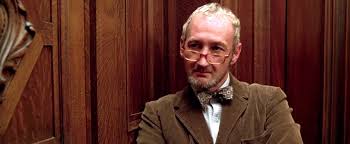
Like any Canadian-posing-as-New-England university, Pendleton has its share of haunted, shrouded history. 1998 marks the 25th anniversary of a fabled massacre, and mysterious professor William Wexler (Robert Enguland!) seems to have a bit much invested in covering it up while also convincing his students that urban legends are pure myth.


Cut to 16-year-old me, who had just begun receiving colorful college brochures with autumnal imagery, becoming even more excited to get out of high school and sit in lecture halls where Freddy Krueger showed slides straight out of Scary Stories to Tell In the Dark.


Anyway, future dreams aside, Urban Legend is indeed the perfect late '90s slasher. Sure, the brown lipstick fashion trends and resigned sighs of seeing your roommate on dial-up and getting a busy signal on your landline give you a knowing wink 22 years later, but here's the thing: Urban Legend is actually kinda good.


Yes, we wouldn't have had Urban Legend in theaters had it not been for the success of Scream one year earlier, and yes, it follows many of the same beats BUT, guess what: the same can be said for Friday the 13th to Halloween, or The Intruder to Friday the 13th, and so on and so on. 

Urban Legend knows its slasher playbook: pal after pal of our final girl dies in a high concept way by a dark figure whose face is obscured (in this case, with a winter coat that apparently everyone in town owns). Each murder is inspired by a popular urban legend, sometimes with an added twist. It's a perfect horror movie setup from first-time screenwriter Silvio Horta, and first-time director Jamie Blanks manages a surprisingly sharp balance between treating the horror seriously while clearly holding in a giant wink.


There are plenty of small touches throughout Urban Legend that demonstrate a clear affection for the genre, from using Chucky creator Don Mancini's name to casting Halloween 4/5's Danielle Harris as Natalie's ill-fated goth roommate. The reveal of the killer is big and stupid in the best of ways, while the coda lets you reframe the entire movie in whatever guise you choose. 


We're at a very specific moment in time when we can look at the '90s with rose-colored glasses. Horror cinema at this time was defined by the self-aware slasher, and while Urban Legend may have felt trite in 1998, it has aged remarkably well two decades after its debut.

High Points
Most of the actual violence is so over-the-top that it's more silly than scary, but the opening scene is genuinely thrilling, with the reveal played to perfect effect amid a rain-soaked dark highway


Low Points
There are two genuinely unpleasant things in Urban Legend, and I'm not talking about the many dead young people or Joshua Jackson's hair color: yes, a dozen innocent students are brutally murdered, but the force-alcohol-fed dog-in-the-microwave moment feels line crossing. The other is one of those uncomfortable real-life mirrors that's hard to put out of your mind: in 2001, Rebecca Gayheart was convicted of vehicular manslaughter that caused the death of a child. Much like Natalie and Michelle, this wealthy white woman received a small fine and probation. There's a lot to process there and it doesn't necessarily need to be done to enjoy a sharp '90s horror flick, but it feels wrong not to acknowledge it when discussing the movie

Lessons Learned, Late '90s Edition
As witnessed here and in Se7en, there was a high correlation between serial killing and excessive rain


A bad bleach job was all you needed to pass yourself off as a Hanson brother


You'd never get a job in the newspaper industry without a hefty batch of school paper writing samples


Rent/Bury/Buy
Urban Legend is currently streaming on Hulu, and I found it surprisingly enjoyable to revisit. It won't change your life, but it just might make you look fondly back at a period of genre cinema we'd all once written off.

Bonus Content!
Hungry for more discussion on '90s theatrical horror? Allow me to point you back to Canada for Alexandra West's fantastic essay book on the subject, The 1990s Teen Horror Cycle. It's a smart, scholarly, and fun look at a decade that we long took for granted. 

Monday, September 7, 2020

Babysitters In Glass Houses Most Definitely Throw Stones


Something that has become endemic to me during the pandemic: turning on LMN (the Lifetime Movie Network) in the background only to find myself rearranging my day to make sure I can finish watching a random filmed-in-a-week thriller.

See, the Lifetime movie has evolved over the last few years in rather fascinating ways. This is a network that employs more women behind the camera than any other, and while many a story feels like a simple boildown of madonna vs. whore, the truth is, a lot of these stories are secretly celebrating female agency. 

Thus, when a title like "The Babysitter's Revenge" rolls in front of my eyeballs, I now know that I'm either getting campy trash or surprising smart commentary. Either way, the kitchens will be immaculate.


Quick Plot: Carrie is a frustrated 17-year-old with some real concerns. Her single mother was ousted from her city council office following a scandal that suggested she had sexually harassed an employee. To help make ends meet, Carrie works hard as the go-to neighborhood babysitter, staying busy after the kids go to sleep by snooping around their wealthy parents' things. 


Such a hobby proves handy: when Carrie catches one of the town moms sorting coke, she's able to raise her rates without protest. If only she could find similar dirt on her sworn enemy: Madeline Cooper.


Played by Bree Turner, Madeline is a queen bee who grew up to be a participation trophy wife. She's perfectly fit and beautifully dressed, but it seems like aside from a fairly whiny toddler named Daniel and handsome-enough husband, she hasn't quite reached the heights she aimed for. 


Naturally, she's decided to take that out on her neighbors. After Carrie's mom refused to take Madeline's request to gate the neighborhood seriously, Madeline cleverly framed her to strip the city council position away. The war continued in more passive aggressive ways, from Madeline having Carrie's friend's car towed to Carrie staging a temporary kidnapping of Daniel to make sure Madeline's only responsible babysitter is the very teenager trying to take her down.


The Babysitter's Revenge, also known (perhaps more fittingly) as Glass Houses, is the perfect example of how a simple LMN quickie, when made with a tad more thought, can actually be something interesting. I wouldn't be surprised if this was greenlit in an old fashioned Roger Corman manner of some content manager throwing out "The Babysitter's Revenge" as a movie title and screenwriter Barbara Kymlicka (Lifetime veteran responsible for EIGHT titles in 2019, and SIX and counting in 2020) decided to do something a little more interesting.


Directed by newcomer Sarah Pellerin, The Babysitter's Revenge is purely about women: Carrie's frustrations with the unfairness of her and her mother's life, and Madeline's attempts to mask her unhappiness by presenting herself as the perfect suburbanite mom. The few men that pass through are mere accessories to the story, which is, at its heart, a power play between a sharp teenager and a bitter, type-A adult. There's far more going on than expected (or often needed) in a movie like this. 


High Points
The fact that this movie opens on five minutes of dialogue about events that have already happened with characters we've yet to meet is a weird vote of confidence in its audience, trusting that we're willing to listen and learn about the two women whose story we're going to be following

Low Points
Bree Turner is glorious as Madeline and gets a wonderfully rich finale freakout, but it's incredibly unsatisfying that we don't get anything of her future in the coda. This woman can still take on the world! Give us a hint at where she's setting her sights!


Lessons Learned
Cell phone volume has come a long way, so much so that you can blast music one house away and get a noise complaint

Always assume that your babysitter is snooping


It's very easy to get away with murder (in an LMN world), providing it's of your real target's more promiscuous best friend*


*FUN FACT: Promiscuous best friends die so often in movies that I write about that when I don't properly discard previously used blog images, I get messages like this when saving:


Rent/Bury/Buy
Like most LMN originals, The Babysitter's Revenge isn't necessarily worth investing energy into finding, but if it floats on your screen when you've got time to spare, it's a fun, surprisingly clever way to pass the time. 

Plus, kitchen porn. 

Monday, August 31, 2020

Black Mirror Revisit: Shut Up & Dance


Season 3, Episode 3: Shut Up & Dance
When I put together my incredibly non-definitive ranking of Black Mirror episodes, Shut Up and Dance came up dead last. I clearly had STRONG feeling on season 3's meanest entry, but I was curious to see if time would be kinder to it. 

The Talent: Shut Up and Dance is written by Black Mirror creator Charlie Brooker and Will Bridges, the same team who would pen Season 6's celebrated USS Callister. Director James Watkins comes with some good modern horror pedigree, having made the strong (if, whaddya know, mean) Eden Lake and the much kinder, effectively spooky The Woman In Black. 


The Setup: Kenny seems like your average British teenager, working in a fast food joint and constantly battling her bratty sister for his laptop so he can lock his door and masturbate in peace. After cleaning his computer with the first antivirus software that comes up in the search results, Kenny discovers he's provided full camera access to a mysterious all-knowing entity that is now threatening to release the video to his entire contacts list.


Most teenage boys would be scared, but Kenny is absolutely terrified and immediately agrees to to carry out his blackmailers' demands. The tasks seem easy enough at first: pick up a cake, work with a fellow blackmailee (Game of Thrones' Jerome Flynn) to rob a bank and, well, things escalate. 


The Ending: After being forced to fight another man to the death, Kenny assumes he's free as initially promised. Broken and carrying a bag of stolen cash, he begins stumbling home only for his mother to call in tears. A montage shows our other shamed men and women discovering the secrets they fought so hard to hide have been released upon the world. 

Kenny, you see, wasn't just jerking off to common porn. While we (thankfully) don't get the details, his mother's cries of "kids!" is enough, especially when we think back to the small moment he shared with a little girl earlier in the episode. What seemed like a quick shot to lend our protagonist charm is reframed as something menacing and awful.


The Theme: But see, here's why I hated Shut Up and Dance so much upon my first viewing: what's the point? People have done terrible things ranging in their measure of sin. Jerome Flynn sought out a prostitute, something hardly worth true damnation (though I like to think it was the detail that he was trying to haggle on the pricing that put him on the list). Nobody should be sad that a CEO's racist emails are leaked, and Kenny's proclivities would probably have led to the abuse of a minor, but seeing these characters put through a marathon of high anxiety tasks is just, well, unpleasant.


I suppose Brooker and Bridges' moral is that what's done is done. No amount of bicycling or sponge cake can erase your sins, and if you put any of your worst instincts out into the digital world, they will indeed come back to haunt you. 

The Verdict: Shut Up and Dance is not a bad episode of television. It's incredibly well-acted, and busting with tension that director Watkins somehow amplifies when he brings in comedy. On second viewing, I can be a little less mad at the rug pull reveal. Yes, it still feels like a cruel trick to pull on its audience, but I can admire how well it plays its hand. 


Technology Tip
Don't ever use the internet in any way shape or form to do anything that you wouldn't feel comfortable being shown to everyone you know. Easy, right?

The Black Mirror Grade
Cruelty Scale: 10/10
Quality Scale: 7/10
Enjoyment Scale: 3/10