Showing posts with label books. Show all posts

Monday, March 3, 2025

Nerd Alert!


It's been far too long since I nerded out with some genre book recommendations. So put on those spectacles and let's go to the library!


Fantasticland by Mike Bockoven

World War Z (the book, not bland excuse for a movie) laid out a pretty great template for how to tackle an high concept story. Oral histories aren't new, but Max Brooks took the format to such success with his epic zombie tale that it's not surprising to see the next generation of horror novelists try the same thing. Mike Bockoven doesn't really have the same sharpness in his actual writing, but by golly can he tell a fun story. In Fantasticland, we follow the bizarre fallout of an unprecedented hurricane locking a Florida theme part away from the rest of the world. The mostly twentysomething part-time employees are left to quickly form their own tribes, enjoying all of the concession stand offerings while turning gift shop souvenirs into grand scale weaponry. It's a wild ride that doesn't fully work if you think too hard about it, but you'll have a hard time putting it down. 

Pair It With:


H.G. Bells' Sleep Over is similarly a better idea than novel, but it's SUCH a good idea. It follows the same oral history style as Fantasticland, only with more widespread apocalyptic overtones. One day, nobody can sleep. And the next day, they still can't. What happens to the world when every one of its inhabitants is functioning in a fugue state? A whole lot of pretty horrible stuff. Enjoy!

Natural Beauty by Ling Ling Huang
 

There's nothing new is framing the beauty industry as body horror, but Ling Ling Huang's exploration brings some new ideas to the table. A former piano prodigy stumbles into a day job at an innovative new spa. Before she can read the side effects, she's experiencing bizarre transformations that turn her Chinese-American identity into something very, very different. Huang's writing isn't for everyone, but it's a very specific window that's worth a peek through. 

Pair It With:

I haven't had the chance to write about just how much I loved The Substance, and now that it's a bona fide 4-time Oscar nominee, there's a part of me that feels like you don't need me telling you what you probably already know: it's a joyfully gross rave of just how weird body dysmorphia makes us. 

Mister Magic by Kiersten White


The setup of Mister Magic is incredibly cool: the youth cast of a Romper Room-esque kids show reunites as adults, only nobody, including the internet, quite remembers why the show ended in the first place. There is somehow no video evidence of it ever even airing, though the Mandela Effect is in full swing with chat room typers who can fill in the blanks. Author Kiersten White was raised Mormon and seems to use Mister Magic as a thoughtful way to explore the stifling, dangerous nature that religion wields over its children. The novel doesn't quite go as dark as you might expect early on so horror readers should keep their expectations in check. Still, it's a unique idea that should satisfy some readers.

Pair It With:
I had last mentioned Mister Magic in a review for Mr. Crocket, which certainly shares some story threads in following an '80s children's television show personality with nefarious motives towards his audience. It's an easy double bill, but I'll also throw out the title of 2024's best film, and one that also happens to use fuzzy media nostalgia as a lens to find a deeper understanding of identity: I Saw the TV Glow.


Siren Queen by Nghi Vo


If you liked Babylon but thought it needed more dark magic, allow me to introduce you to the glorious Siren Queen. Set in the golden pre-Hays Code Hollywood, Nghi Vo's novel follows an ambitious Chinese American actress as she navigates monstrous studio heads and witchy wilting stars who have all sold aspects of their soul to live the dream. Luli is willing to do the same but only on the condition that she never be cast as a maid. So where does that leave a non-caucasian, queer starlet? Well, as the monster of course! Vo goes all in with turning the studio backlots into a weekly witches' sabbaths, with characters shapeshifting into far more interesting creatures than any plastic surgery could create. 

Pair It With:


I'm not always the biggest fan of Hollywood stories, as the behind-the-scenes narratives usually just feel too insidery or depressing. Both descriptions fit a film I love in spite of this: Kevin Kolsh and Dennis Widmeyer's Starry Eyes, which stars a game Alex Essoe as a struggling actress who finds herself in situations not unlike Luli. If you enjoyed the brutal Starry Eyes, Siren Queen might read for you as a similar story told decades earlier.

A Certain Hunger by Chelsea G. Summers 


Deliciously twisted is the best way I'd describe this novel, which follows a painfully chic food critic who discovers that nothing tastes as good as the perfectly prepared flesh of an ex. It's impossible not to be swept up in the glamorous, worldly life of our occasional cannibalistic narrator Dorothy Daniels. Summers relishes Dorothy's unapologetic hedonism, and I found it impossible not to root for her to savor every bite.

Pair It With:

I'm certainly not saying Ridley Scott's Hannibal is a good movie, but it is, in the words of modern vernacular, a VIBE, and therefore, a fitting pairing to A Certain Hunger in celebrating the carnal pleasure of perfectly prepared meat. 

Monday, December 26, 2022

Nerd Alert! Books to Buy With Your Gift Cards!


As tentatively promised, it's time for another dive into some of the genre (and adjacent) books that I've been enjoying in recent weeks. Clean those glasses and dive in!


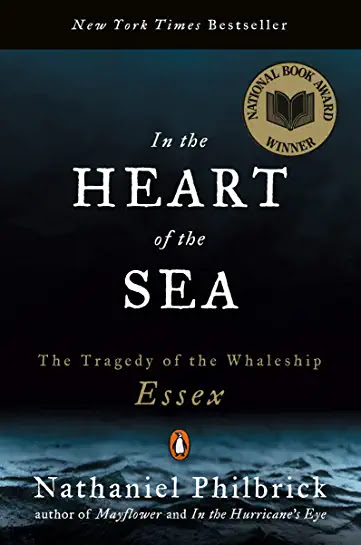
In the Heart of the Sea by Nathanial Philbrick
Nonfiction is a bit of an uphill climb for me, but there's one particular history subject that I can always read about: exploration/nautical hell. Chalk it up to having a passionate fifth grade teacher, but give me a biography of James Cook that details his brutal dismemberment or the horrors of scurvy as it knocked out his crew's teeth and yes, I'm fully there. In the Heart of the Sea is sort of the historical prequel to Moby Dick, an intimidating classic that I've circled like Pee-Wee Herman around the snake tank, knowing I SHOULD read it for its place in literary history, but terrified at the amount of likely dull whaling details I'm going to encounter. In the Heart of the Sea is thankfully a brisker but deeply informative look at the same era and industry, told well by Nathaniel Philbrick as he sorts pieces together the various accounts of the infamous Essex's voyage in 1820. Phlbrick's voice is engagingly entertaining, keeping the history lesson moving with great narrative skill. I certainly didn't expect to encounter 19th century dildos in chapter 2, if that tells you something.

TV/Movie Pairing:


The fascination of In the Heart of the Sea is wonderfully reminiscent of another property based on a nautical failure of the same era. If you loved Dan Simmons' The Terror, this ticks many of the same boxes. And more importantly, if you haven't checked out the wonderful (and vastly underrated) AMC miniseries adaptation, amend that today. Jarred Harris and Ciaran Hinds lead the cast through brutally stark art direction. Yes, the CGI monster is the least effective part (same goes for the presumably non-CGI monster in the book) but the human aspects and nature's wonder are beautifully done. Just promise me you'll skip the completely unrelated second season of the series, which assembled a completely new creative team to tell an unrelated story...very badly.


We Believe the Children: A Moral Panic In the 1980s by Richard Beck
TWO nonfiction on ONE list? What is HAPPENING? Well, hopefully not whatever went wrong with the world in the 1980s, when the system began to prosecute/persecute random citizens for corrupting the youth of America with witchcraft. The Satanic Panic is a dark chapter in this country's history, but not nearly enough is known about why and how it came to destroy so many lives. Author Richard Beck does a thorough dive into a few of the more prominent cases and effectively grounds the action so we the reader can better understand how 1988 California could so easily mimic 1692 Salem. It's all too familiar. 

TV/Movie Pairing


I'm still waiting for the world to find this Philip Schaeffer's Witch-Hunt, a made-for-pennies oddity that manages to develop a fascinating little story on dialog alone. Witch-Hunt is very much about how being part of the Satanic Panic might fester in someone decades later, and while you have to power through its early low budget strained rhythm, once you give in, there's a lot there. 


When No One Is Watching by Alyssa Cole
The horrors of gentrification take on a literal form in this contemporary tale of a Brooklyn neighborhood. The narrative is effectively split between Sydney, our hometown heroine ready to defend her territory from the invading wealthy whites, and Theo, a nice enough guy discovering his part in the problem. It's a fast-paced mystery with a solid payoff.


TV/Movie Pairing

I found When No One Is Watching by the tagline "the literary Get Out," and that really does fit. If you enjoyed one, you'll likely feel the same way about the other.


God Shot by Chelsea Bieker
Don't you kind of hate yourself for being so damn fascinated by cults? The details are always so strangely enthralling that you end up sucked into a story that almost always involves victimization, often of the marginalized or young. Chelsea Bieker's God Shot doesn't necessarily give us a story we haven't seen before, but she solidly places it from the point of view that we should most be listening to in these scenarios: a teenage girl who is thoroughly enamored by her faith's charismatic sham of a leader, but slowly discovers entirely for herself that there's something very wrong. It doesn't necessarily fall into the horror categorization, but it's deeply affecting in pulling you into a very dark place.


TV/Movie Pairing:


There are plenty of films and documentaries about cult victims, but one the best remains Sean Durkin's Martha Marcy May Marlene. Like God Shot, it steadies itself in the perspective of a young woman taken in by the promises of an appealing man quickly proven to be horrible abuser. Now don't ever make me write out and remember the order of names in that title again.


Blood Autumn by Kathryn Ptacek
Is there anything more wonderful than discovering a used bookstore that has both cats AND a huge stretch of horror paperbacks? I stumbled upon such a gem on a recent vacation (the Book Corner in Niagara Falls, New York) and left with a literal boxful of random treasures, including this sexy vampire romp. I'd never heard of the author or title, but for $1, that juicy cover art couldn't be denied. And what a find! August Hamilton (amongst her many names) is a gorgeously drawn villain, a deeply carnal succubus who tears through men every which way. It's hard not to root for her.

TV/Movie Pairing


August makes you thirsty for the kind of glamourous lady vampire that sashayed through castles in the Hammer years. I confess that's a bit of a blind spot for me so at the lack of recommending the wrong one, I'll say you can never go wrong with Catherine Deneuve's otherworldly performance in The Hunger. If you're looking for something newer and woefully underrated, the divine Gemma Arterton shines in Neil Jordan's underappreciated Byzantium. 

Anything here strike your fancy? I'm always on the hunt for more reading, so if you've found adjacent picks to some of these, share them in the comments! And as always...


Monday, September 26, 2022

Nerd Alert! Summer Reading Catchup


It's strange to think about just how much I love reading, just how much I love writing about movies, and just how little I ever think to write about the books I love reading. Often that's because my brain usually needs to take more time unraveling novels and coming to terms with how I ultimately felt about them, whereas films tend to be a more immediate experience.

So after a summer filled with a whole lot of library loans, I figured there's no reason not to share some of my recent recommendations, all on the genre(ish) side. And since sometimes it's hard to really get a feel for a book without the ease of a movie trailer, I'll throw in some adjacent material to help you figure out if it's to your taste (sometimes literally). 


Lapvona by Ottessa Moshfegh
Do you enjoy the medieval setting of Game of Thrones but find it, well, a tad too clean? Pump up the literal filth, black humor, class inequalities, and cannibalism for the wickedly entertaining Lapvona, a fictional fiefdom ruled by an idiotic glutton who inspires nothing but the worst in his poor starving subjects. While the point of view moves through several slightly less villainous characters, nobody in this miserable world really deserves the reader's love, and yet, reading their awful journeys never feels depressing. There's such a glorious absurdity to the action that it's kind of a delight. Or maybe I'm just a terrible person.

TV/Movie Pairing

The easy option would be a similarly period-set tale like Black Death or Hagazussa, but this book's real soulmate has deeper aspects in common: a fascination with all things food, no restraints on exploring what can be done to a human body, and a larger-than-life spoiled rotten crime lord who can't shut up. Yes, it's Peter Greenaway's beautifully ugly The Cook, The Thief, His Wife & Her Lover. 


Beauty Queens by Libba Bray
When a plane carrying the Miss Teen Dream finalists crashes on a mysterious island, the young contestants are forced to use all of their pageant training to survive in the wilderness. Turns out, catching fish and building storm-proof shelters is much more rewarding than mastering tap choreography and hair removal. Bray, primarily an author of YA fiction, is clearly having fun creating a sort of Idiocracy-esque near future that richly satirizes how corporate America underestimates and devalues teenage girls. The diverse batch of characters are fully drawn, and there are plenty of laugh-out-loud moments that rival the best of Miss Congeniality. Some of the storytelling spins a bit out of control and not every subplot is handled cleanly, but overall, Beauty Queens is a whole lot of fun.

TV/Movie Pairing: 


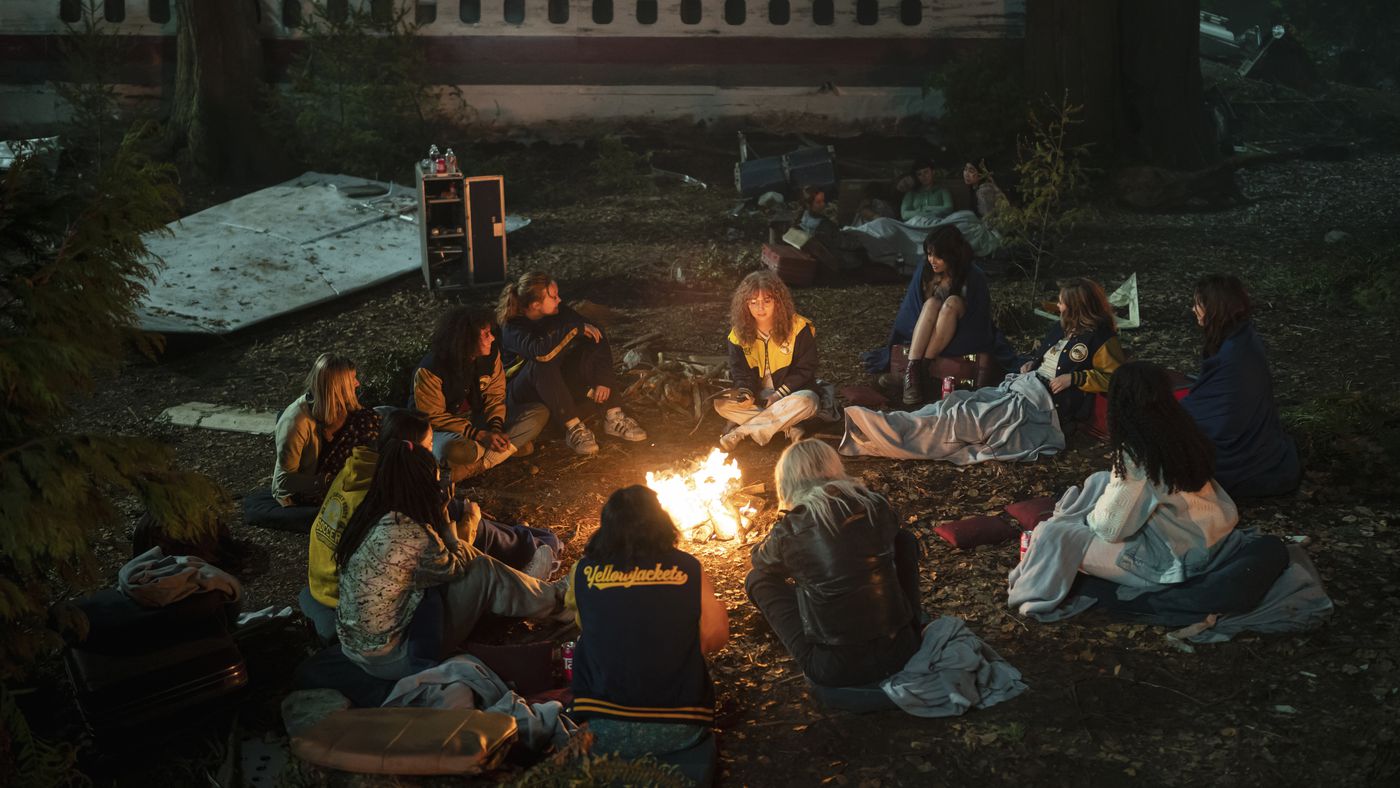
I found Beauty Queens via an article recommending what to read after Yellowjackets, which makes perfect sense because Beauty Queens is sort of the sunnier, more optimistic version of the same basic premise. Less cannibalism, more explosions.


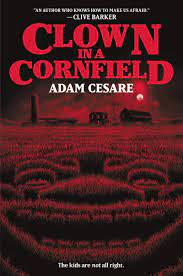
Clown In a Cornfield Series by Adam Cesare
Nothing is more exciting than seeing someone you know and respect create great work that finds a wide audience. Adam Cesare has been in the horror internet circles for some time, and what a delight to see him step into the (very violent) YA horror realm with not one, but two incredibly entertaining slashers. Danger is looming in Kettle Springs, a dying midwestern hamlet harboring growing tensions between the weary adult population and the teenagers they blame for their town's demise. In the middle of it all is Frendo, a corn syrup mascot turned murderous archer (who might just have a few friends). 

TV/Movie Pairing: 

You don't find a better setting for a massacre than a sprawling cornfield, so why not pair this one with another story that understands its appeal: Netflix's There's Someone Inside Your House. Both properties rise above so much other genre offerings because their teenage characters are treated as three-dimensional human beings. It's a perfect autumn double (or triple).


Blood Sugar by Sascha Rothchild
Every book club (I say as someone who adores book clubbing) has read a book like Blood Sugar, but very few boast such a wonderfully lovable and respectable murderous protagonist as Ruby Simon. The self-aware Type-A Miami psychologist might be an Amy Dunne-ish serial killer, but she's a GOOD serial killer, one who only targets the kind of people who hurt the world. Plus, she loves animals! She has a signature pen! She's the best!

TV/Movie Pairing: 


Between the key Type 1 Diabetes storyline and Ruby's physical description, I couldn't shake casting What Keeps You Alive's Hannah Emily Anderson as Ruby. Her Jackie is far more typical sociopath than the less outwardly violent Ruby, but there's something about that film that could operate in the same universe. Both feature terrifyingly smart, in control women who are intoxicating.  


The Last House on Needless Street by Catriona Ward
Sometimes you read a book that isn't perfect, but that immediately makes you want to seek out everything else its author has done. That's the case for Catriona Ward's strange, disturbing, and fully twisted The Last House on Needless Street. Narrated (perhaps) by a dangerous shut-in, his abused charge, her vengeance-hungry sister, and most excitedly, a beautiful green-eyed cat named Olivia, this book is incredibly dark, but also, very...heartfelt? There are dozens of surprises along the way and saying anything about the story may spoil some reveals. Know that this isn't an easy read, particularly if children in peril upsets you on the page. But it's unlike anything I've read, and it left me deeply hungry for more.

TV/Movie Pairing: 


For a lot of reasons that will be clearer when you actually read The House on Needless Street, the movie that I found myself thinking of after was Scott Derrickson's recent The Black Phone. Both do an astounding job at capturing the voices of children in danger, and both play with perspective in interesting ways. 

If I remember, we'll do this again towards the end of fall. So heed the words of another famous, less homicidal clown!


Monday, April 9, 2018

Nerd Alert! Ghoulish Stories Vol. 1


Is there any art form more underrated than the short story horror compilation? Much like film anthologies, there's just something vastly entertaining about a good collection of 20-50 page tales, almost as if it was a medium specifically designed to create and complete a nightmare.

Hence it makes some pretty good sense that Greg Ansin and Michael Neel, creators of 2009's Drive-In Horror Show, would transfer their film skills to the page in that compact format. Ghoulish Stories (Volume 1) includes eight original horror stories ranging vastly in style from a modern tech-inspired tale to a delightfully demented romance. With a title like "Trampoline Chainsaw Lovers," the latter is easily the happiest piece, filled with some vivid characters and a genuinely sweet relationship at its core.

"iThink the App" starts things off with a quick-moving saga of technology run amuck as a hot new social app encourages users to do whatever it suggests. It doesn't take long before mass murder becomes one of those activities. While the subject matter feels a little common, the pacing is key, particularly for the anthology's introductory story.

In "The Crawlspace," a brother and sister discover some unsettling secrets lurking in their basement. Much like The Closet, Drive-In Horror Show's best segment, "The Crawlspace"'s strengths lie in its young characters. The same can be said of "The Freak", the story that's probably easiest to see filmed. A likable kid ends up with the worst possible summer when his pals decide to prank the town's legendary hermit. Naturally, this doesn't end with a Sandlot-esque resolution involving happy baseball mementos. 

Two of the more grounded stories, "Blackout" and "Two Drop Donuts," have a ready-made Tales From the Crypt tone in building sympathetic protagonists only to mix in some deep hues of moral shadiness. "Blackout" has some excellent atmosphere buildup, while "Two Drop Donuts" treads a somewhat predictable path. Still, if you don't finish the book craving a specially infused pastry, then I long for your willpower.


The most epic story is "Plastic Island." A trio of military divers takes their submarine deep below chartered territory only to discover the future is literally built on garbage. It's the longest piece in Ghoulish Stories, and suffers a little in its early pages with character buildup that feels like too much exposition. Once our team reaches the titular locale however, the action picks up quickly with some truly horrific post-apocalyptic tribal terror. Ultimately, it's a fresh take on a popular storytelling subject, going places that you don't quite expect.

My personal favorite is easily "Nightmare Cards", a high concept tale that feels like a passionate quickie marriage between Freddy Krueger and Pokeman. Ansin and Neel's imagination gets to go to extremes as a variety of monsters (ranging from a sack-wearing axeman to a well-coiffed gentleman) orchestrate creatively violent dreams for children. The visual possibilities leap off the page, making me as a reader long to see a comic book or animated adaptation.

Ghoulish Stories is available in hard copy or digital form, and includes a few illustrations in its appendix to match each story. While some stories are stronger than others, they're all well worth a read, creating gleefully horrible worlds where some considerably awful things can happen. As horror fans, is there anything we want more?

Sunday, October 6, 2013

October!

We’re 7 days into the most wonderful time of the year, and I’ve barely addressed the fact that, you know, WE’RE SEVEN DAYS INTO THE MOST WONDERFUL TIME OF THE YEAR.
Precisely
Here at the Doll’s House, I have nothing overly exciting planned save for the usual weekly dose of genre (or awful, but this month, strictly genre) film reviews. While some exciting pumpkin-related shenanigans could still sprout up, I figured it was far more useful to share some links to a few of my rather talented pals’ far more interesting October projects.

Hitch up your haunted hayride and let’s roll!


-Over at The Lightning Bug’s Lair, good pal Zach (and guest host for our latest Single White Female/Obsessed episode of The Feminine Critique) is don’ting away with 31 days of covering movies with titles that include horror’s favorite contraction. Zach always makes October a truly delightningbugful time of year, and I’m sure this round will be no different.


-This being October, it’s the perfect time for you savvy e-reading bookworms (or e-worms? Is that more or less gross?) to check out a few great picks. First up is R. k. Kombrinck’s short story collection, These Lonely Places. Some of you might know the author as a barrel of laughs and Burger King hatred heard on Night of the Living Podcast, but his fiction is a far more serious matter. From giant spiders to horrifically twisted old people, Kombrinck’s writing is truly creepy, filled with surprising twists and plenty of scares.

-For those of you in need of some quality nonfiction, check out Bryce Wilson’s Son of Danse Macabre. Wilson is also the keeper of the fine blog Things That Don’t Suck (and thankfully, his writing doesn’t) and Son of Danse Macabre reads like a worthy sequel and followup to Stephen King’s 1981 book. Picking up where King left off, Wilson provides superb analysis of the genre (including video games and comics) of the last 30 years. For just $2.99, it’s a journey well worth taking.


-Get Rocked. Get Shocked. Get n’ed. All these things at Worcester’s annual horror (and music, whatever that is) convention. I’ll be taking a ride up there for the weekend of the 19th, so if any of you New Englanders are dropping in, be sure to let me know so we can say hi while wondering if Jordan Ladd would be honored or embarrassed if we asked her about her villainous role in Lifetime’s Murder on the 13th Floor.


-Gear up your ears for ShowShow, one of the Internet’s oldest and still most entertaining podcasts. Every year, the crew assembles for the Spooktacular, where they release one episode a day for the month of October. It’s a hard show to describe until you hear it, but with a bizarre collection of films on this year’s docket (George Kennedy vs. An Alf puppet supercat in The Uninvited, anybody?) and what I’ve been assured is a bottomless supply of alcohol, you can guarantee yourself a good time.


-More entertainment courtesy of the podcasting world: Outside the Cinema’s annual Halloween Throwdown, aka 16 hours of random and rare horror movies streaming live online. It's a surprisingly enjoyable way to kill a Saturday, so if you've long wanted to see films like Fade To Black and Mr. Boogedy, be sure to check it out.


-Plus, plenty of blogs over yonder on my right side blogroll will be doing truly seasonal coverage, from Chuck Norris Ate My Baby’s annual Chucktoberfest to Fascination With Fear’s Guilty Pleasures and Final Girl’s own version of SHOCKtober


Good things everywhere. GO GET THEM!

Sunday, July 15, 2012

The Shin-n-n-ing

For a good chunk of movie audiences, Stanley Kubrick's 1980 adaptation of Stephen King's The Shining stands as one of cinema’s greatest accomplishments in terror. To its grandfather, it was (at least at the time of its release) blasphemy.


Thusly did we get Mick Garris’ extremely literal 1997 miniseries, written by King and filmed at the very hotel that inspired the tale. To experience all three tellings is a pretty fascinating exercise in the art--and sometimes, fingerpainted afterschool activity--of the adaptation.


It surprises some (okay, my cats) to learn that I haven’t read that much of Stephen King’s canon. I adore his essay work, but each of the handful of King fiction I’ve picked up continue to kill me with final act buzzkill (Salem's Lot is a pleasant buck of that trend). Lately though, I’m becoming more forgiving in my old age of literary criticism. I blew through Carrie with plenty of energy, so following it up with one of King’s most celebrated hits seemed like the best idea since buying Maximum Overdrive on DVD.


More refreshing than a soda can to the groin!
If you’re a horror fan who has never read The Shining, head to your nearest library/local bookstore/airport and give it a go. Though King himself acknowledges that some of his prose is on the messy side, the book moves like a fascinating nightmare. Wendy, Jack and Danny are all written with a firm ear towards character and their tentative hold on a fragile family unit is as devastating as the latter half is scary. Jack’s descent is inevitable, but as King astutely recognizes in his introduction to the book's reprint, Jack isn’t a one-dimensional monster anxiously awaiting his transformation. We care about these people, making every swing of the roque mallet hurt.


But let’s face it: most readers don’t travel 500 plus pages through The Shining for a family drama about the perils of alcoholism. Inside the ghostly holdings of The Overlook lurks some true terror, from an eerily macabre masked ball to the iconic Room 217. Most memorable is Jack’s, Danny’s and Dick Halloran’s meet-ups with the growling lion made of topiary. It’s truly remarkable how effective scenes of evil garden creations can be on the page...


And how damn silly looking they are when brought to life by 1997 era CGI. Kubrick famously omitted the topiary from his film, claiming special effects wouldn’t do it justice. Perhaps that’s true (considering how giggly the 1980s BBC version of The Day of the Triffids made me, I’d say yes). Or maybe, like so much else in his version, Kubrick didn’t think they worked according to his vision.


Can't imagine why...


An adaptation, you see, is just that. It’s an interpretation of preexisting material, not necessarily a direct translation of it. 


One of my biggest pet peeve comments I hear from movie viewers is the whine that “they changed it from the book!”  Why is this offensive? ‘They’ (evil filmmakers with their own ideas) didn’t change YOUR book. They didn’t rape its author and force it to birth this creation or chain him or her in a tower until the writer released a Galileo-like false confession that erased any original ideas. Books and movies exist on two different plains of the universe.


Sometimes, a close-to-the-page film breeds greatness (No Country For Old Men, Atonement) while others fall flat (The Road, Blindness). What I respect most is a film that honors its source material’s essence but understands well enough that the language of film can veer wherever it wants and still be great (i.e., Children of Men or The Sweet Hereafter, fine literary works that bred incredible filmmaking).


Kubrick falls into the latter category. His Shining plays quite a bit with its source material, retaining its skill but filling it with an entirely different substance. Does it work as a film? Certainly. As an adaptation? Yes. It’s just not the translation loyal readers (and one writer) may have been waiting for. 


Jack Nicholson’s Jack is, much to the annoyance of Stephen King, not the Jack on his pages. He starts with a Joker grin and ends with the same Joker grin frozen solid, and while it’s a terrifying character that has rightfully become iconic, it’s ultimately far less complex than the tortured recovering alcoholic of the novel. It’s probably Kubrick’s biggest deviation, and one that builds an immediate distance between the audience and characters. Sure, Shelley Duvall (say nothing negative; woman has a lifetime get out of jail free card for creating Faerie Tale Theatre) as Wendy comes off as a bit of a nag, but that doesn’t mean we ever really understand Jack wanting to plant an axe into her back.


It’s understandable that the casting would irk King, particularly since the author used the character as something of a metaphor for his own struggles with alcohol. For that reason alone, it's clear why the author would take such a strong position (executive producer and screenwriter) on the second stab at adapting his material. The problem, of course, is that he put it in the hands of someone who loved the novel even more than he did.


I have a lot of respect for Mick Garris. The man clearly adores the genre and would sell his kidneys and children to make horror even better.


But that doesn’t mean he’s a good director.


The Stand is a mediocre retelling of King’s epic, with lots of aspects (the ridiculousness of the sultry pill-popping Laura Sangiacomo as a virgin, the casting of Rob Lowe, and much more) that just don’t work. His Masters of Horror episode, Chocolate, has some interesting ideas with painfully awful execution. And Sleepwalkers...well...there have been worse adaptations of King pieces.


And yet, it makes perfect sense that Stephen King would watch him direct his adored text. I obviously don’t know what their working relationship was like, but I imagine conversations went as such:


MG: So Mr. King, I was thinking of cutting that scene where Halloran misses the plane to Denver. It seems a little unnecessary, don’t you think?


SK: No way. It’s important in showing how hard the dude’s trying. Also, I wrote it.


MG: Totally! Forget I ever said a thing. Um, what about the one that comes about ten minutes later, where Halloran lands and the car rental cashier kindly tells him she’ll call ahead to put chains on the vehicle? It kind of cuts into the action over the Overlook and, well, I don’t know that we need it.


SK: Did you hear me the first time?


MG: Of course! I mean, you’re right, 110% right. I guess that means I shouldn’t even ask about that scene later where Sam Raimi has a cameo playing the guy that lends him the snow mobile thing, right? I mean, the people need to see that he gets a snow mobile thing from Sam Raimi. And when Halloran arrives at The Overlook and gets out of the snow mobile thing to brush the snow off the sign that says “The Overlook” even though the audience already knows that, you know, that’s The Overlook, we need that right?


SK: Quiet kid. Just remember Uncle Stevie’s rule.


MG: If it’s on the page, it stays.


SK: Got it. Now print me out a new picture of that Kubrick dude and tape it over that dart board yonder. I got things to do.


As King and Garris discuss in the commentary tracks, the miniseries is indeed the ideal format for a dense novel’s filming. It’s not easy to tell a 500+ page story in two hours of screentime, so the extended running length makes perfect sense.


But what Garris and King don’t realize is that a book is its own thing, one that exists on its own dimension inside the readers’ heads. We bring our own aesthetic to what we read--for whatever reason, I cast Elizabeth Mitchell and Kyle Chandler as the Torrances and resurrected Scatman Crothers from the grave to revisit Halloran--and so a literal word by word adaptation will almost always fall flat. Watching a bizzarely dreadful Melvin Van Peebles discuss his travel plans does absolutely nothing for the narrative. Just because it’s in the book does not, in ANY way require it to be filmed.


Likewise, a film can use its facilities to enhance its source material, be it through music, visuals, performances, or random touches. You know, like how Crothers' Halloran decorates his Florida condo:


No reason for it exactly, but it's memorable and interesting, something that makes us wonder a little more about the character. The miniseries never dares to embellish.


There is good inside 1997’s The Shining. Rebecca DeMornay and yes, Steve Wings Weber are quite strong as a couple on the edge, and both the loving and abusive scenes together are believably powerful.


As for the rest of the miniseries...well..the last shot was neat. Of course, before that we deal with Haunted Mansion caliber ghosts and Peebles' terrible line readings, heavy-handed musical cues and laughable CGI, plus a fatal step in miscasting that makes Danny a precocious 8-year-old that doesn’t know how to read. I won’t insult child actor Courtland Meade’s performance, as it’s not awful...just not right. I may have missed the exact moment where his age was discussed (for silly reasons involving me not understanding how to read a double sided disc, I was forced to download Part 2 en espanol and channel my inner 8th grade honors student to understand the dialogue) but either Danny is WAY too well-spoken for a 6 year old (who then graduates two years early in the film’s painful flash forward coda) or an 8-year-old with a learning disability, which doesn’t fit his clearly bright and well-spoken character in the least. Either way, WHAT IS GOING ON?


Also, his hair looks stupid.


Then there’s the time period, or lack thereof. Danny talks like a child of the 90s while The Overlook uses rotary phones and Dick Halloran dresses like Willie Dynamite circa 1971. I’m confused.


Plus now I just want to rewatch Wilie Dynamite.


But enough bashing of a not necessarily terrible way to spend 4.5 hours. It made Stephen King and most likely, those who believe an adaptation should be a book-on-film satisfied. I can’t imagine it entertaining someone who didn’t read the novel, but as an example of (in my opinion) what an adaptation shouldn’t be.


Also, I spotted a goof (Part 3, flowers moving before Wings comes into frame) and I NEVER spot goofs.


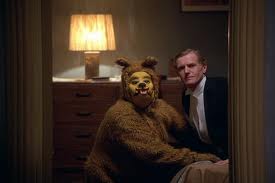
Oh, and the miniseries features a Ghost Dad coda that's way more hilarious than Ghost Dad.


Also, did I mention Danny's stupid haircut?


I don’t think Kubrick’s film is perfect, though I do cite it as a brilliant horror film and even more brilliant, if almost unrelated interpretation of a great read. I also don’t think Garris or King were wrong to revisit the material in their own manner. I just wish they remembered what film can do and actually tried to do it.