Showing posts with label adaptations. Show all posts

Monday, December 30, 2013

The Cleanest Looking Zombies You Ever Did See


Max Brooks' epic World War Z is one of the most unique reads I've had in recent years. Part horror novel, part modern social studies lesson, it could be argued to be the very apex of the undead movement of art. Like so many of us who grew up fantasizing about life in the Monroeville Mall, Brooks saw the concept of a Romero zombie invasion as something well worth exploring, in his case, on a global scale. His novel (a collection of 'interviews' conducted with those who survived an international zombie attack) is simply brilliant.


Cue the angry mob of (somewhat justified) torch-bearing bookworms who therefore considered Marc Forster's loose film adaptation to be a blight on mankind.


The cinematic journey of World War Z is a complicated one. When the first script leaked several years ago, the Internet rejoiced like a band of victorious Ewoks over how it apparently captured the spirit and scope of Brooks' novel in a way that could, sources said, redefine screenwriting as we knew it. Fast forward several drafts later to word of the troubled production, now being produced by (and starring) Brad Pitt with a constantly ballooning budget and pushed-back release date.

Eventually, World War Z debuted to admirable box office numbers, decent critical reviews, and a whole lot of anger from its initial fanbase. Brooks casually disowned the film as having nothing to do with his book. Horror fans growled at the PG13 rating. Readers were disgusted by what was a complicated, global narrative being reduced to 'Hot Brad Pitt Fights Zombies To Save His Family.'


I go through this somewhat long preamble to try to explain where I come from in watching and reviewing World War Z. The novel was one of my absolute favorite reading experiences, and something I was eager to share and push on friends who mostly responded the same. A part of me was crushed to learn about the film's dilution of Brooks' worldwide elements. As someone who thinks The Walking Dead would be a better place without the Grimes' father/son dull spot, the idea that such a fascinating and incredibly developed examination of modern society would be boiled down to 'hot dad saves kids' made me angry.


But as I've said about so many films adapted from beloved works of fiction, a movie is its own thing. There can be nothing wrong with using a book simply as a springboard for inspiration rather than blueprint for cinematic translation. For every No Country For Old Men that adapts its source nearly verbatim and works beautifully, there are just as many The Shinings that take the initial story and spin it into something of its own. With great humility, I swallowed a good deal of emotion and tried my hardest to watch Marc Forster's World War Z as something original with no attachment to the novel whose name it shares.

Here's me trying.

Quick Plot: People Magazine's Sexiest Ex-UN Field Officer Alive is enjoying a regular road trip with his wife and two daughters when chaos breaks out on the streets of Philadelphia. Before you can say cheese steak, people are sprinting for their lives as the occasional twitchy infected lurches on their tail to take a bite.


Well, 'lurch' is such a lugubrious word. It's more like they're being set up in the kind of children's toy catapult contraption every kid wanted for Christmas (be it a pirate ship or wresting ring) and instantly SHOT into the still-living's path.


It's almost cool. I'll give you that.

One Mist-y trip to a grocery store later and Gerry is able to get into contact with his former employers who decide to send him on an international journey to help identify a solution to the now world-wide epidemic of fast running zombieism. In return for his risky work, Gerry's family is to be kept safe on a military ocean rig. The military is awesome and completely trustworthy like that.


What follows are a few episodes of Gerry traveling to a few far reaches of the world: South Korea, Israel, and Wales. If you can divorce yourself from the far more global spread of the novel, you can appreciate a mainstream big budget horror (well, action with touches of horror) studio film integrating different nations into its narrative. Yes, it's ultimately the blond haired, blue eyed, apple pie in his beard Brad Pitt who (SPOILER ALERTISHNESS) is the hunk the seven continents need to save the world, but hey....at least he gets a cute female Israeli sidekick!


I don't know I don't know I don't know, I moan with exasperation. It's probably impossible for me to fully disarm my devotion to Brooks' novel, making the film 'adaptation' such a disappointment. There are strong elements at play: the film LOOKS and SOUNDS quite good, with some incredibly effective fast-paced attacks in its first and second act. For general audiences whose familiarity with the zombie genre ends at The Walking Dead, World War Z is certainly an exciting way to kill two hours of time. For most of us, this is that film that your coworkers and extended family will ask you about, because after all, you're a HORROR FAN!


In most cases, that means you won't like it. World War Z is to the zombie genre what The Big Bang Theory is to geekdom. It's more than appealing to the mainstream, but those with a deeper identity to the subject matter will just find it empty. There have been plenty of PG13 horror films that have surpassed their youth-friendly rating to still provide scares, but for a movie about a mass zombie invasion destroying the entire planet, it just seems like we all deserve better than a hot American saving the world without seeing a drop of actual blood.


High Points
Self slingshot-flinging zombieism is neat enough in being something completely new


Low Points
Wow, what a climax


I don't mean to insult the asthmatic population, but can we please agree that children with severe breathing conditions in need of holy grail-esque inhalers are a tad forced in cinema?


Lessons Learned
Those annoying children's toys that make battery operated sounds can be surprisingly useful when identifying key features of a zombie virus


Apparently, we are in no way past the point of 'please turn off your cell phone' courtesy announcements before launching super dangerous missions involving the undead

Cardio, cardio, and cardio


Rent/Bury/Buy
Well, considering my below freezing temperature expectations, World War Z was certainly better than it could have been. On the other hand, considering its source material, World War Z was nowhere near as good as it should have been. Brooks loyalists should stay away, but those who enjoy action horror will certainly find this to be a decently made, and for a good 2/3rds of its running time, well paced little mainstream hit. 

Sunday, July 15, 2012

The Shin-n-n-ing

For a good chunk of movie audiences, Stanley Kubrick's 1980 adaptation of Stephen King's The Shining stands as one of cinema’s greatest accomplishments in terror. To its grandfather, it was (at least at the time of its release) blasphemy.


Thusly did we get Mick Garris’ extremely literal 1997 miniseries, written by King and filmed at the very hotel that inspired the tale. To experience all three tellings is a pretty fascinating exercise in the art--and sometimes, fingerpainted afterschool activity--of the adaptation.


It surprises some (okay, my cats) to learn that I haven’t read that much of Stephen King’s canon. I adore his essay work, but each of the handful of King fiction I’ve picked up continue to kill me with final act buzzkill (Salem's Lot is a pleasant buck of that trend). Lately though, I’m becoming more forgiving in my old age of literary criticism. I blew through Carrie with plenty of energy, so following it up with one of King’s most celebrated hits seemed like the best idea since buying Maximum Overdrive on DVD.


More refreshing than a soda can to the groin!
If you’re a horror fan who has never read The Shining, head to your nearest library/local bookstore/airport and give it a go. Though King himself acknowledges that some of his prose is on the messy side, the book moves like a fascinating nightmare. Wendy, Jack and Danny are all written with a firm ear towards character and their tentative hold on a fragile family unit is as devastating as the latter half is scary. Jack’s descent is inevitable, but as King astutely recognizes in his introduction to the book's reprint, Jack isn’t a one-dimensional monster anxiously awaiting his transformation. We care about these people, making every swing of the roque mallet hurt.


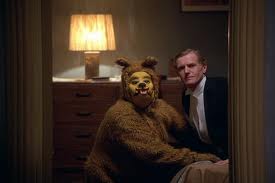
But let’s face it: most readers don’t travel 500 plus pages through The Shining for a family drama about the perils of alcoholism. Inside the ghostly holdings of The Overlook lurks some true terror, from an eerily macabre masked ball to the iconic Room 217. Most memorable is Jack’s, Danny’s and Dick Halloran’s meet-ups with the growling lion made of topiary. It’s truly remarkable how effective scenes of evil garden creations can be on the page...


And how damn silly looking they are when brought to life by 1997 era CGI. Kubrick famously omitted the topiary from his film, claiming special effects wouldn’t do it justice. Perhaps that’s true (considering how giggly the 1980s BBC version of The Day of the Triffids made me, I’d say yes). Or maybe, like so much else in his version, Kubrick didn’t think they worked according to his vision.


Can't imagine why...


An adaptation, you see, is just that. It’s an interpretation of preexisting material, not necessarily a direct translation of it. 


One of my biggest pet peeve comments I hear from movie viewers is the whine that “they changed it from the book!”  Why is this offensive? ‘They’ (evil filmmakers with their own ideas) didn’t change YOUR book. They didn’t rape its author and force it to birth this creation or chain him or her in a tower until the writer released a Galileo-like false confession that erased any original ideas. Books and movies exist on two different plains of the universe.


Sometimes, a close-to-the-page film breeds greatness (No Country For Old Men, Atonement) while others fall flat (The Road, Blindness). What I respect most is a film that honors its source material’s essence but understands well enough that the language of film can veer wherever it wants and still be great (i.e., Children of Men or The Sweet Hereafter, fine literary works that bred incredible filmmaking).


Kubrick falls into the latter category. His Shining plays quite a bit with its source material, retaining its skill but filling it with an entirely different substance. Does it work as a film? Certainly. As an adaptation? Yes. It’s just not the translation loyal readers (and one writer) may have been waiting for. 


Jack Nicholson’s Jack is, much to the annoyance of Stephen King, not the Jack on his pages. He starts with a Joker grin and ends with the same Joker grin frozen solid, and while it’s a terrifying character that has rightfully become iconic, it’s ultimately far less complex than the tortured recovering alcoholic of the novel. It’s probably Kubrick’s biggest deviation, and one that builds an immediate distance between the audience and characters. Sure, Shelley Duvall (say nothing negative; woman has a lifetime get out of jail free card for creating Faerie Tale Theatre) as Wendy comes off as a bit of a nag, but that doesn’t mean we ever really understand Jack wanting to plant an axe into her back.


It’s understandable that the casting would irk King, particularly since the author used the character as something of a metaphor for his own struggles with alcohol. For that reason alone, it's clear why the author would take such a strong position (executive producer and screenwriter) on the second stab at adapting his material. The problem, of course, is that he put it in the hands of someone who loved the novel even more than he did.


I have a lot of respect for Mick Garris. The man clearly adores the genre and would sell his kidneys and children to make horror even better.


But that doesn’t mean he’s a good director.


The Stand is a mediocre retelling of King’s epic, with lots of aspects (the ridiculousness of the sultry pill-popping Laura Sangiacomo as a virgin, the casting of Rob Lowe, and much more) that just don’t work. His Masters of Horror episode, Chocolate, has some interesting ideas with painfully awful execution. And Sleepwalkers...well...there have been worse adaptations of King pieces.


And yet, it makes perfect sense that Stephen King would watch him direct his adored text. I obviously don’t know what their working relationship was like, but I imagine conversations went as such:


MG: So Mr. King, I was thinking of cutting that scene where Halloran misses the plane to Denver. It seems a little unnecessary, don’t you think?


SK: No way. It’s important in showing how hard the dude’s trying. Also, I wrote it.


MG: Totally! Forget I ever said a thing. Um, what about the one that comes about ten minutes later, where Halloran lands and the car rental cashier kindly tells him she’ll call ahead to put chains on the vehicle? It kind of cuts into the action over the Overlook and, well, I don’t know that we need it.


SK: Did you hear me the first time?


MG: Of course! I mean, you’re right, 110% right. I guess that means I shouldn’t even ask about that scene later where Sam Raimi has a cameo playing the guy that lends him the snow mobile thing, right? I mean, the people need to see that he gets a snow mobile thing from Sam Raimi. And when Halloran arrives at The Overlook and gets out of the snow mobile thing to brush the snow off the sign that says “The Overlook” even though the audience already knows that, you know, that’s The Overlook, we need that right?


SK: Quiet kid. Just remember Uncle Stevie’s rule.


MG: If it’s on the page, it stays.


SK: Got it. Now print me out a new picture of that Kubrick dude and tape it over that dart board yonder. I got things to do.


As King and Garris discuss in the commentary tracks, the miniseries is indeed the ideal format for a dense novel’s filming. It’s not easy to tell a 500+ page story in two hours of screentime, so the extended running length makes perfect sense.


But what Garris and King don’t realize is that a book is its own thing, one that exists on its own dimension inside the readers’ heads. We bring our own aesthetic to what we read--for whatever reason, I cast Elizabeth Mitchell and Kyle Chandler as the Torrances and resurrected Scatman Crothers from the grave to revisit Halloran--and so a literal word by word adaptation will almost always fall flat. Watching a bizzarely dreadful Melvin Van Peebles discuss his travel plans does absolutely nothing for the narrative. Just because it’s in the book does not, in ANY way require it to be filmed.


Likewise, a film can use its facilities to enhance its source material, be it through music, visuals, performances, or random touches. You know, like how Crothers' Halloran decorates his Florida condo:


No reason for it exactly, but it's memorable and interesting, something that makes us wonder a little more about the character. The miniseries never dares to embellish.


There is good inside 1997’s The Shining. Rebecca DeMornay and yes, Steve Wings Weber are quite strong as a couple on the edge, and both the loving and abusive scenes together are believably powerful.


As for the rest of the miniseries...well..the last shot was neat. Of course, before that we deal with Haunted Mansion caliber ghosts and Peebles' terrible line readings, heavy-handed musical cues and laughable CGI, plus a fatal step in miscasting that makes Danny a precocious 8-year-old that doesn’t know how to read. I won’t insult child actor Courtland Meade’s performance, as it’s not awful...just not right. I may have missed the exact moment where his age was discussed (for silly reasons involving me not understanding how to read a double sided disc, I was forced to download Part 2 en espanol and channel my inner 8th grade honors student to understand the dialogue) but either Danny is WAY too well-spoken for a 6 year old (who then graduates two years early in the film’s painful flash forward coda) or an 8-year-old with a learning disability, which doesn’t fit his clearly bright and well-spoken character in the least. Either way, WHAT IS GOING ON?


Also, his hair looks stupid.


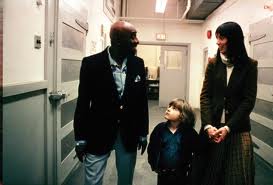
Then there’s the time period, or lack thereof. Danny talks like a child of the 90s while The Overlook uses rotary phones and Dick Halloran dresses like Willie Dynamite circa 1971. I’m confused.


Plus now I just want to rewatch Wilie Dynamite.


But enough bashing of a not necessarily terrible way to spend 4.5 hours. It made Stephen King and most likely, those who believe an adaptation should be a book-on-film satisfied. I can’t imagine it entertaining someone who didn’t read the novel, but as an example of (in my opinion) what an adaptation shouldn’t be.


Also, I spotted a goof (Part 3, flowers moving before Wings comes into frame) and I NEVER spot goofs.


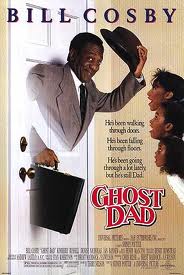
Oh, and the miniseries features a Ghost Dad coda that's way more hilarious than Ghost Dad.


Also, did I mention Danny's stupid haircut?


I don’t think Kubrick’s film is perfect, though I do cite it as a brilliant horror film and even more brilliant, if almost unrelated interpretation of a great read. I also don’t think Garris or King were wrong to revisit the material in their own manner. I just wish they remembered what film can do and actually tried to do it.