Showing posts with label musical. Show all posts

Monday, January 12, 2015

The Music of the Fright


It may have been suggested, at least once or twice, that I’m something of a musical theater fan. Perhaps it’s the stack of Playbills hung on my childhood bedroom wall, the pile of VHS tapes my pals and I used to make in high school featuring us performing Broadway showtunes, or the fact that the best energy boost I’ve ever had in a half marathon is hearing Defying Gravity blasting just half a mile before the finish line.


Yes, I love musicals. I’d probably sell my soul or at the very least, a cat in return for a good singing voice but as I’ve yet to find the right market, I instead comfort myself listening to others. When the world is great--I mean, REALLY great--I find that in a horror movie.

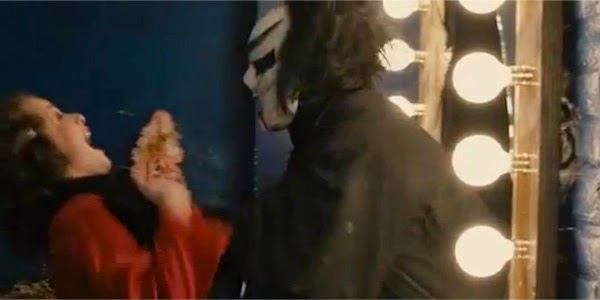
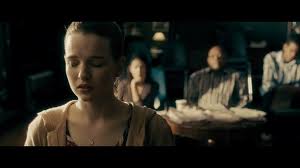
Quick Plot: After a rousing opening night of a new Broadway musical called The Haunting of the Opera (sound familiar?), the leading lady (Minnie Driver, who might have had something to do with that thing that sounds familiar) is brutally slaughtered by a mystery man wearing her co-star’s mask. 


Ten years later, her twin children have grown into attractive cooks at Center Stage, a theater camp run by their mother’s boyfriend and former producer Roger (also, Meat Loaf). Camilla has grown into a beautiful and talented soprano who dreams of following in her late mother’s footsteps, while brother Buddy is still embittered by the entire musical community. 


As a last ditch effort to find some profit, Roger decides to revive The Haunting of the Opera as the summer’s big showcase. Surely nothing can go wrong with such a controversial decision, right?


Written and directed by newcomer Jerome Sable, Stage Fright is pretty much everything I could ask for in a movie, missing only a few evil children and plate of nachos. From the opening text informing us that the movie is sort of based on true events (just like Return of the Living Dead) to the followup that "the musical numbers will be performed exactly as they occurred," I squealed with glee.

(not THAT kind of glee)

This movie was made for me. 

Was it the fact that one song lyric involved a kid getting bullied for singing Sondheim? That the totem poles at this summer camp featured the drama/comedy masks? That one song had the faintest touch of a Jesus Christ Superstar salute? 


I don't know that Stage Fright will appeal to hardcore horror fans or those who prefer, well, another theater-set slasher called Stage Fright. But this film delighted me, and as much as I'd like to think Jerome Sable Inception'ed his way into my dreams to give me exactly what I want, I'll still say that I think this will please you too.


High Points
As someone who has worked backstage in a fair amount of college theater performances, believe me when I say that nothing is more annoying than hearing the actors practice their vocal warmups. Hence, the fact that Stage Fright uses that moment to give us such a juicy murder made me far more happier than it probably should have


The end credits song includes lyrics thanking the audience for staying so late. Then they break into a lecture about piracy. ALL IN ROCK OPERA FORMAT


Did I mention how happy this movie made me?

Low Points
I'm a stickler for detail, so it bothered me slightly that we were never informed who took over for a key actor in the big show. Understudies need to rehearse, you know

Lessons Learned
Altos just don’t understand


The first rule of theater camp: abandon all ye cell phones

You can't change the past, but you can make a musical


Rent/Bury/Buy
Look, I understand that a horror musical with original showtunes might not be for everybody, but good golly was this the film for me. I adored Stage Fright and would eagerly donate to kickstart a sequel. Give me more I say! 

Sunday, June 10, 2012

Wicker It, Just a Little Bit


Writing about the psuedo sequel to my third favorite film of all time is no easy feat, and hence, the weakling inside me is taking the easy way out: I’m excusing The Wicker Tree as a warm-up for whatever Robin Hardy does next.


See, give the 82 year old filmmaker a break. It’s been quite some time since his he last got behind a camera and everybody needs a good warmup.


The Wicker Tree is just a 90 minute yoga stretch.

Quick Plot: Beth Boothsby (fresh-faced Brittania Nicol) is a successful country singing star who just can’t stop warbling about Jesus. She pauses long enough for a goodbye party at her Baptist church, wherein the good cowboys of Texas send her and her fiancĂ©e Steve out to Scotland for a two-year missionary journey to bring Christ to pagans.


I don’t know about you, but I had no idea modern missionaries took European tours. Consider me schooled.

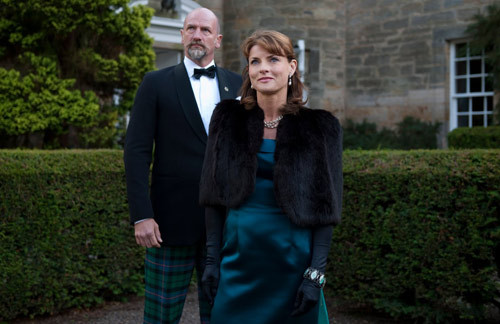
Shockingly enough, those funny voiced redheads don’t really want to hear about dying on the cross. Disheartened by the sound of doors slamming in their pretty faces, Beth and Steve reluctantly accept an invitation to the more rural town of Tresseck, where wealthy power couple Lord Lachlan and Lady Delia Morrison oversee a gaggle of plain folk who worship goddesses and nature.


Tresseck isn’t an easy home for two crazy Texans whose biggest source of pride shines from their promise rings. Beth is able to charm some of the townspeople with her voice, but her preaching never seems to land on open ears. This is especially hard on our country star since she is (gag) a born again virgin, having remade herself into a crucifix wearing angel after hitting it big with her original single, Trailer Trash Love (yes, there’s a music video set in a redneck bar and yes, it’s amazing).


On the other hand, Steve is far more willing to suspend his Christian beliefs for fleshier pleasures. After failing to seduce Beth, he takes a quick liking to local Lolly…mostly because she’s a pretty blond with a cute accent who likes to bathe in the nude and essentially say “Hey, I’d really like it if you came in here and had sex with me.”


And so he does.

See, Cowboy Steve ain’t no Sergeant Howie. Then again, Hardy has also argued that The Wicker Tree is NOT a sequel to his 1974 masterpiece. It’s more a companion piece, a film set in the same TYPE of world that also explores the contrasts and similarities of paganism and Christianity. Or something.


Sigh. It’s never easy to approach a follow-up to one of your all-time favorite films. Sometimes the results are pleasantly odd enough to make it work (Return to Oz) while others just feel like wasteful one-offs unworthy of their names (Starship Troopers 2—though in fairness, Part 3 is surprisingly sly).  Robin Hardy can SAY that The Wicker Tree isn’t a sequel, but why name it “The Wicker Tree” if that’s the case? Perhaps my immediate low point is that the title is positively distracting. Like other Hardy fans who have been following the film’s 4+ year journey through budget cuts and actor injuries, I would have rather sat down to watch a film called Cowboys For Christ and gone from there.

That being said, The Wicker Tree DOES still share some of its predecessor’s charms. The original music isn’t as insanely humful as Paul Giovanni’s catchy Landlord’s Daughter, but some of the songs are quite pretty in a haunting way. Aside from Beth’s Jesus jingles, there’s a striking number sang by a middle aged tavern wench about, as far as I could tell, doing the nasty in the forest.


But the REST of the film…well, it’s there with some great ideas, some truly creepy ones, and ultimately, no solid payoff for its religious buildup. Let’s get spoilery:


Whereas the townspeople of The Wicker Man were making human sacrifices to restore their harvest, the villagers of The Wicker Tree are suffering from a different, equally stirring plague: infertility. As Tresseck is too close to a nuclear power plant, the female population has been unable to conceive for some time. Naturally for a bunch of nature worshipping Europeans, the logical way to fight this is to sacrifice two innocent(ishes) in some extremely brutal fashions, i.e., skin the female and call her The May Queen and tear the cowboy apart to eat with your bare hands. I imagine Hardy is trying to show an extreme case of religious fanaticism to compare to Steve and Beth’s overly fanatical (yet more conventionally accepted) Christianity. But the problem is, what is he actually accomplishing by having the pagans prove to be so brutal?

It’s a tough question and perhaps a second viewing might make more themes clear. The IDEAS are certainly there, but considering how much time is spent on Beth’s conversion from a slutty Britney Spears knockoff to a fully clothed church girl, it’s odd that her character ultimately gets no real choice in or lesson from her awful fate. Perhaps some of you smarter readers who have watched The Wicker Tree can help.


SPOILERS HATH END'TH

High Notes
Not spoiling, but just sayin’: like in The Wicker Man, people die in some fairly horrific manners, all of which are suggested without being deliberately shown. I found it chilling

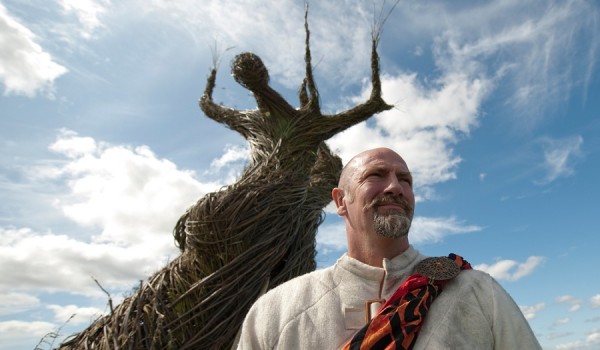
Yes, Graham McTavish's role was supposed to be played by the god that is Christopher Lee, but I still found his self-proclaimed Monty Burnsish millionaire to be an effective villain. Similarly, Nicol captures the perfect essence of an overly devout without much brains Christian princess


Low Notes
Hey, I’m not going to argue with the hypocrisy of Bible interpretation, but it just feels like the script could have pointed this out in a more organic show-don’t-tell way. Instead, we have out pagan characters describing Christian beliefs about the rapture. The execution felt lazy


Lessons Learned
Contrary to common Englishman belief, The Clitoris is NOT an island off Greece famous for its ouzo


Never ask a Christian cowboy to play poker. He’ll probably just spend hours going through each card and explaining what it has to do with Jesus and really, you’ve got money to win already. Eff that dude

Cowboys keep their hats on


The Winning Line
“Where is my bowl of eyes?”
Because, come on: it’s one thing to HAVE a bowl of eyes. It’s a far greater thing to misplace it

Rent/Bury/Buy
It’s hard to know how to recommend The Wicker Tree. If you’re a diehard fan of The Wicker Man (like me), then you kind of HAVE to see where Hardy went next, even if the results are just nowhere nearly as satisfying as you might hope. That being said, there is some beautiful landscaping, weirdly paced horrors, and haunting original songs that make even an ultimately lackluster film still something more special than your average straight-to-DVD genre picture. So put it on your queue for an eventual watch. It won’t change your belief in cinema or fertility goddesses, but it will be something unique.

Monday, March 19, 2012

Monday March Musical Madness: Fame 2009


In case you didn’t know, I think Alan Parker’s 1980 sorta musical Fame is a genuine great film about young artists. When I make a statement like that, I often catch an eye roll or sarcastic comment about how it’s a silly ‘80s dance movie and ancestor to High School Musical.

Then I call my lawyer to get me off yet another murder charge.


Look, I’m not comparing an epic tale of teenage performers to Schindler’s List or Starship Troopers. But I am defending its reputation, which too often gets lumped with lighter later season Glee-type bubble gum fare. Fame is not. There’s abortion, attempted suicide, failure, dream crushing, teen exploitation, illiteracy, and ultimately, no fairy tale rich and famous contracts. It paints a stark but loving portrait of what it’s like to be gifted and driven but plopped in an environment overcrowded with people that might be MORE gifted and MORE driven than you ever thought yourself capable of.


In 2009, the remake warlords released an updated Fame for the 21st century audience. Critical and audience response wasn’t kind, but the sirens of instant watch called and hence, here we go:

Quick Plot: A gaggle of dancers, musicians, and actors line up to audition for entry into the High School of Performing Arts. Like its predecessor, Fame starts with an amusing montage displaying the range of talent on the streets of New York, from one kid’s adorably awful Taxi Driver impersonation to a classic pianist’s easy mastery of a difficult piece.  Once the placard reads “Freshman Year,” we settle on our cast:

Malik, an intense aspiring actor whose hard knocks childhood has closed him off from tapping into his true potential


Joy, a peppy actress who flunks out of school because of her job on Sesame Street 

(no, really)

Alice, the rich dance star who dates bad boys but not in an exciting way


Jenny, the mousy actress who’s boring but white and therefore our apparent lead 


Denise, a secret vocal powerhouse whose strict parents want her to focus on the classical piano

Kevin, a ballet dancer from Iowa who might not be cut out for the big leagues


Neil, a filmmaker-in-training learning that the industry is full of crooks


Marco, a musician whose experimental style mildly ruffles teacher Kelsey Grammar but then never really seems to go anywhere


And a few more pretty fresh faces who I forgot about.

You might have already guessed it, but therein lies the biggest issue of Fame, a film that actually started promisingly before descending into a messy collage of pretty but bland people I just didn’t care about. The decision to approach the film as a true ensemble piece is admirable, but there are simply so many storylines going on that not a single one has the time to become any more than a one-line stereotype. This ain’t Contagion being directed by Stephen Soderbergh. It’s Fame being directed by the guy that mashed together the messy Glee 3D concert movie.


It’s a shame. While none of the kids register along the lines of Paul McCrane’s character actor star-making performance in the original, there’s still clear talent in the new cast. Collins Pennie’s Malik has something of interest behind sparse screentime, while the ridiculously long-named Anna Maria Perez de Tagle has a likable peppiness as the dropout Joy. What’s worse is that *some* of the stories have genuine potential but not a single one gets paid off.


Take for example the character of Kevin, a fresh-faced dancer whose mother runs a Midwest ballet school. Teacher Bebe Neuwirth (fine, as always) is hard on him, recognizing his talent and effort but not ignoring the fact that his solo technique won’t get him work in the competitive world of professional dance. In one of the film’s best and easily most honest scenes, Newirth denies Kevin a recommendation because she simply doesn’t believe he should pursue dancing as a career. This is really the only storyline that follows the same beats as the original film, and yet when Kevin inches toward a moving subway train, the depth and punch of attempted suicide just feels forced. This might be the best story IN Fame, but because it’s spread out in snippets and pushed aside for the dullest romance in recent teen cinema history, how are we supposed to take it seriously?


So about that dull teen romance: it stinks. For some reason, Fame seems to think that it needs to ultimately focus on a pretty white ingĂ©nue. Kay Panabaker plays Jenny as a boring young girl who starts dating a slightly less boring young man, has an uncomfortable encounter in a casting trailer that almost insults Irene Cara’s heartbreaking nude audition gone wrong, then sort of gets back together with now really boring boyfriend in time to sing (terribly) at graduation. We never actually see her give anything near a great performance that makes us think “yes, let’s see her shine!” Sure, Maureen Teefy’s Doris wasn’t the most likable onscreen presence in 1980, but she had genuine pluck and a real journey that let us see her grow from freshman to senior year. Jenny is a surface-level character who somehow steals the most screentime and in the end, the film is all the worse for it.


I could go on. I could, so I guess I just WILL.

Remember how in the original, we had a snooty ballerina in an abortion clinic after fooling around with a straight-from-the-streets bad boy? Here we have Alice, who dances well and has rich parents so she must take an interest in a minority student from the other side of Central Park. So she points him out to her parents at dinner, says he’s dangerous and she likes it, then goes offscreen for a good hour, and in the final wrapup of the characters, she breaks up with him to take a role in a water ballet show. Now I’m not saying that we NEEDED another abortion, but were we supposed to be invested in a relationship that barely gave us its lovers IN THE SAME SCENE?


Much like Glee, Fame’s cast is (for the most part) musically talented but underserved. As Denise, Naturi Naughton possesses a pretty incredible voice that does surprising justice to Cara’s Oscar-nominated Out Here On My Own. But the story insists on making her character a dull wallflower who sings modern rap with her pals while following her parents’ more traditional dream path to Carnegie Hall. This conflict is perfectly fine for the film, but it’s handled terribly. For one thing, we don’t ever really care about her partners’ stake in the group so when a big name producer tells them he’s only interested in her, are we really supposed to be sad? Especially since Denise has thus far shown no actual stage presence to be believable as the next Mariah Carey?


You get my point.

At an oddly chosen 100 minutes, Fame simply bit off more than it could chew. There are too many characters with terrible division of screentime between them. Director Kevin Tancharoen can stage a fine musical performance or montage, but he clearly doesn’t have a grasp on Allison Burnett’s wannabe epic script. This is a film that clearly came from good intentions but had absolutely no idea how to make them a reality.

High Points
As I say for the similarly flawed beyond possible repair Smash, it’s always nice to see a film embrace and exploit its NYC setting to the extreme

Michael "Brianna Barksdale” Hyatt alert! Wire fans rejoice!


Low Points
Aforementioned confusion of the film’s script and character weight. Seriously, are we aware that Panabaker’s ABC Family Channel-level romance got more attention than a suicidal dancer AND character dropping out of HIGH SCHOOL TO BE ON SESAME STREET???


Odd Point
Part of what made the original Fame such a groundbreaking film was its portrayal of a realistic gay teenager learning in his most awkward years who he was. This Fame has no acknowledged gay characters, though I think most audiences (self included) would certainly assume things here and there. On one hand, maybe it’s a positive sign that a character can just be gay in a teen film without it being an issue. On the other, are we missing a prime opportunity to explore that in a mainstream film? I dunno, I just work here.


Lessons Learned
Bach was a stubby little German guy who wore a wig and died 1000 years ago

If you want your child to graduate high school, do not even THINK of signing release forms 
for her to be employed by PBS

The theater is not a place for cowards (just narcissists)


Rent/Bury/Buy
For the first forty minutes or so of Fame, I was genuinely excited and eager to rebuff the critical sentiment that it was a dud. Then the film decided to do everything wrong. I’m fully aware that a 1980 movie about teenagers might show some signs of aging, and yet I truly believe Parker’s 32 year old film remains far more relevant to today’s youth than this oddly patched together yawn. If you NEED to watch a talented teens movie with more current slang, at least start with the earnest Center Stage (I’m not kidding!) or the giddily wonderful Step Up sequels (skip the first one, please). 2009’s Fame is a not dreadful watch for a random lazy day, but don’t tune in expecting any of the heart so rich in the original. It’s there, and that is that.

Monday, March 12, 2012

Monday March Musical Madness: Carrie


When Carrie: The Musical debuted on Broadway in 1988, it lasted just six performances before its financial backers pulled the plug. It was an $8 million investment, the Ishtar of the theatre world that despite sold-out early runs, would not even try to survive amid the venomous reviews that would make everything written about Spiderman: Turn Off the Dark feel like a soft fluffy blanket.
There was no cast recording ever released for the original production, although star Betty Buckley (who also appeared earlier in the Brian DePalma film) would go on to use one of its songs in her concert performances and discuss the show’s missed potential on an extra for the special edition film DVD release. Some grainy 1980s bootlegs have occasionally surfaced on YouTube, but save for a popular coffee table book about Broadway flops, the musical seemed destined to remain an urban legend to 21st century audiences.

When I learned that Carrie was being revived by the MCC Theater for the Off-Broadway Lucille Lortel Theatre, there was no chance in Castle Rock that I would miss it. With my cell phone turned off and fella bravely at my side, I ventured.
If you know the story of Carrie, then you know the story of the musical: Religious Teen’s telekinetic abilities blossom with her first period, while the Mean Girls tampon-bomb her and Nice Mean Girl feels bad about it. Nice Mean Girl enlists her Nice Boyfriend to take Religious Teen to the prom. Meanest Mean Girl dumps pig’s blood on Religious Teen just as she’s crowned prom queen. Mayhem ensues. Crazy Mom goes crazier. One survives.

A lot of theater audiences mock the very idea of turning a ‘70s horror novel into a musical. I think the potential is actually quite strong, since Carrie is a fairly operatic premise, with plenty of high drama character arcs that easily lend themselves to song. The risk, of course, is that if the material is taken seriously and DOESN’T work, it’s such a grand miscalculation that will immediately damn it as a more obvious flop than say, a musical retelling of Jane Eyre.
Following the colossal failure of Carrie’s first run, why revive it? I think the answer lies in the extreme curiosity of people like myself or Patrick over at the Scream Queenz podcast (check out his ultimate Carrie episode here). The same people who forked over a few bucks to see Hannibal Lector pirouette in Silence: The Musical might be eager to watch Mrs. White raise a knife over her blood-stained daughter’s middle.

We’re even more eager to laugh at it.
But see, just like its namesake, Carrie doesn’t want to be laughed at. It wants to move you, moisten your eyes, teach you about bullying and send chills down your spine without the help of air conditioning. This isn’t Silence or Evil Dead damnit! This is SERIOUS!

Which would be fine if the show was close to being great.
It’s not. It’s just...not.
By no means is Carrie the worst musical ever made. Come on folks, I’ve seen the woefully misguided Women On the Verge of a Nervous Breakdown, something even Patti LuFUCKINGPone couldn’t save. I was one of the very, very very very very few free ticket holders to get a peek at Jackie Mason’s painful Laughing Room Only, a show that ended its first act with a ten minute song about how Starbucks is confusing to old Jewish men. Carrie, you got nothing on that.

On the other hand, I’ve also been lucky enough to cry my eyes out at Ragtime and get the urge to kill a president seeing the incredible Assassins. Carrie won’t inspire me to commit a felony, nor did it crank up my tear ducts or ignite my glee on a ‘is this REALLY happening’ Love Never Dies level. Nope, it will do nothing because it’s a perfectly mediocre and forgettable show.

C’mon! It’s CARRIE! The MUSICAL! Mediocre is a dirtier word than dirty pillows.
The music is...okay. Most of the high points happen during Carrie and her mother’s tense duets, and while the melodies are haunting, the intensity isn’t as powerful as it should be, especially when Dean Pitchford’s lyrics might as well ask the audience to just fill in the rhyme with whatever is the easiest matching word. Molly Ranson has an incredible voice and likable presence as the awkward Carrie, but she never quite registers as the stomped upon wallflower abused from every side. Broadway veteran Marin Mazzie (a Ragtime star herself) gets some of the best musical moments as Mrs. White, but there’s no real sense of the horror she’s capable of, making her big final moment more laughable than scary. I can appreciate the idea of toning down Piper Laurie’s iconic crazy to find some more humanity in the character, but ultimately, the stakes just never get high enough.

The rest of the cast does little with little. While the ensemble hits their mark and pop admirably, Christy Altomare’s Sue Snell has little spark. It doesn’t help that the musical incorporates an awkward interrogation style for Sue to speak directly to the audience, telling us everything that did and will happen and what it all might mean. This element is obviously taken from the novel (and to worse extent, the 2002 television remake) and while one could see how it’s supposed to lend commentary on the story, it’s used so poorly that it ends up feeling like a theater game the writers forgot to cut after the workshop.

So what DOES work? David Zinn’s set design primarily. The simple look focuses on a pair of gymnasium doors, an ominous and surprisingly powerful foundation that does more to foreshadow the impending horror than all of Sue’s “We didn’t know what would happen!” pleas clumsily planted in the first act. Similarly, Kevin Adams’ lighting design does the job of covering the prom queen in pig’s blood in an effective way. Unfortunately, the story itself rushes through the climax as if trying to get its audience on the next train. Neither Carrie’s joyful crowning nor her rage fueled massacre is given any proper stage time, meaning we never feel the highs of her glory or real motivation for her crime. The attack ends in less than a minute, wiping all the characters out without prejudice. While I wouldn’t expect a small-scale musical to expand Carrie’s hunt outside of school grounds, the decision to give head mean girl Chris the same end as her lackeys and randomly southern gym teacher feels lazily anticlimactic.

I don’t regret seeing Carrie because, well, I’m me and would have felt my life unlived if I’d missed it. That being said, the audience behind me debated leaving at intermission, while a couple sitting to my left right openly guffawed at Mrs. White’s final gesture. It’s not a good show, nor is it so bad it’s Love Never Dies good. For me, that’s a far bigger crime than bloody school pranks or electrocuting the student body.