Thursday, September 3, 2009

Franchise Fun


With the recent success of The Final Destination and the subsequent announcement that Halloween 3 (or 11, but who’s counting?) will be made, it seems the era of the horror franchise is being resurrected like, well, a Romero buried zombie digging his way out of a wormy grave. While the Jigsaw readies his costume for this year’s trick-or-treating and the behemoths of the 80s sharpen and shine their knives for glossy reboots, I figured it was time to take a quick glance at the current horror series returning to theaters.

Saw

Status: Monopolizing Halloween for the past 5 years, this infamously R-rated series will make its sixth outing next month
Killer Key Features: twist ending, gravely voiced villain, bicycle riding puppet, elaborate traps for morally flawed character actors, MTV quick editing
Fresh Faced Pre-Fame Victims: The cast tends to be composed more of dimming stars from the 90s than ingenues, but do credit the original for a heavily featured pre-Benjamin Linus, Michael Emerson
High Points: Whether it suits your taste buds or not, few could deny the impressive execution of the first film’s big reveal; Part IV breathed a little new life into the series by featuring the first likable hero
Low Points: The weakest work of Cary Elwes’ career; an increasingly mean spirited attitude most prominent in Part III; the convoluted plotting of Part V to essentially do little more than set up the next installment


Jaws Jump: When a VH1 reality show plays casting agent, the signs aren’t good
Influence: Credit does go to Saw for making studios allow their horror films to maintain hard R ratings, but providing an opportunity to smart fare like Hostel has also sullied horror’s reputation with messy drudge like Captivity. Whether you get off on torture porn, roll your eyes at Jigsaw’s exploits, or believe (as I do) that Saw is a decent, if underwhelming, collection of quick thrills, it certainly has made a lasting impression on modern theatrical releases.

Final Destination

Status: Producers have claimed that the recently released The Final Destination is indeed grammatically honest, but its huge opening weekend could certainly cause Death to overlook a few more accidents, only to then do some makeup work with wacky yet non-supernatural methods that would make Rube Goldberg seethe with envy 
Killer Key Features: massively violent opening scenes, luckily educational Googling, the number 180, sharp objects impaling their way through eye sockets, gentle breezes, 
Fresh Faced Pre-Fame Victims: Sean William Scott, pre-Heroes Ali Larter
High Points: Part 2’s opening pile-up remains one of the most terrifying car accidents in cinema history; The tanning bed dual homicide cleverly gave Part 3 a macabrely funny kick; Part 4’s NASCAR collapse captured the terrifying possibilities of lax building codes and frantic mobs
Low Points: A few two many explosions in the otherwise favorite Part 2, the general lack of depth to leads in any of the films
Jaws Jump: A 3D gimmick is certainly one way to deliver the same formula while still putting popcorn stained bottoms into the seats


Influence: On the surface, 1999’s Final Destination seemed like any other outing with pretty people in peril but due to high production values, a great concept, and an excellent sense of self awareness, each entry has packed enough humor and scares to leave audiences--especially the dedicated horror crowd--thirsty for more. While not a huge cash cow in the Saw league, the series has been profitable enough and yet thankfully, the creators have been responsible to not rush into each production. I only wish more franchises would take a few lessons from Death’s messy mistakes.

Halloween

Status: Despite a disappointing opening weekend, a third/eleventh film (depending on your numbering system) is slated for a summer 2010 release, this time sans two-time director Rob Zombie 
Killer Key Features: October 31st, slutty babysitters, very large kitchen knives, trenchcoats, scores featuring heavy use of minor keys
Fresh Faced Pre-Fame Victims: Jamie Lee Curtis making her mark as the nerdiest scream queen; Paul Rudd fighting a satanic cult in the best-forgotten Part VI


High Points: Carpenter’s masterful camerawork and even more impressive original score; Part III’s attempt to reinvent the franchise bombed but has since developed its own following; Rob Zombie’s first half of his reboot nearly succeeds at innovating a tired genre
Low Points: Much like the fifth F13, Halloween V cheats the dark ending of Part 4 and follows it up with nothing worth watching; Tyra Banks’ offscreen death and Bustah Rhymes mean kung fu moves in the Big Brother-meets-the-Internet dreck in Resurrection; Zombie’s messy followup not knowing what kind of film it wants to be
Jaws Jump: The Halloween series is one of the most uneven of any major franchise and is best separated in pairs of two, where every other entry tries to find a new hook. Chapter 11 will finally resort to what feels like a last resort: 3D
Influence: The 1978 Halloween is, in many ways, the birthplace of the modern slasher, expanding on Hitchcock’s Psycho with a careful borrowing of 1974’s Black Christmas. Norman Bates may be the grandfather of 20th century villains, but consider Michael Meyers as the oldest child that had to go out and pave the way for others to follow. 

Nightmare On Elm Street


Status: The upcoming remake will mark Freddy’s 9th outing to Elm Street, but for the first time, a new hand (Watchmen’s Jackie Earle Haley) will don the rusty glove for an April release.
Killer Key Features: Christmas sweaters, boiler rooms, nightmares, use of the word ‘bitch’, surprisingly abundant availability of “stay awake” pills in typical households
Fresh Faced Pre-Fame Victims: Patricia Arquette, Laurence “Larry” Fishbourne, Breckin Meyer, Jack Sparrow
High Points: Tina’s savagely violent wall death in the original; the surreal imagery of Dream Warriors; Part 2‘s underrated gay analogy, undeservedly panned by just about everyone; the Kafkaesque kill of Part 4; death by hearing aide in Part 6
Low Points: Freddy’s open mike night comedy routines in Parts 4-7; lazy character development; the smart idea but boring execution of Wes Craven’s New Nightmare


Jaws Jump: The entrance of a child actor to any film can be detrimental. When said actor is put in a potato sack and cast as the unborn spawn of a heroine and/or demonic dream monster, the results are enough to make Part 5 the real beginning of the end
Influence: Did YOU have a Freddy notebook for math class in the first grade? Quite possibly, because while Michael gets the respect and Jason has the numbers, it was Freddy, with his janitor-meets-Sinatra style, that made merchandising a horror film a new market in itself

Friday the 13th

Status: The only franchise here to come one film behind The Land Before Time, a sequel to the ahem, reboot (if merely calling what’s simply another sequel a ‘remake’ means reboot, that is) is already in development
Killer Key Features: machetes, boobs, hockey masks, uptight surviving females, woods
Fresh Faced Pre-Fame Victims: Kevin Bacon, Crispin “So You Think You Can Dance” Glover, Corey Feldman, Kelly Hu
High Points: The twist of Part 1; the burlap sackhead of Part 2; some kickass and completely ridiculous kills in Jason X


Low Points: Aside from Parts 1-12, minus 11? Part V had a particularly sleazy haze, while my personal favorite (as a guilty pleasure), Jason Takes Manhattan, is laughably horrendous (yet wonderfully worth a watch for reasons I can’t explain in just a few lines)
Jaws Jump: By Part VII, Jason required a gimmick so telekinesis, tourism, soul-jumping, outer space, and the world’s best almost buddy comedy followed
Influence: Like Freddy, pop culture hasn’t quite been the same since Jason sliced  through his first non-virgin. The massive juggernaut that was (and still is) Friday the 13th can’t be dismissed. Browse through any 1980s catalogue of horror movies and note how many feature final girls, masked villains, and tepid sex. Jason wasn’t necessarily an innovator, but his persistence--both in the story and as a franchise--continues to fester its way into modern culture. 

...of the Dead


Status: After the ho-hum box office and fan-fueled distaste for George Romero’s Diary of the Dead, America’s favorite ponytailed director announced he would continue his series with a sixth film, Survival (not surprisingly) of the Dead.
Killer Key Features: shambling corpses, wooden acting, satirical undertones that become progressively more obvious
Fresh Faced Pre-Fame Victims: Tom Savini, genre favorite Ken Foree
High Points: the super savvy observations of 70s consumer culture in one of the greatest horror movies of all time; everything about Night; Day‘s opening shuffle


Low Points: performances that shoot dialogue out like BB pellets in Day; Land’s incongruous crispness; Diary’s stiffness
Jaws Jump: Although Bub is a lovable lug of a corpse, the humanization of the undead was continued a little too obviously in Land, which in turn made the return to newness of Diary feel that much more stale
Influence: Eh, nothing special. Just responsible for inspiring a few hundred zombie films, musicals, books, video games, comic books, Facebook applications, rock musician monikers, and...you get the point

Scream

Status: Ten years after the mild success of Scream 3, announcements have been made detailing the development of a fourth entry. Writer Kevin Williamson is working on the script, while a cast is mysteriously being collected. As of now, Courteny Cox, David Arquette, and Jamie Kennedy (because what else has he got to do?) are scheduled to return, with Neve Campbell’s presence still in the air.
Killer Key Features: trendy haircuts, teenagers with SAT acing vocabulary, stabbings, impressive cameos, squinting
Fresh Faced Pre-Fame Victims: While most of the leads were already semi-famous for television work, the series did help to give early breaks to Liev Schreiber, Portia De Rossi, and Emily Mortimer


High Points: The original’s opening was a tribute to 80s horror fans who knew the answer to Ghostface’s trivia; Rose McGowan’s garage-squished death was refreshingly visual for a studio film; Part 2’s script, with its witty cinema references and sequel-savvy wit
Low Points: Part 3’s overly Hollywoodizing felt pretentious, while most of the humor landed flat; the sparing of Dewey not once but thrice was clearly a cowardly plot move inspired by saddened test screening audiences
Jaws Jump: The attempts to tease us with a supernatural spin in Part 3, along with the convoluted, impossible to get ending, showed that the series was clearly in need of some new style
Influence: With theatrical horror undergoing a quiet hibernation in the mid 1990s, Scream successfully revived the slasher genre by welcoming new audiences while saluting loyal fans. Sadly few followups left much of a lasting impression on old or new audiences (although Final Destination and The Faculty maintain some well-deserved love). Young actors previously employed with the WB network (and currently for the CW) should certainly make daily blood sacrifices to Kevin Williamson for providing reliable employment opportunities for years to come. 

Personally, I prefer more unique stand alone films, but tradition is tradition and we all know we’ll fork over our cash for a few (or most) of these upcoming installments. Share which ones you’re excited for and which need to go the way of the Wolfman--oh wait. Scratch that. Just leave some comments.

Tuesday, September 1, 2009

Pretty In Blood


For better and worse, Wes Craven’s Scream was a landmark film for horror cinema. The 1996 sleeper renewed a mainstream interest in slashers, a tepid love affair that had basically laid dormant (in spirit) since Freddy pondered fatherhood and Jason tasted New York bagels. Well-versed genre fans chuckled at Kevin Williamson’s cracking self-aware dialogue and classic references while a new generation of Noxema-using young people hit the mall in search of similar fare. (As for me? As my 14 year old friends got lost in Skeet Ulrich’s big browns and snidely mocked Neve Campbell’s Kmart wardrobe, I ceased upon the opportunity to show “scary” movies at previously dull slumber parties; sadly my fellow eighth graders did not appreciate Mothers Day as quite the tongue-in-cheek comedy it was).


Most importantly, the echo of Scream inspired--well, that may be too artistic a word considering the result--studios to throw mid-ranged budgets at a slew of slashers starring fresh-faced WB stars (aw, a moment of silence please). Some, like the convoluted but not irredeemable I Know What You Did Last Summer, achieved decent success and birthed unfortunate Brandy-based and excessively wordy sequels, while others--like the dreadful Disturbing Behavior, starring a pre-Mrs. Cruise as a Goth girl--had shorter lifespans than a Tomogatchi pet in an emergency room full of Beanie Babies. Or something.


If I learned one thing this week, it’s that Scream’s effect was airborne and made its way across continents to the Land Down Under. Cut, a 2000 slasher with meta film intentions, is clearly surfing on the Ghostface-d wave. It utilizes a rubber-faced killer, cinema savvy victims, and lazy but affectionate film references ranging from to Shock Corridor to Jules and Jim.


Quick Plot:
Cammy from Street Fighter (aka pixie pop sensation Kylie Minogue) is a low level director trying to finish a mediocre horror film--a daunting cast when your lead is a divaliscious Molly Ringwald and your villain has the IQ of a pea. After insulting her male lead, Minogue meets her poorly edited end, leaving Ringwald to stave off the killer and rise to the minor stardom allowed to second string soap opera actresses.


Fast forward thirteen years to the Australian version of Scream 2’s film class. Budding director Raffi Carruthers and ambitious producing major Hester Ryan decide that the best way to ace their senior project while stepping into the public eye is to complete the infamously cursed slasher film, much to the brooding consternation of their mentor who has his own connection to Hot Blooded (the unfinished movie, sadly not the Foreigner song). They amass a blandly attractive crew, fly over former star Vanessa Turnbill (Princess Ringwald) in coach class, and roll the old reels to the original location of the ill-fated shoot. Will a superstrong but silent unidentified masked man pick off the snarky Aussies one by one, replacing prop garden shears with sharp weapons of decapitation? If you have to ask, you’re reading the wrong blog.


You won’t find humor up to Scream par, nor are the scares worthy of other on-set horror like John Carpenter’s Cigarette Burns. Cut, however, is not a total waste of time, particularly if you happened to have been raised on 80s slashers. I was reminded of films like Popcorn, which also had a dedicated spirit devoted to its own genre. The effects are passable enough, though the story could have used some sort of invigoration. One of the biggest barriers while watching a film like this is the responsibility you constantly feel to identify the killer before the plot does it for you. This isn’t necessarily Cut’s fault because (HELPFUL SPOILER) the villain is not among the introduced cast. Unfortunately, we don’t discover this until too late, so much of our own viewing time is wasted with unnecessary theorizing. Then again, that process may be what keeps films like this from boring us to our own bloody deaths.


High Points
Watching Ringwald channel her inner bitch truly is a joy


The decision to make the creative artists of the film female is a nice and refreshing touch, especially since it’s not overly pushed as being revolutionary


Low Points
While all the young actors are likable enough, none leave any sort of lingering impression or cause us to actually care about their fates


A minor character revelation is supposed to do something for the action, but once revealed, it’s never revisited and feels like a late attempt to give unneeded substance to a lite film


Lessons Learned
It’s hard to scream without a tongue


Stunt drivers are always expected, even when the only required driving is out of a driveway


Throwing garden shears is surprisingly easy


Today, hearing dialup onscreen is as quaint as watching the Amish churn butter


Rent/Bury/Buy
About a month ago, my brother texted me that he was in a discount store that had a bin of DVDs on sale for $2.50. I hadn’t heard of Cut, but a quick sneak on IMDB during work hours, along with the very presence of Ringwald at a rather unpredictable point in her career, was enough for me to approve the sale.


At that price, it’s hard to go wrong with any movie, much less a decent, occasionally clever slasher with an earnestly positive attitude about it. This is ultimately one of those unoffensive, but uneventful films that doesn’t really deserve your searching energy, but won’t hurt you when viewed in the background of a spring cleaning or miniature toy village assembly (I dunno, what DO you people do with your spare time?). Fans of 80s slashers will get a soft-toed kick out of its retro style and Rinwald devotees should revel in her diva performance. The effects are above par and the gore, though not extraordinary, doesn’t play chicken. For those horror lovers okay with the occasional imitation brand servings, give it a low expectation intentioned try. For the others, delve into the 80s and find something else.

Sunday, August 30, 2009

THIS Is How You Make a Franchise


Next to the adventures of one Mr. Charles Lee Ray, Final Destination may very well be my favorite horror franchise of all time. Part of it is a personal connection, as unlike the mixed but marvelous Elm Street series, I’ve seen each of Death’s installments on the big screen with low expectations. The first and probably ‘scariest’ entry opened with the best plane crash since Alive (despite being in poor taste by using the same name and setup as the ill-fated TWA Flight 180, but hey, go Long Island-set horror!). Part 2 featured one of the greatest car accident scenes ever put on film, and the roller coaster gone amok opening of Part 3 has made many a carnival goer stick to the bumper cars. More importantly, each film knows what its audience wants--creative deaths, macabre humor--and delivers it with drunkenly giddy spirit.


The Final Destination--which I pray to the Grim Reaper is just an excuse to not smack a 4 on the title--is the movie you expect, and in a rare instance, that’s a most fantastic thing. Let’s face it: every Friday the 13th, save for Parts IX and X, followed an identical formula right down to the kill styles...much like all four of the Final Destinations. And yet, compare the by-the-numbers energy of filmmaking in any Jason round with the kinetic movement of Final Destination and you get a perfect example of what makes a good and lasting film franchise.


Quick Plot: A quartet of well-spoken young pretty people attend a NASCAR race, along with an array of rednecks whose accents somehow exist in the same town. Clean cut Nick is hit by a gentle brush of wind--never a good sign in a horror movie--followed by a nightmarish vision of a racing accident that spews through the so-secure fence and into the crowd, sending sharp things into bellies, debris on top of heads, and panicky families stomping over each other to reach the exit.


Anyone whose seen one of the other joyfully twisted Final Destination films knows that little Nicky will snap out of his CGI’d dream in time to save his friends and a few stereotypical bystanders (one is actually credited as Cowboy; another, played by The Signal’s not Simon Peggish Justin Welborn, is listed as Racist). What follows, of course, is the unseen Grim Reaper grouchily working overtime to knock off the wrongfully surviving characters in increasingly wacky ways.


The trailer gives away a few situational deaths, but director David R. Ellis (he who helmed the enjoyable first sequel) really does provide an engaging show that still packs a few surprises. Nods to the earlier films are littered throughout with care, from the opening credits sequence to the Clear Rivers Car Wash. The cast is serviceable, and while none are worthy of Oscars or People’s Choice Awards, the core creates sympathetic characters that we can mildly care about.


High Points (aside from the entire 80 minutes)
There’s a nice seize the day moment late in the film that helps to make us actually care about the final scenes of suspense


A late plot element featuring a second large-scale disaster is a nice way to shake up the formula we’ve come to rely on in past films


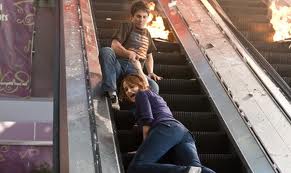
Some of the choices for vicious machinery felt especially inspired in a I’ve-always-been-slightly-afraid-of kind of ways. Escalators, car washes, and pool drains are certainly ripe with potential. Should there be a 5th trip, I’m crossing my fingers for a revolving door kill.


Low Points
Aside from the fantastic opening, the 3D is never really utilized in an innovative or even fun My Bloody Valentine-ish way


Lessons Learned
In a pinch, tampons make effective--and adorable--ear plugs


European travel guides are big on highlighting local attractions with artistic zombie hand photographs


Babbling is not encouraged when crossing a busy street


Binoculars are an excellent tool for smuggling alcohol into dry events


Velcro really is the best invention of the 20th century


See/Skip/Sneak In
Despite the disturbingly cheerful 9-year-old sitting two seats away from me, I had a blast with this film. It’s too early to call it the best in the fairly young franchise, but any movie that keeps a sick smile on my face for 80 minutes is definitely worthy of a full price ticket. My one complaint is that the 3D is hardly overwhelming, so those living in 3Dless towns can still enjoy the film without shelling out $4 for disposable glasses and flying object imagery. Best enjoyed with popcorn and a sense of humor.

And This Is How You Make a Mess


Like a good chunk of current horror fans, I rank The Devil’s Rejects as one of the best-made genre films of the last ten years, consider House of 1000 Corpses to be an obnoxious but not irredeemable scrimmage in filmmaking, and find the opening half of the Halloween remake to hold a pumpkin full of potential that gets squandered in the rushed second half. The news that Rob Zombie would be following up his 2007 film with a sequel that he once vowed to never touch was odd, but not unwelcome. Maybe, I thought, he needed to get the reboot homage out of the way to find his own vision for Michael Meyers.


Well. Perhaps he did, but that doesn’t mean it works. Halloween 2 (thankfully NOT called H2 in the actual credits) is, like its predecessor, an ugly, occasionally jarring, often annoying, and ultimately chaotic exercise in grisliness. It’s far more interesting than lackluster fare like the latest Friday the 13th or The Hitcher remakes, but ultimately, even the 2 hour running time--filled not in small part by quick shots of fake breasts, blasting music cues, and somewhere around 1872 uses of the word ‘fuck’--leaves us with a rough and confusing film without much to like.


Quick Plot: One year after surviving the return of Michael, Laurie Strode (the now more tolerable, if not quite sympathetic Scout Taylor-Compton) continues to be haunted by nightmares and bad fashion sense. Meanwhile, Dr. Loomis (the always reliable genre stalwart Malcolm McDowell), is thriving as a minor celebrity about to release his second book detailing the Haddonfield attack. And Michael? Well, he apparently woke up somewhere that contains Rob Zombie style hillbillies and has been trekking across the country/state/town/universe (it’s never clear) slaying anybody that gets in his way of reuniting with lil sis. For company, he is occasionally visited by mom Sheri Moon-Zombie dressed up for Halloween in a dime store ghost costume and leading a white horse through snow. (For the record, Zombie has adamantly stated there will be no Part 3--which he also did regarding Part 2--but if there is, I’m dying for it to feature a showdown between Moon’s Pegasus and Brad Dourif on a black stallion).


Also returning is Danielle Harris as the healthy-minded Annie, a far more enjoyable presence compared to Laurie’s new slutty goth friends. In typical Zombie style, other veterans pop up for random cameos with mixed results. Eventually, Michael comes home, Laurie learns some secrets, and we try to figure out what the hell is going on.*


One of the reasons I’ve always preferred Ebert to Siskel is that Ebert reviewed a film for its intended audience, while Siskel would criticize its plot for not being the direction he would have chose. At this point, I’m starting to think my issue with Rob Zombie’s Halloween series is not necessarily his filmmaking, but the tease of character development he’s now given us twice. I was intrigued by the young Michael Meyers as a natural born psychopath with a soft spot for his mother and baby sister, and therefore, I’ve been nothing but disappointed with Zombie’s decision to fast-forward through adolescence and jump into Meyers, now a 7 foot tall indestructible killing machine. As a fan of Chucky, I’ve never had issues with the abuse of realism of horror, but I don’t understand how or why someone with as much talent as Rob Zombie would start Michael out as a person and suddenly transform him into a demon. I don’t want a Part 6 style supernatural explanation, but it feels, once again, like Halloween 2 wants to explore Michael’s psychology but can’t quite shake the limitations of making a simple and grisly gorefest.


High Points
Brad Dourif clearly holds a special place in my heart, and here, he dutifully carries out the role of a guilt-ridden sheriff and ends up being the most sympathetic character in the bunch


Casting Margot Kidder as a psychologist is all sorts of ironically fun


No spoilers here, but one of my favorite performers--goodness no, it’s not Chris Hardwicke--makes a stellar cameo beside McDowell


The final shot is quite haunting, but see my spoiler rant below for more explanation*


Low Points
One of the most effective aspects of The Devil’s Rejects is how truly terrifying scenes take place under the hot sun, so it’s quite disappointing to see the majority of Halloween 2 occur in the poorly lit nighttime


While I enjoyed McDowell’s performance, his entire storyline felt like plot filler--especially considering its thin resolution


Zombie has proven before that he can compose a great shot, but here, he randomly chooses scenes to make artistic. As a result, these slow-motioned moments feel pretentious and out of place, while the rest of the filming just looks ugly


Lessons Learned
Post traumatic effects of surviving a nightmarish chase with a giant killer may include developing a goth persona, not wanting to clean your bathroom, and building an impressive tolerance to hard liquor


Illinois is home to the new Chris Hardwicke talk show, conveniently located ten minutes from Haddonfield


If you want to survive a Rob Zombie film, never work in the sex or stripping industry


Black-and-white cartoons are known to inspire vivid nightmares


Another word for a Dr. Frank-N-Furter Halloween costume would be “chick dressing up like a dude who wants to be a chick.” I guess someone did not obtain the rights to the Rocky Horror Picture Show


Jewish people use the phrase ‘kosher’


D-E-A-D spells not dead


See/Skip/Sneak In
Sigh. Fans of Zombie’s first Halloween will certainly want to check out this installment, and some may even enjoy it more. The Saturday night audience I had the displeasure of sitting with hardly seemed impressed at the conclusion, although they certainly seemed jumpy throughout. Despite my fairly negative review, I wouldn't want to discourage anyone from giving Halloween 2 a chance if he or she appreciates this kind of roughness onscreen. Just remember to stop by with some comments on your own take. I'm incredibly curious to hear other thoughts on this installment, especially as word of mouth contains more expletives than the film itself.


**SPOILERS**
**SPOILERS**
**SPOILERS**


My understanding is that Laurie has simply snapped by the end, but my friend and I were both considering the fact that maybe she was the killer all along. The last few kills are committed with no witnesses. The cops can’t get a shot of Michael. The early murders have nothing to do with anything else happening onscreen and therefore could have simply been fantasies of a pre-aware Angel Meyers. If our theory was right, I’d have more respect for the film; at the same time, I’d also be annoyed that Zombie couldn’t commit to that idea. Either way, the ambiguity--and there’s a good chance dear Erica and I are the only ones that felt that--just seems, like the rest of the film, a big old mess.


**END OF SPOILERS***

Thursday, August 27, 2009

Marcia Marcia Marcia!


It must be hard to be the ugly twin. Humans are insecure enough without the constant reminder that someone with all the same potential is using it in a better way. Likewise, Hollywood is often prone to birthing a pair of fraternal films that share a unique or timely concept. Because us audiences are generally unable to tell Bill Paxton apart from Bill Pullman, the very idea of similarly plotted films often feels cruel and intolerable, thus dooming one to certain box office death. We’ve seen it in the art houses when the mighty Philip Seymour Hoffman’s Capote slew poor little Toby Jones’ Infamous. and we’ll soon be served with two dueling helpings of Sherlock Holmes. In terms of genre cinema, here are a few examples of double features and some thoughts on how time has aged them.

1996: Independence Day / Mars Attacks
Connection: hostile aliens, ensemble casts, big budget
With the economy booming and humans enjoying themselves way too much on that new toy called the Internet, the film gods looked upon us and decided the world needed a serious beatdown. Aliens of all sizes were lining up to do some damage and while I hate to project a stereotype on any species, everybody knows that extraterrestrials do not respect the rules of the queue. The long-legged villains of Roland Emmerich’s Independence Day naturally took the lead over Tim Burton’s goofy little bobbleheads by premiering on its namesake holiday (hear that, Rob Zombie?). The July 4th opening famously cemented Will Smith’s Uncle Sammish reign over the start of summer, while Mars Attacks thudded into the Christmas Season. Whoulda thunk seeing the world vaporized by country music hating bug-eyed gremlins wouldn’t be popular with the mall-going December crowd? 


13 years later... While Independence Day has racked up its share of well-deserved criticism (golden retrievers with great timing, Harvey Fierstein's gravely whining, and an advanced inter-galaxy traveling species without Norton Anti-virus protection are just the start), the effects have aged decently enough and the initial attack still feels appropriately exciting to a popcorn munching, belief suspending viewer. Modern viewers are justified in scoffing at the faux nationalistic spirit and hokey pro-America attitude, but the rash of big dumb action flicks it has since inspired look and sound so much worse, it’s hard to claim Independence Day has aged poorly. Similarly, Mars Attacks remains a polarizing film, respected by some as a clever piece of pop art lampooning B-movies and hated by others as an overlong and overloud slog far less entertaining than it thinks it is. All in all, history and now remain in sync. 


Sixth Sense / Stir of Echoes
Connection: ghosts, haunted little boys, working class
1999 was a fantastic year for movies, so it’s natural that a few merely good ones might slip through the cracks. David Koepp’s Stir of Echoes, a surprisingly effective--if not overwhelmingly awesome--ghost story was thus doomed by its release date and four little whispered words: “I see dead people.” Talk about bad luck. M. Knight Shayamalan’s blockbuster juggernaut changed the nature of twist endings and helped--briefly--to restore some mainstream cred to scary cinema. It packed astonishing performances, oozy atmosphere, and one of the biggest shocks of its time. Stir of Echoes, on the other hand, was a solid little thriller aided by its blue collar setting and Kevin Baconness, yet limited by a familiar plot and Law & Order: SVU ish resolution. 


10 years later... While it’s certainly true that M. Knight can’t brag about spawning a Rob Lowe starring sequel, The Sixth Sense remains an admirable film that lives up to its hype. Despite the well-deserved backlash against the director’s later works and the fact that everybody and their kittens knows the twist, some memorable scenes--such as Cole's offscreen tussle with a servant in a friend's attic--still provide genuine chills. Stir of Echoes now gets the obligatory "Oh yeah, that was a good one" nod from later viewers. It certainly holds up as an effective thriller and makes for a decent night's viewing, but it remains a humble pearl in a year of gems.


Nightmare on Elm Street 3: Dream Warriors  /Bad Dreams
Connection: See below
It’s not surprising that a studio would want to market its film to subconsciously remind audiences of the most sucessful franchise of the 80s, but it sure is unfortunate that a haunting and well-acted thriller like 1988’s Bad Dreams (yes, your thesaurus is correct in noting that those words are a synonym for ‘nightmare’) would be dismissed as a quick cash-in to Freddy Krueger’s third and, according to many, best outing into Springwood. Really, the similarities between the films are surface level...it just happens that the surface is really thick:
-Both are set in the psychiatric wing of a laxly run mental asylum and focus on a diverse group of unstable patients
-Both share a middle aged male villain who died by fire and now wears some badass burns
-Both feature an elaborate collection of insanely creative deaths wrongly dubbed as suicides
-Both star Jennifer Rubin


You can see how an theater patron might get confused and ultimately choose the more familiar, if much wordier, title. And they did.

21 years later...Most fans of Freddy still contend that the Frank Darabont co-penned Part 3 is heads (perhaps even pizza topping heads) above other 6 sequels). At the same time, Bad Dreams continues to slowly win approval from late blooming DVD renters. Once removed from its Krueger connection--especially since, despite its title, there are no actual rapid eye movement set scenes--Bad Dreams does stand on its own as a solid 80s entry into the horror world. 

The Zombie Diaries / Diary of the Dead
Connection: title, downbeat ending, found footage device
The word 'diary' is associated more with a fourteen year old girl than gruesome flesh eater (I'm waiting for a truly sick combination of the two, by the way). In 2008, however, video journals were all the rage in the zombie genre. George Romero's pseudo guerilla style documentary hogged the theatrical attention, receiving a fair amount of critical praise but loads of hatred from the general horror community. Michael Bartlett and Kevin Gates’s British anthology, The Zombie Diaries, on the other hand, found its audience a month or year or two later (all depending on which country you call home) on DVD, where podcasts, blogs, and other webbish forms of communication spread that this was in fact one of the best zombie films in years. 


One year later...It's too soon to really call a winner here, but history is already warming up to favor The Zombie Diaries over the far too dated Diary of the Dead (even the Myspace reference feels like a relic a mere year later). Then again, when both films utilized a filming style that had and has since reared its shaky head in Cloverfield, REC, Quarantine, District 9, our sensitive stomachs can only wait and see what the world will make of home movie horror.  

I'm sure there is a shoe closet full of other pairs I'm forgetting, so add below and declare your winners.

Tuesday, August 25, 2009

Get Out of My Bad Dreams and Into My Cult


Perhaps it's my own age, but I always find something truly special about non-slasher horror films made in the 1980s. Once you hack your way through the cookie cutter patterned Friday the 13ths and their knockoffs, there is a seemingly endless supply of decent little thrillers rich in gore, compelling storylines, and character actors that instantly keep viewers young by challenging them to identify what other 1980s horror or 1990s sitcom they made brief appearances in.


For these reasons and more, I was excited to finally view 1988's Bad Dreams, a Nightmare on Elm Street-ish inspired flick that had the terrible luck of premiering around the same time as Freddy’s most beloved outing against the Patricia Arquette-led Dream Warriors. Well-cast and directed by a young (very young) Andrew Fleming (he who would go on to make a personal 8th grade favorite, The Craft), Bad Dreams is not what you would call a classic, but certainly worth its weight in dead mental patients and 80s era scoring.


Quick Plot: We open on an icily blond Richard Lynch leading his Waco-esque (pre-Waco times) cult into a fiery mass suicide. One young woman, Cynthia (Nightmare 3’s mohawk donning Jennifer Rubin), survives alone, falling into a 13 year coma which wakes her up conveniently enough in the 1980s, just in time to ride the nightmare horror craze and act beside a Summer School era Dean Cameron in a powerful supporting role. Since Cynthia has no memory of the fire and has even less resources in the outside world, she’s committed to a mental asylum headed by ReAnimator’s Bruce Abbott and Buffy the Vampire Slayer’s Henry Yulin*. Cynthia struggles to fit into the kooky borderline personality support group, quite a challenge when she’s continually haunted by the eerie image of a post-burning Lynch and the slightly uncomfortable fact that everyone she seems to talk commits suicide in an elaborate manner.


This is not your fluffy dumb and dead teenager movie, despite its reputation as Freddy's illegitimate child tucked away in a VHS love nest. While Bad Dreams was clearly influenced by the more famous films of its time, it holds its own and holds up well 20 years later. Sure, we've seen our share of pretty young women with ghostly visions and questionable sanity, but middle aged horndogs being splattered by violent air conditioning and salty mouthed Weekly World News reporters add new and welcomed touches to an age old sub-genre. The film is not without its faults--a clumsy climax and not quite fully realized villain revelation bog down its second half--but Bad Dreams ultimately succeeds on its own terms in creating a new story with memorable characters and a few moments of actual fear.


High Points
From Jennifer Rubin’s sympathetic amnesiac to the quirky but resonant mental patients and always enigmatic Richard Lynch, the entire cast turns in solid performances to make you genuinely care about each character


If you read my disappointed review of The Believers, you may know that I have a fascination of sorts with cults. While I still would have preferred a little more exploration into Unity Field, the presentation of this Jonestown-ish group is haunting and realistic


The gore is not nearly as explicit as in the Nightmare series, but Bad Dreams does boast a few memorably twisted and creative death scenes, plus a truly disturbing and impressively directed baptism by fire that may indeed induce your own bad dreams


Low Points
Somewhere along the line, the film switches viewpoints from Rubin’s patient to Abbott’s psychologist and while this does produce one of the film’s wackiest and most entertaining sequences, it also loses our character investment


This moment actually made me happy, but not in a good way: note the final expression and blase shrug of the police investigator at the film’s resolution. Should major characters really express such a blatant lack of interest after a dramatic and deadly showdown between the protagonists and villain?


Lessons Learned
If you want to be totally 80s, get two divorces and a yeast infection. If all you can handle is Cleveland, stick to the 70s.


Having secret sex in a turbine fan room carries risks far greater than herpes


The record for longest tenure in a coma is 37 years


Comas will do wonders for your hair and complexion


Rent/Bury/Buy
Fans of 80s studio horror should enjoy Bad Dreams as an interesting, if not amazing remnant of a time when horror had something of a heyday. While it doesn’t pack the lasting visual innovation of its ultimate rival, Dream Warriors, it is a well-acted and sometimes haunting film that refreshingly does not involve zombies, big men with machetes, or boobs (sorry boys; the ladies can enjoy the sexiness of Bruce Abbott’s Mr. Rogers’ sweater). The DVD includes a few older featurettes, along with a friendly commentary by writer-director Fleming. An alternate ending packs a creepy and appropriate punch before finishing with a dime store Halloween decoration image that belongs in no film made for more than thirty seven dollars and eighty two cents. Bad Dreams is definitely worth a viewing and could have enough rewatchability potential to merit a purchase.


*You might be wondering why I seem to have this need to credit each actor with another performance. Truly, it’s just too hard not to when nearly every cast member has some notable horror or cult film on his or her resume. Plus, I've been playing the movie-actor-movie connection game for nearly two days, so I'll personally take any chance to boost my personal database of useless film knowledge.