Showing posts with label robert englund. Show all posts

Monday, September 14, 2020

You Will Believe


I saw Urban Legend in the theater as a 16-year-old horror fan who was witnessing the rebirth of slashers aimed squarely at my generation. Having been that awkward kid with full video store access, it was a strange place to be. Suddenly, the type of movies I'd beg to watch at slumber parties were actually cool. The only problem: the actual movies were not.

I Know What You Did Last Summer, Halloween H20, Disturbing Behavior...the list of movies with good talent and promise that don't actually work that well as horror is pretty long. My memory of Urban Legend was that it was more fun than most of its peers, but, well, it's been 22 years. Let's see how it's aged.

Quick Plot: Pendleton University student Michelle Mancini (yes, the name should remind you of a certain hero of mine) stops for gas on a dark, rainy evening, immediately becoming suspicious of the twitchy gas station attendant beckoning her to get out of her car. Considering he's played by Brad Dourf with Charles Lee Ray eyes and Billy Bibbit's speech impediment, you can understand her edginess. 


Enter the first urban legend of Urban Legend: there's someone in the backseat, and Michelle learns too late that some legends can be true...particularly in slashers all about turning urban legends into elaborate murder set pieces.

The Pendleton student body seems fairly ambivalent about one of their own being brutally murdered. Only Paul (Jordan Catalano era Jared Leto), an ambitious school newspaper reporter, and Natalie (Alicia Witt at her most radiant red-headedness), who knows a thing or two about the deadly possibilities of modern folktales and Michelle Mancini, suspect there's a bigger story at play.


Like any Canadian-posing-as-New-England university, Pendleton has its share of haunted, shrouded history. 1998 marks the 25th anniversary of a fabled massacre, and mysterious professor William Wexler (Robert Enguland!) seems to have a bit much invested in covering it up while also convincing his students that urban legends are pure myth.
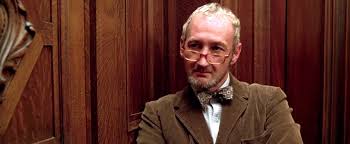

Cut to 16-year-old me, who had just begun receiving colorful college brochures with autumnal imagery, becoming even more excited to get out of high school and sit in lecture halls where Freddy Krueger showed slides straight out of Scary Stories to Tell In the Dark.


Anyway, future dreams aside, Urban Legend is indeed the perfect late '90s slasher. Sure, the brown lipstick fashion trends and resigned sighs of seeing your roommate on dial-up and getting a busy signal on your landline give you a knowing wink 22 years later, but here's the thing: Urban Legend is actually kinda good.


Yes, we wouldn't have had Urban Legend in theaters had it not been for the success of Scream one year earlier, and yes, it follows many of the same beats BUT, guess what: the same can be said for Friday the 13th to Halloween, or The Intruder to Friday the 13th, and so on and so on. 

Urban Legend knows its slasher playbook: pal after pal of our final girl dies in a high concept way by a dark figure whose face is obscured (in this case, with a winter coat that apparently everyone in town owns). Each murder is inspired by a popular urban legend, sometimes with an added twist. It's a perfect horror movie setup from first-time screenwriter Silvio Horta, and first-time director Jamie Blanks manages a surprisingly sharp balance between treating the horror seriously while clearly holding in a giant wink.


There are plenty of small touches throughout Urban Legend that demonstrate a clear affection for the genre, from using Chucky creator Don Mancini's name to casting Halloween 4/5's Danielle Harris as Natalie's ill-fated goth roommate. The reveal of the killer is big and stupid in the best of ways, while the coda lets you reframe the entire movie in whatever guise you choose. 


We're at a very specific moment in time when we can look at the '90s with rose-colored glasses. Horror cinema at this time was defined by the self-aware slasher, and while Urban Legend may have felt trite in 1998, it has aged remarkably well two decades after its debut.

High Points
Most of the actual violence is so over-the-top that it's more silly than scary, but the opening scene is genuinely thrilling, with the reveal played to perfect effect amid a rain-soaked dark highway


Low Points
There are two genuinely unpleasant things in Urban Legend, and I'm not talking about the many dead young people or Joshua Jackson's hair color: yes, a dozen innocent students are brutally murdered, but the force-alcohol-fed dog-in-the-microwave moment feels line crossing. The other is one of those uncomfortable real-life mirrors that's hard to put out of your mind: in 2001, Rebecca Gayheart was convicted of vehicular manslaughter that caused the death of a child. Much like Natalie and Michelle, this wealthy white woman received a small fine and probation. There's a lot to process there and it doesn't necessarily need to be done to enjoy a sharp '90s horror flick, but it feels wrong not to acknowledge it when discussing the movie

Lessons Learned, Late '90s Edition
As witnessed here and in Se7en, there was a high correlation between serial killing and excessive rain


A bad bleach job was all you needed to pass yourself off as a Hanson brother


You'd never get a job in the newspaper industry without a hefty batch of school paper writing samples


Rent/Bury/Buy
Urban Legend is currently streaming on Hulu, and I found it surprisingly enjoyable to revisit. It won't change your life, but it just might make you look fondly back at a period of genre cinema we'd all once written off.

Bonus Content!
Hungry for more discussion on '90s theatrical horror? Allow me to point you back to Canada for Alexandra West's fantastic essay book on the subject, The 1990s Teen Horror Cycle. It's a smart, scholarly, and fun look at a decade that we long took for granted. 

Saturday, February 25, 2012

The Devil Wears Petite Prada


Today’s entry into The Shortening is a bit of a surprise. Emily! You cry. There are no short things in The Phantom of the Opera. Some productions are keen to include Parisian rats or the occasional little person chorus member, but that’s not really enough to justify a room at the Doll’s House in this busy February season.
But break open the party room with a low ceiling! A birthday gift from my fella, this adaptation is probably best known as a Robert Englund vehicle but its very being and body count are actually inspired by Satan who--didntcha know, is a dwarf?


Quick Plot: In modern day--okay, 1989--New York City, a young opera student named Christine (Popcorn and more importantly, Babes In Toyland’s Jill Schoelen) finds a mysterious charred libretto to use at an audition for the Met (which apparently did open calls in the 80s?). As she begins the disharmonic chords of Don Juan Triumphant, Christine passes out and awakens as Christine Day, an American ingenue working for the Paris Opera House in 19th century France as the understudy to the diva soprano Carlotta.

Yup, you know the story by now. Christine is engaged to a boring but wealthy slab of handsome, but her heart and voice belong to an unseen vocal coach, that same unseen force who ‘haunts’ Box 5 and causes minor mayhem when his demands aren’t met by the theatre owner (BILL EFFIN' NIGHY!). Nothing new so far, except that the Phantom is played by Robert Englund somewhere between Dreammastering and Dreamchilding. 

As Eric Destler, Englund’s face is a pointy quilt of human skin carefully sewn together. It’s a groovy look, one that works because it makes the Phantom actively unsettling. Even before Andrew Lloyd Webber, the Phantom always seemed to me far too romanticized a figure. Yes, he’s a cruel murderer, but he does it in the name of music and love (or to a more sidestepped degree, obsession). The audience generally forgives his crimes because a) he was a wronged man to begin with (either through nature or seedy bosses, depending on the details) and b) he makes really good work. 

Easily the most interesting aspect of director Dwight H. (as in Halloween 4) Little’s adaptation is its portrayal of the Phantom, aka Eric. Unlike other tales that have Eric the victim of birth defects or burns and plagiarism, Englund’s Eric is not a nice man and really has only himself to blame. 


Okay, himself and Dwarf Satan.
As a young composer in the making, Eric made a deal with Dwarf Satan to craft the perfect opera. The price? Sacrificing his face and body in such a way that no fan will ever throw her pantaloons at him. The upshot? Eric apparently develops superpowers that let him fight a gaggle of backalley bandits through knife throwing, whipping, head tearing, and teleportation.

That’s the main issue with The Phantom of the Opera: it doesn’t quite know what sort of mood it wants to maintain. The score and setting take us deep into classy old Par-ree, but Eric’s pretty ridiculous killing techniques and, sigh, Freddy Krueger-ish puns (“Consider yourself SUSPENDED!” which is, as you expect, snidely shouted at an ill-fated stagehand about to get SUSPENDED from the rafters) square us uncomfortably in a film that wants to stand firmly in the 1980s horror comfort zone. 
Ultimately, The Phantom of the Opera saves itself by its final twenty or so minutes. The big showdown in Eric’s lair is genuinely dangerous, something a lot of other film versions have a hard time doing. I won’t spoil the coda, but as we get brought back to present day (oh yeah, cause remember that?) there’s an added sequence that while kind of silly if you actually think about any of it, isn’t to be found elsewhere.


High Points
Bill Nighy is in this movie. Granted, his role as the new owner of the opera house isn’t huge, but it does mean that we get to see Bill Nighy dressed to kill at a masquerade and more importantly, that BILL NIGHY IS IN THIS MOVIE

Considering the setting and subject matter, it’s important for any Phantom adaptation to put some effort into its music. Thankfully, Misha Segal’s score is grandiose enough to help boost the atmosphere that the visuals...

Low Points
...don’t quite nail. Perhaps I’m just comparing this version to Dario Argento’s dreadful but beautiful retread that came a decade later, but Little’s world just doesn’t look nearly as grand as I generally like to think of Paris opera houses
Lessons Learned
Ghosts do not skin their victims

How to film a flashback within a flashback? Make it foggier
Even in 19th century France, thugs attacked one at a time


In order to nab the lead soprano at the Metropolitan Opera, one need only sing a few bars and almost get killed by faulty stage decorations. (In other words, put yourself in a situation where you could sue for millions if you REALLY want that role)

Look! It’s...
A young and nerdy Molly Shannon as Christine’s modern day accompanist  (see her all fogged out in the Blossom hat?)


Rent/Bury/Buy
I'm a sucker for Phantom adaptations, be they gaudy musicals or haunting monster tales. This Phantom, though far from perfect or even--let's face it--very good, has a lot of fun interpreting Gaston Lerox's novel for a late '80s audience. Englund is clearly enjoying himself by stretching outside of Elm Street, while Gerry O'Hara's screenplay hits all the expected beats while adding plenty of fresh Faustian touches. You know, like Dwarf Satan. They're just not making 'em like this these days...

Monday, November 30, 2009

Mill Creek Quadracinema! Disc 11


As many a horror fan/DVD junkie knows, Mill Creek Entertainment puts out amazingly priced 50 or 100 movie packs filled with an assortment of public domain or incredibly cheap genre films. The cuts are usually fuzzy and drab, often trimmed to be less fattening than a Jenny Craig Thankskiling dinner (I’ve been hesitant to watch my copy of Unsane, aka Dario Argento’s Tenebre with good reason) but with so many rare films to choose from, you occasionally stumble upon a shiny piece of turkey meat well worth the grease. 
The biggest challenge in conquering those quadruple (sometimes quintuple) featured double discs is knowing where to start. Not only are some packs filled with obscure choices, you also have to research alternate titles and running length. If, that is, you actually care.
So in an early attempt to set and fulfill a New Year’s resolution, I’ve decided to devote one day a month (unless I get more proactive...or less) to a single disc from one of the four 50 packs I own (for the record, those are Chilling Classics, Tales of Terror, Nightmare Worlds, and Drive-In Movie Classics). What follows will be a loose and condensed review (plus, naturally, Lessons Learned) of the four-five films on any given disc to let you know what’s worth a watch and what will make better use as a coaster.
Today’s picks come courtesy of the 50 Chilling Classics edition, Disc #11
SIDE A

1. Edgar Allen Poe: Dr. Tarr’s Torture Dungeon, aka The Mansion of Madness, Dr. Goudron’s System, Dr. Tarr’s Pit of Horrors, House of Madness, The System of Dr. Tarr and Professor Feather (1973)


Plot: A reporter and a few friends travel to a forest set mental asylum to research the bizarre and experimental treatment practices of the infamous Dr. Tarr (rather, Dr. Maillard), whose efforts include allowing patients to enact their twisted fantasies to the fullest of their imagination. Colonial dressed looters tie men up and rape their wives, bird enthusiasts act as chickens, and most horrifically, naked women ride horses and undoubtedly encounter some very unpleasant itching. It all leads up to an interestingly climactic trial/feast/battle with a tortoise (seriously) reminiscent of Marat/Sade and what I dream my ThanksKilling dinner will be like from now on.
Notable Cred: Writer/director Jose Lopez Moctezuma also directed the better known Alucarda
Verdict: The grainy transfer does a terrible injustice to what is an oddly intriguing little film. Its 88 minute running time is inexplicably too long, particularly in early scenes that do little more than show a bunch of inmates prancing through the woods like wannabe merry men. Still, once it hits its third act, Dr. Tarr’s Torture Dungeon is rich in surrealism, both in its wacky visuals and oddly overproduced (yet somehow maddeningly appropriate) instrumental soundtrack. Definitely one to watch when you’re in the mood for a little seen period film.
2. The Bloody Brood (1959)


Plot: A sadistic Beatnik gang decides watching and/or causing people to die is the hippest new cat on the skiddooing block (I wasn’t alive in the ‘50s; I’m trying my best to capture a dead language). After feeding a delivery boy a hamburger laced with ground glass, the unlucky kid’s big brother (and total square)  goes undercover (sorta) to investigate and bring those no goodnik daddios to justice.
Notable Cred: Peter Falk stars as Nico, the sociopathic leader of the murderous cool cats
Verdict: While my teenage days of Mystery Science Theater 3000 marathons have made it a challenge to view any black-and-white thriller without the help of snarky silhouetted robots, this is a decent little pick of a very different era of filmmaking. Not for those with no taste for black-and-white slow boilers, but it’s more than passable for 66 minutes. Dated? Of course, so pop it in if Beatnik badness is your thing. Scoo-pah!
SIDE B


1. Alien Zone, aka The House of the Dead, Last Stop on 13th St., Zone of the Dead (1978)


Plot: Anthology goodness! The framing story is set in a mortuary, where the keeper proudly tells a passing guest (and adulterer) four stories about his clients. Like any Tales From the Crypt or Creepshow tale, all feature nasty and selfish baddies who get what they deserve. A breakdown:

Story 1: A child-hating schoolteacher gets her comeuppance at the hands of out-of-season trick-or-treaters in cheap plastic masks. Short and surprisingly creepy

Story 2: A preppy killer lures women into his apartment to videotape himself strangling them. Nothing special, but quickly paced and to the point. Oh, and with no actual story to be told so there's that.

Story 3: The longest and probably best made, although in comparison to the others, it drags far too much for my taste. London’s two most esteemed criminal investigators (as rated by Rolling Stone Magazine) try to solve a case with a few twists at the final result. Standard detective story that fans of the sub-genre will probably enjoy more so than I did.

Story 4: A professional jerk who despised the idea that someone would take the time to choose between 23 different types of hamburgers gets trapped in an elevator shaft and tortured with near iron maiden action, only to instead become an alcoholic. Odd and underdeveloped, but interesting enough in a nonsensical way.
Notable Cred: I’ll point it out just because it’s a general rarity in ‘70s genre cinema (well, a general rarity still in a good deal of cinema): Alien Zone (a title which makes absolutely no sense, by the way) was directed by Sharron Miller, a female filmmaker better known for her work in television.
Verdict: Surprisingly fun, with highs and lows in the storytelling. There are a few dud performances (particularly in the framing story) and others that keep shaky material watchable, but overall, I enjoyed this anthology far more than I expected to. Minimal gore and no nudity; just a solid little collection of cheap and fun tales that’s way better than anything Uwe Boll ever made. A mediocre endorsement if ever there was one!
2. Slashed Dreams ahka (Also Hilariously Known As) Sunburst (1975)


Plot: A dime store knockoff of Joni Mitchell provides the soundtrack that blankets about 80% of this cutely awful rape flick, following a college couple as they spend 30 minutes going to class and campus parties before getting into an argument with their peers and deciding to escape to the woods to meet their Thorough-esque friend Michael. Yeah, ‘huh’ is the best description of the prologue. Once hiking, they meet a bear and two rednecks that make the Gogans from Pete’s Dragon look  as rough as the fellas from Deliverance. Kathrine Baumann (not awful) is briefly raped by the pair, but thankfully, hippie friend Robert England (giving a rather likable performance) is there to make tea, while the defeated boyfriend attempts to fight back. Then doesn’t. But according to the final song, it’s all good. Because there's poetry. And friendship. and sunbursts.
Notable Cred: Englund in plainface
Verdict: Unless you’re a diehard fan of folk music, a Robert England completist, or someone that really enjoys rape revenge but hates the whole unpleasantness about it (and actual revenge aspect), Slashed Dreams is not, I repeat, NOT worth your time. It does, however, make for some pretty fun viewing about how nice it is to have friends.


Lessons Learned
Rape takes about 90 seconds to suffer and fifteen minutes to overcome
No man gets a haircut before killing himself
Police in the 1950s just didn’t do fences
Any man that wants your stockings for a magic trick is up to no good
Never trust a burger served by Beatniks
Always wear a bullet proof vest when planning on making a casual arrest, as no gunman will ever think to shoot you in the head
Beatnik dancing is all about having a loose neck


Sexual abuse is a lot like making tea
If I’m ever on death row, my choice of execution method will now be “beheading at the hands of well-choreographed mental patients dressed as exotic birds”
Many private detectives find the term “private eye” mildly insulting


Never turn your back on an overcrowded holding cell filled with disgruntled people and ample arm holes

Yup, something about these things truly freak me out.