Showing posts with label picnic at hanging rock. Show all posts

Monday, April 8, 2019

Lights Out


On the pages of George R.R. Martin's Game of Thrones series, Margaery Tyrell isn't much of a presence. She never gets a point of view chapter, and therefore remains a passive pawn in other characters' games. One of the highlights of HBO's hugely successful adaptation has been (especially for readers of the books) how certain actors took lesser characters to new heights. 


As the ambitious, often-married lady of Highgarden, Natalie Dormer brought layers of intrigue to what could have been a mere body to move about Westeros. She showed even more skill in the uneven Picnic At Hanging Rock miniseries, overcoming some age miscasting to remain a fascinating presence. 


All this is to say that I'm rooting hard for Dormer's career. In Darkness marks her debut as a screenwriter, and while it's not quite the genre pic its marketing suggested, it showed up on Netflix and hence, this here blog. 

Quick Plot: Sofia is a blind pianist living one floor below Veronique, the flighty daughter of an infamous Serbian war criminal named Zoran Radic. When Veronique mysteriously tumbles out her third floor window, Sofia becomes a person of interest to everyone, from a friendly detective to Joely Richardson's icy brunette business manager and her puppy-eyed hunk of a brother (Daario Naharis Beta Tested Ed Skrein).


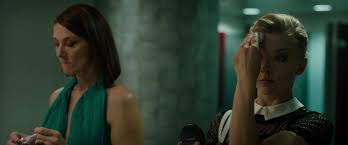
Between coded USB drives, poisoned champagne, and incredibly polished eye makeup applied without sight, In Darkness is an ambitious thriller that wants to do a LOT in its 100 minute run time. Written by Dormer and director Anthony Byrne, it piles mystery upon red herring upon mystery, with at least two major twists and very little room to breathe. 


It's far too much plot, and many of the details pile up in a way that adds to the ridiculousness of the story. Take, for example, the violinist busker who Sofia sees (well, not SEES, but you know) ever day on her afternoon coffee runs. At one point, she asks him to warn her if he sees a certain suspect by playing a lesser known composer. He does...sometime in the middle of the night. Does this accomplished, very clean-cut street musician LIVE outside this suburban coffee shop? Does he actually make cash at all hours? IS HE A ROBOT? 


You get the point. 

I almost wish In Darkness had leaned in harder to some its sillier elements. At times, there's a sense of campiness bubbling right under the super serious veneer, from Veronique's leopard print fashion to Detective Mills' inability to ever not eat. Maybe next time, Dormer and Byrne can embrace the fun. It would be better for all of us. 


High Points
Sofia has a little too much skill at everything to be a believable woman (and the less said about the final twist, the better) but as expected, Dormer remains an engaging presence onscreen who's impossible not to care about


Low Points
There is so much wrong with the final reveal that puts every action before it in question that I won't waste my time here listing it all. Just know that the ending is stupid and kind of makes the whole movie even stupider, despite it trying so hard not to be

Lessons Leaned
Nothing makes a dieting detective hungrier than a visit to the morgue

Grieving lets people see that you have feelings

45-year-old British size 10s don't do dairy

Rent/Bury/Buy
It pains me to say In Darkness is a deeply flawed film, but at the same time, I can fully admit that I didn't hate watching it. It's loaded with beautiful, well-dressed British people being mysteriously sexy amidst classical music, and that in itself has its charms. I wish the script had a little more finessing, but hey: I'd rather a film try too hard than phone it in. Even if I wish it had hung up the phone two minutes earlier.

Friday, April 9, 2010

Paranormal ActSwimmity


Like many modern films with any morsels fit for digestion by the horror community, Lake Mungo is being marketed as a terrifying ghost story that makes The Blair Witch Project, Paranormal Activity, and The Haunting look like Casper Meets The Wiggles. The problem with that description is not that the film isn’t scary, but that Lake Mungo is of a hybrid, undefinable genre more akin to something like Jacob’s Ladder or Bug.
NOTE: Because this is a brand new release making its way through DVD and the After Dark Horrorfest, I’m instituting a self-no-spoiler policy for this review. All plot reveals and sssssecretsssss will, however, be fair game for the comments section so expect full divulgences after the jump. Until then, we'll keep it clean and pure.

You know the type.

Quick Plot: 16 year old Alice disappears while swimming with her family in suburban Australia. Months later, her seaweed-soaked body is found, prompting her family to deal with their grief in personal ways. Dad has nightmares but trudges on to work. Mom begins wandering town like a lost puppy late in the night. And brother Matty throws himself into investigating the strange appearances Alice may or may not be making in witching hour videos and backyard photography.

There’s a good chance that nothing in that plot synopsis whetted your appetite for this film. In terms of premise, Lake Mungo is a pretty plain tale inspired more by Sightings than The Sixth Sense. In no way, however, is it that simple.
Filmed in documentary style, Lake Mungo avoids the found footage format trend that makes viewers queasy. While some critics have complained that such a choice robs us of most dramatic payoff, I found the honest, straightforward narrative completely worked to make the story feel like a moving photo album missing key pages. Something has happened to this family, and their honest, baffled, and lost faces tell a sad and haunting tale.

There are dabblings with psychics and scandals, but Lake Mungo never quite goes where you expect. Critics who often complain about forced finales should be pleased with how organic Lake Mungo proves to be. There are plenty of chills generated from the more ghostly leanings, but ultimately, this is more a film about grief than gotcha! moments of shrieks.
High Points
The performances--particularly Rosie Traynor as June and David Pledger as Russell--a are believable for a documentary and layered enough to keep you intrigued. June’s introversion gives birth to a different kind of grief from Russell’s stoic false closure. Director Joel Anderson lets their pain speak for itself with no swelling moments of tears or screams, and as a result, the loss cuts even more deeply.
I was often reminded of another teenage girl disappears into Australian wilderness film, Picnic At Hanging Rock. Whether this was a direct inspiration or not, fans of Peter Weir’s 1975 ethereal genre-defying film may find some of Alice’s past comments about her future to be equally eerie.


Low Points
The main way Lake Mungo draws your attention to something amiss is to show video footage, then zoom in on the phenomena. While it’s still creepy and I’m thankful to have seen all the paranormal activity, I would rather have had a little more added mystery with more moments of did-I-see-that?
Lessons Failed
In order to avoid any spoilers, I will forego this section. That’s how much I love you all. I’m actually putting my education on hold.


Rent/Bury/Buy
I’d hate to repeat myself so soon after And Soon the Darkness, but like that slow burning 1970 thriller, Lake Mungo is a polarizing goosebumps giver or dull dud. Opinions will vary pretty sharply due to the creeping pacing and documentary style. If you have the slightest appreciate for suspenseful and ambiguous films that don’t really fit a specific genre, then rent Lake Mungo quickly and judge for yourself before the inevitable Paranormal Activity love/hate hype endangers your own viewing experience. I genuinely felt my heart beat a little faster during some of Lake Mungo and a day later as I think back, it feels even more haunting a story. While I’m generally not easy to scare (although my barely readable review of Magic might prove otherwise), the combination of striking imagery plus an utterly everday family living with tragedy truly struck some sort of nerve. Hopefully, it does for you as well. 


And remember, I've declared the COMMENTS section to be a spoil happy zone so hold your nose and proceed at your own risk.

Sunday, December 13, 2009

Wicker Me Wonderful

When Final Girl Stacie Ponder announced The Wicker Man as December 14th's film club pick (a monthly roundup of movie blogs reviewing the same movie; come here  tomorrow and check it out) I was more than apprehensive to type a single word. Aside from a few carnivorous klowns, stab-happy dolls, and shopaholic zombies, Robin Hardy’s 1973 musical/thriller/drama/horror/mystery comes close to topping my list of all-time favorites. Witness this very special corner of my apartment:


Sure, I’ve been known to bookmark the infamous 2 minute best-of youtube clip of LeBute’s remake (an incredibly campy example of what happens when a misogynist filmmaker gets his hands on good actors,  bad special effects, and bear suits), but my heart forever belongs to what is quite rightfully cited as “The Citizen Kane of Horror Cinema.”

As I assume most of you have already viewed this film, I’ll spare the synopsis to get to the meat and apples-of-a-good-harvest-season: why I adore The Wicker Man. Spoilers will follow, so if by some promiscuity loving pagan god forbidden chance you haven’t seen it, I implore you to close this link, velcro up your shoes, put on your best bunny head mask and get thee to a video store to pick up the Special Edition 2-disc set.

Back? Now ask the landlord's lovely daughter to pour you a pint and settle in for why The Wicker Man is perhaps the most awesome film of all time:

The Look

Not only is the Scottish location a truly gorgeous sight to behold, but Hardy and cinematographer Harry Waxman capture its strange beauty in such an intriguing way. The glare of the sun blocking our view in the film’s final act stays in many a watcher’s head long after it’s done, while other “eye” choices (such as having the early landing of Sgt. Howie’s plane shown through his bobbing-on-water point of view) all work to make the film’s actual shooting just as memorable as its famous performances, songs, and script.


The Language
The fact that it incorporates words like strumpet, mead, assiduous, wench, bawdy, and a barrel more of playful yet underused vocabulary

Touches of the Eerie
Strange little moments of horror add up throughout the film, slowly hinting at what might lay below the surface of this strangely organic world. Several brief scenes never fail to tickle my skin, including the giggling schoolgirl’s gleeful pleasure in tethering a beetle to her desk and the children’s all-too-happy games playing dead during Howie’s frantic search for Rowan. Plus, clown dolls!


Christopher Lee
If one were to compile a list of the greatest speaking voices in cinematic history, Christopher Lee’s rich bass would surely find its way close to the top. The Wicker Man gloriously milks those well-traveled vocal chords for all their worth, letting Lord Summerisle wax nostalgic in unusual sermons and sing a few ditties with an energy rarely seen by such a cinematic titan.


The Overall Mood
Much like Peter Weir’s Picnic at Hanging Rock, The Wicker Man casts an inescapable spell over its audience without relying on obvious visual cues. It’s a combination of the living landscape, offbeat songs, and peculiar dialect amongst Summerisle residents that leaves you enraptured, if always uncomfortable inside a simultaneously familiar and strange land.


Incredible Buildup
Rarely does a film with a body count of one merit so much horror, but credit The Wicker Man’s carefully planned crescendo as Howie plays detective on an island where the typical rules of investigation simply don’t apply. One of the tensest moments comes during the big parade, as one by one, nervously laughing pagans in costume step into a sword drawn circle to learn their fate. The fake-out beheading summons one of the all-time biggest gasps I’ve ever released while watching a film.


Music
Paul Giovanni’s folky songs are one of a kind, from the brilliantly catchy Maypole dance to the sensual siren song a nude Britt Eckland coos from behind a heavy wall. Wedding DJs probably don’t get a lot of requests for "The Landlord’s Daughter" and we’ll probably never hear an American Idol contestant cover "Corn Riggs", but it’s impossible to deny the importance of these unique compositions in such an atmospheric film.

Edward Woodward
The first time I watched The Wicker Man, I was glaring my way through its running time at Sgt. Howie’s close-minded aggressiveness amid a free-spirited land of good-natured barflies who just wanted to rock. With each viewing, I come to admire the late Woodward’s work more and more. It’s not an easy task to carry a film as a somewhat unlikable character, but Howie always seems a real, fervent man doing his job and trusting in his faith. It’s a testament to Woodward’s performance that, despite his character’s attitude throughout the film, we as the audience are completely invested in his fate.


Finale
I dare you not to get goosebumps as Woodward screams out that hymn, raising his voice  to mount the crackling of flames and joyous choral song of the townspeople’s joyous swaying below. The contrast creates what may be one of the most haunting scenes in filmic history.


Quibbles
One restored scene to the extended cut doesn’t quite sit well with me: While the theatrical version opens with Howie arriving at Summerisle, the restored film starts on the mainland, with Sgt. Howie singing at church and his fellow policemen joking about his virginity. Does anybody else find this a little too obvious, too soon? 

The music played during Howie and Rowan’s near escape feels, much like Peter’s last stand in Dawn of the Dead, jarringly out of place, taking us into ‘70s TV cop chases and out of a May Day celebration

Lessons Learned
If an attractive young woman is nakedly banging on your walls, it might not be a bad idea to give in to one night of carnal pleasure

It’s much too dangerous to jump through fire with your clothes on


Snails are horny, selfish, and highly admired by pagan chiefs

Shocks are so much better absorbed with the knees bent

Rent/Bury/Buy
Own it. Watch it. Love it. Sacrifice a virgin to it. The Special Edition features a rewarding batch of extras, including an energetic 35 minute retrospective where we learn that Ingrid Pitt is quite possibly one of the most happening dames in the business. The commentary track is not to be missed, especially to hear Christopher Lee’s praise of just how much he believed in the film. It’s a classic like no other.


And don't forget to head over to Film club captain Final Girl's site  on Monday afternoon and browse a few more reviews from fellow movie geeks. You don't need even need a secret code!

Friday, July 3, 2009

America, Eff Yeah (or something something)


As my fellow Americans and I prepare to gorge ourselves on hamburgers and s’mores (side note: does a s’more hamburger sound good, or am I just really hungry?), I thought it would be patriotic--or, well, timely--to round up a few installments of my favorite genre that represent some aspect of United States history. A complete timeline wasn’t possible because a) as far as I know, we’re still waiting for the proper Columbus-as-Godzilla analogy of my dreams and b) there aren’t nearly enough (that I know of) films set in the past. 

Still, I did manage to pull a few titles/notable time periods for your movie marathon. No matter what color passport you may keep, feel free to add more below. Based on some of my picks, we need all the help we can to make history not repeat itself.

Puritannia!


Truth be told, I can’t think of any great American horror films that truly capture the restrictiveness of Christian culture. Peter Weir’s brilliantly haunting Picnic At Hanging Rock does an incredible job of exploring the unnatural atmosphere of Victorian society, but, well, that classic is set in the 1900s on another British colony that begins with A. For colonial horror of a more cerebral ilk, one could check out the we’re-the-real-monsters A-list headed The Crucible, starring a horny Winona Ryder, a brooding Daniel Day Lewis, and lots of black magic loving teenagers who scream more than all Jason’s final girls combined or an entire cycle’s worth of America’s Next Top Model contestants. If so-bad-it’s-still-not-good films are your cup of tea, then sit yourself down for an MST3K zinger-ready viewing of Demi Moore’s Oscar-baiting, Razzie winning performance as Hester Prynne in The Scarlet Letter. It teaches some important national lessons, such as don’t have sex with priests even if they are Gary Goldman and never under any circumstances overestimate your acting ability.

Manifest Destiny


Go west, young man! And if in doubt, eat your fatter travel companions. The infamous Donnor Party of the 1840s ventured into unchartered territory by heading across the country in search of gold and good settling ground, but they’re far more remembered for their survival spirit and taste in good old fashioned American red meat. American citizen meat, that is. Short on supplies and near starvation, these ill-fated pioneers eventually began eating their fellow (dead, I believe) travelers, thus beginning our national tradition of cannibalistic antiheroes. Without them, would Anthony Hopkins have ever won an Oscar? (probably). For totally unfaithful adaptations of this event, see the well-made Ravenous or Trey Parker and Matt Stone’s Tromarrific Cannibal! The Musical. Warning: you will be singing about baked potatoes, snowmen, and trackers for weeks without fail. And you may want to eat people. I honestly don’t know which is worse. 

The Civil War


The bloodiest event in American history pitted brother against brother, North against South, and twangs against Yank speak. In terms of body count, it’s our most devastating war, although oddly enough, you won’t find a large amount of horror films addressing the subject. Near Dark adds an excellently evil layer to Lance Henrickson’s vampire by giving him a Confederate backstory (slavery supporting AND undead? shudders). One of my favorite forgotten horror anthologies, the Vincent Price starring From a Whisper to a Scream (aka The Offspring) sets its final segment during the last days of the Civil War, when a group of children orphaned by the North’s dominance find their own method of Reconstruction (hint: it involves a lot of pieces). The amateur acting is spotty, but the gritty barrenness of a war-torn society (rarely seen in the U.S. but sadly far more common elsewhere) is explored in a truly frightening way.

The 1960s


In 1968, George Romero changed American (and international) cinema with the gore-filled, hero lacking Night of the Living Dead. Aside from introducing the world to unlimited hours of entertainment in planning zombie escape plans, this little black and white horror captured a changing tide in national sentiment. The blatant acknowledgement of unequal treatment of blacks, the inefficiency of government authorities, and the disenchantment with the American heroism by the reality of Vietnam  has aged well in the 40 years since it’s midnight premiere. It won’t make you proud of this country, but it remains one of its most important cinematic milestones.

Getting depressed by the state of the red white and blue? For an all-American palette cleanser, check out 1997’s low budget, high body count Uncle Sam. Yes, it’s pretty much 85 minutes of patriotic kills using every implement you’ll touch this July 4th (flag pole? check; bbq? check; firecrackers? you get the point) and no, it’s not good. But with American heroes Isaac Hayes and Robert Forster on board, plus the most aggressive potato sack race ever put on film, you’ll get much more enjoyment than, say, watching televised fireworks scored to the Last House On the Left-like raping of John Philip Sousa’s legacy by high school marching bands.