
On a recent(ish) episode of Girls On Film, the ladies and I drooled over the briliance of Nicholas Roegg's Don't Look Now. In terms of visuals, it's arguably one of modern cinema's most influential genre films while also boasting excellent performances and a solid base of emotional connection. I would give it four stars without a blink, but here's the funny thing: I don't in any way agree with its theme.
Don't Look Now is ultimately a film about fate and predeterminism. Sure, there are other forces at work, but in my SPOILERY opinion, we are never to believe that Donald Sutherland's character ever really had a chance. His death was scheduled as soon as we first caught that glimpse of red on his slide, and no amount of dwarf ducking could prevent it.

I am not a believer in the idea that one's fate is ever sealed, but in no way does that detract from my appreciation and enjoyment of Don't Look Now. I bring this up because Lars Von Trier's Melancholia is a film that I simply don't agree with, one so seeped in a literal depression and conviction that the world might as well explode because it has virtually nothing good that deserves to survive.
I disagree, and unlike a film that works on other merits, I don't think Melancholia is otherwise strong enough to stand on its thesis.
But it's still really pretty.

Quick Plot: A gorgeous overture follows plays over striking imagery as Earth meets what we'll later learn is the comet Melancholia. Sticks are whittled, children carried, horses fallen, and explosions imminenent as we move into the main meat of the dinner, Chapter 1, Justine.

Played by a wonderfully understated Kirsten Dunst, Justine is a beautiful bride and successful copywriter faking smiles on her wedding day. The groom is kind and handsome but dull as a prison spork and the venue--a sprawling golf course estate owned and lorded over by millionaire brother-in-law Keifer Sutherland--as cold as it is luxurious. Though the wedding photos are worthy of a magazine spread, the marriage--SPOILER ALERT, if that's possible when the first five minutes of the film tell us the world blows up anyway--ends before morning as Justine's depression is simply too crippling for any anniversary.

The second part of Melancholia focuses more on Justine's put-upon older sister Claire, played by Antichrist goddess Charlotte Gainsburg. It's been some time since the failed wedding and the new, more pressing issue of the upper class is the movement of Melancholia. Claire worries that it will hit Earth, while her husband (Sutherland as John) insists the world is safe. Once a now dingier and Dunstier Justine arrives, the dangers of cometary collision become more pressing.

Melancholia presents two different viewpoints on the state of the world: one that it's a place worth saving because it has good in it (Claire) and the other, that it's a giant wad of chewing gum with hatred and awfulness sticking out every germ-ridden end. Since this is a film by Lars Von Trier, you can guess which side wins.

And that's my ultimate problem with the film. Yes, it's also quite slow and (duh) pretentious, but I often say the same about Michael Haneke movies and ultimately deal out positive reviews. Like Von Trier, Haneke doesn't necessarily see the world as an oyster and often focuses on extreme acts of onscreen cruelty, but there's usually some point or theme to think upon later with some agreement or intelligent rebuttal.

But what is that for Melancholia? That the world is best seen as something to be destroyed? That it's not fit for a pleasant, imaginative child like Claire's son Leo to play in? Where Haneke's The White Ribbon was a deceptively simple town biography about the absence of innocence, Melancholia feels like an overly beautiful diatribe on how the whole world should just go to hell.

I suppose that if you're viewing the film as a portrait of depression, maybe it achieves success. Justine's progression from uncomfortable bride to the calm in the light of a meteor does work from a certain perspective. It's validation for her negativity, as is the all-too easy (SPOILER ALERT) suicide of John, the previous symbol of cultural normality. That John would leave his family at their hour of need just feels easy, much like my main beef with the villain's final act of cowardice in The Woman.

How is Justine's stick fort any stronger a symbol than Claire's idea of sipping wine with classical music? Are we supposed to stand behind Justine when she insults her sister for wanting to survive? I do think Melancholia gave me a window into Justine's world in its first half, as her inability to play the perfect wife felt true and sad, rather than grating or disrespectful. It's the film's latter half that ruffled my Bjork swan dress feathers, the idea that this is not a world worth fighting for and to pretend differently is just a lie. I like wine and scenic porches and the innocence of youth, and if using those things to confront death means I'm wrong, then I just don't understand why sitting on grass surrounded by sticks is that much righter.

Okay fine: when the apocalypse hits, I'm making nachos and drinking a bottle of Ommegang Three Philosophers Ale. I can't lie to you.

High Points
In a depressing movie about the end of the world, every touch of dark humor counts and nowhere is this more apparent than Udo Kier's wedding planner
Though she doesn't reach the ungodly levels of Emily Watson, Kirsten Dunst finds the perfect notes to convey Justine's inner workings without ever resorting to easy showiness
Though she doesn't reach the ungodly levels of Emily Watson, Kirsten Dunst finds the perfect notes to convey Justine's inner workings without ever resorting to easy showiness

Low Points
The aforementioned premature death of a key character feels like a cheat and I'm still miffed about it
Lessons Learned
American accents are a recessive gene

Putting your boss in your wedding party does not excuse you from working on your wedding day
The apocalypse is going to be realllllllllllllllllllllllllll

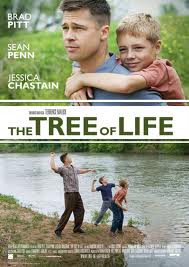
Tree of Melancholia
Film critic Jim Emerson had an interesting writeup of Melancholia, but his comment sections were even more enlightening. One reader started to draw comparisons to Tree of Life, which got me to thinking how the two films play together. Aside from their obvious compatibilities (both using small family stories behind the backdrop of the universe's death), the films do seem to look at our relationship to the world with different conclusions. I'm not itching to rewatch either anytime soon, but when I do, I'm definitely making it a double bill.
See/Skip/Sneak In
While he's no flawless Paul Verhoeven, I consider myself a fan of Lars Von Trier, even when I can't say I like his work (meh to Dogville and Manderlay). Personally, Melancholia doesn't come near the heights of Breaking the Waves, Antichrist, or Dancer In the Dark because I just can't get behind the film's thesis. At the same time, it features some truly spectacular use of sound and imagery, along with the typical good female performances that come standard with a Von Trier tale. If you're not familiar with his work, then I certainly wouldn't start here (I'd say Emily Watson's mind-blowing work in Breaking the Waves is the best primer) but those who look forward to seeing whatever wackiness comes out of the world's craziest Dane will definitely get SOMETHING or another out of Melancholia. For me, it goes in that second tier and falls a little lower due to its negativity.
But what can I say? At heart, I'm just a cockeyed optimist.

But what can I say? At heart, I'm just a cockeyed optimist.




 Posts
Posts


