Showing posts with label charlie brooker. Show all posts

Monday, April 11, 2022

Black Mirror Revisit: White Bear


Last year, I compiled a non-definitive ranking of Black Mirror episodes. Once a month, I revisit an episode, starting from the bottom. We've reached the pewter medal position with my original #4, the fun-for-the-whole-family White Bear!


The Talent:
Charlie Brooker did his usual writing duties, though he apparently had to scramble to revise his script in just two days after other episodes went over budget and he finally saw his shooting location. British television director Carl Tibbetts takes the helm, returning the next season for the equally dark White Christmas. Also on hand is Michael Smiley in a small part, and as anyone who's ever watched a Ben Wheatley film knows, one should never trust Michael Smiley. 


The Setup:
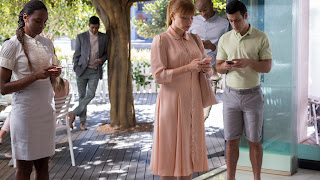
A woman wakes up disheveled, with no memory of who or where she is. She's in a dank suburban neighborhood, surrounded by strangers who keep their distance but record her every move on their cell phones, particularly when masked Purge-like aggressors start chasing her armed with anything from a rifle to electric knife.


Turns out, a mysterious electrical signal has set the world on fire, turning a good chunk of the population into homicidal maniacs. Our unnamed lead quickly teams up with the resourceful Jem (the incredibly British named Tuppence Middleton), a rebel trying to shut down the transmitter in the hopes of restoring sanity to the world. 


The Ending: 
Of course, there's no need to bust down any radio towers because, in one of the more extreme Black Mirror twists, there is no signal: the entire situation we've watched unfold is an elaborate prison sentence for our anonymous protagonist, now revealed to be the most infamous living criminal in England. Victoria Skillane helped her late fiance kidnap and murder a little girl. Every day, she awakens to the same horror show. Citizens get to participate and watch as she runs for her life in a waking nightmare, only to discover (every day!) the horrible crime she committed. Talk about a life sentence.


The Theme:
Fitting to its chaotic nature, White Bear has a few things to shout powerfully but a bit incoherently. It's obviously interested in the public's appetite and how easily it can be steered down the darkest of paths. Victoria's crime is as bad an act as a human being can commit, but her punishment is more about transferring domain over her to those who think they deserve it rather than actually forcing any kind of penance upon the guilty. There's no arc to Victoria's plight: every day, she spends a few hours running for her life in total fear, only to have another hour of being reminded of what she did to merit it. Then it happens again, with her learning nothing.


And yet, the people -- even children -- who show up to The Victoria Skillane Spectacular get their catharsis. They gleefully watch a stranger they think they know be put on an elaborate trial, reveling in her terror, participating wherever they can. They leave remembering everything and feeling better for it. 
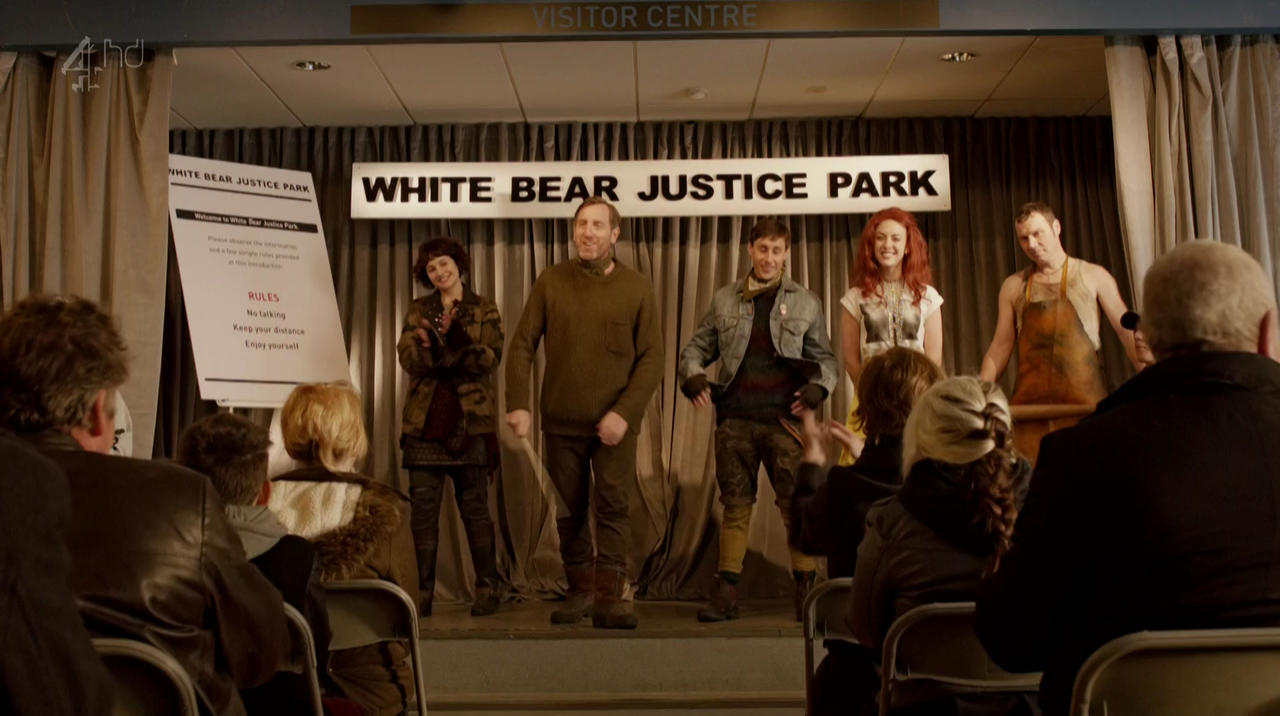


It's a horror show not because of what Victoria goes through, but how enthusiastically the volunteers take part. 

The Verdict:
Is White Bear the most thoughtful, mind-opening episode of the Charlie Brooker universe? Of course not. Is it the closest the series comes to an all-out horror movie? Heck yes, and a manic, enjoyable, admittedly derivative one at that. 


Technology Tip:
It's the rare Black Mirror episode where technology plays a surprisingly small part in the conflict, so I'd say the most useful tidbit is surprisingly mechanical: check your weapons. Always, just check your weapons


The Black Mirror Grade
Cruelty Scale:
9/10; Yes, Victoria's crimes merit the most severe of human punishments, but BOY does White Bear find a harsh way to make her pay, and by involving the general public, it takes society as a whole down a dark, dark path. 

Quality Scale:
6/10; Look, I kind of love White Bear, but I also can fully concede that this episode does indeed feel like it was written in a rush and filmed on a sale. There's an unrefined quality to it that kind of works for the grittier, visceral horror show it's going for. But, you know, it also isn't necessarily the highest quality 42 minutes of television. 


Enjoyment Scale:
7/10; As anyone who's read my decade-plus years of horror coverage knows, I don't need perfection to be happy. I just want to be entertained, and White Bear accomplishes that. 

Up Next (Month): 
It's horror of a different sort with the terrifying technology presented in The Entire History of You.

Monday, March 14, 2022

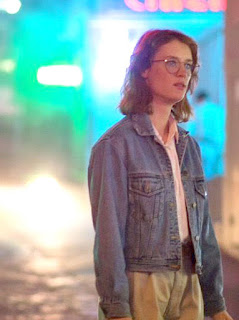
Black Mirror Revisit: Hang the DJ


Last year, I compiled a non-definitive ranking of Black Mirror episodes. Once a month, I revisit an episode, starting from the bottom. Today, we've officially reached the top 5 with Hang the DJ.

The Talent: 
As always, Charlie Brooker writes, but this time, we get a director with very specific Doll's House credentials: Tim Van Patten, known now as a successful television director with key episode credits of The Sopranos, The Wire, Boardwalk Empire, and the pilot of Game of Thrones but known first to us for his unhinged in Class of 1984, 


The Setup:
Amy and Frank are first-timers using Coach, a new dating app with a twist: upon your first night out, Coach will tell you the length of the relationship. When that time is up, you're instantly set up with the next suitor/ette.


It's an awkward but enjoyable evening, yet Coach only gives Amy and Frank 12 hours before moving them on to new partners. Frank gets stuck with a woman who seems to despise him, while Amy is sent down a series of one-night stands. Eventually, the pair are matched again. Finally happy, they agree to not check the expiration date and enjoy whatever time they have together. 


Frank can't resist, but as soon as he checks Coach's predictions, the timer winds down, cutting their relationship from the projected 5 years to just one more day. Not long after, Coach gives Amy what should be good news: the system has found her true match, and it's not Frank. 


Amy gets one last date of her choosing before committing to her soulmate. She naturally chooses Frank, then attempts to make an escape from the system that wants to keep them apart. 

The Ending:
Or does it? Turns out, Amy and Frank are living inside a simulation designed to test their compatibility. 998 out of 1000 trials have ended this way, with the couple choosing each other over the system. In the real world, Amy gets a notification for her next date: a 99.8% compatibility with a stranger named Frank.


The Theme:
The fact that Black Mirror airs on Netflix, a service that's done more to increase algorithmic marketing than, well, let's guess 99.8% of other companies, puts Hang the DJ's messaging up to more debate than many other episodes. It's easy to see the story's twist as a criticism of modern dating, which relies on data mining to determine something very human. But had Brooker really felt that way, how easy it would have been to nose that thesis over the finish line. Throw in a winking popup ad for another Black Mirror-themed bite of capitalism and it would all be clear.

But that's not how Hang the DJ ends: our last image is a smiling Amy, a woman we've had an hour to get to know and like. She sees her match and smiles, and we smile before her because we know that Frank is indeed a suitable match. They share a sense of humor, one of the most important foundations for a relationship. Maybe they wouldn't have found each other in the "real world", but what does that really matter? Had they both independently ended up at that bar on the same night, they might not have thought to lock eyes. An app helped them along, and there's nothing wrong with that. 


So what is Hang the DJ saying, exactly? In my glass half full read, that people who are open to love can find it. There are tools to help but ultimately, the responsibility is yours. Not every prospective girlfriend is willing to challenge the very universe she's occupying to risk being with a man who's already failed her once. But Amy does, because even in her pixelated form, her love drives her. Real-life Amy will probably never know how far she was willing to go and heck, who knows that same passion will work in 3D. But if it doesn't, what's the worst that happens?


I know there are more cynical (and even sinister) readings of this episode, and while I could see them clearly when looking at the similarly themed San Junipero, Hang the DJ just feels joyous. 

The Verdict:
Clearly, I enjoy this episode. If watched in the right mood, it's a Twilight Zone rom-com. What's wrong with that?

Technology Tip:
Sure, algorithms can know you pretty well, but ultimately, connection is based on instinct. Trust yours.


The Black Mirror Grade
Cruelty Scale: 1/10
THEY'RE HAPPY DAMMIT AND I'LL HEAR NO DISAGREEMENTS

Quality Scale: 7/10
Georgina Campbell and Joe Cole's performances go a long way in making this an engaging story with a couple you root for.


Enjoyment Scale: 8/10
Hang the DJ isn't mind-blowing, but it's clever and cute, managing to put online dating under a different light. I know this one rarely makes best-of lists because it doesn't necessarily have as much to say as, say, Nosedive, but for me, it just works. 

Up Next (Month): Switching moods just a pinch, we head down a different version of an alternate reality with the cheery, super kid-friendly White Bear!

Monday, January 10, 2022

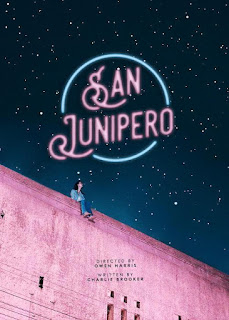
Black Mirror Revisit: San Junipero


Last year, I compiled a non-definitive ranking of Black Mirror episodes. Once a month, I revisit an episode, starting from the bottom. We're moving up the list today to my #6, one of the best received of the bunch, the Emmy-winning San Junipero.

The Talent:
Showrunner/writer Charlie Brooker brought in Be Right Back's Owen Harris to direct, fitting in some ways as San Junipero is something of a brighter take on a similar story. Harris would go on to also helm Striking Vipers. Also of note: San Junipero stars slightly-before-they-were-more famous Mackenzie Davis and Gugu Mbatha-Raw.


The Setup:
Yorkie is a tourist visiting San Junipero, a pristine beach-side area filled with attractive young people and '80s style arcade clubs. Introverted but eager, Yorkie catches the eye of life of the party Kelly, whose advances send her running. One week later, they're hooking up, but now it's Kelly who's backing away. 


If you know more than one thing about San Junipero, it's that (SPOILER ALERT) "San Junipero" itself isn't real. Like many a Black Mirror world, it's a simulated reality. In this case, one designed as a digital afterlife.


Yorkie, who's been paraplegic for most of her adulthood, is ready to commit herself to an artificial heaven so long as Kelly can join her. But Kelly has lived a different life, one with a husband and daughter, both of whom died without packaging their essence into San Junipero's storage cabinet. Is it fair for her to abandon them at her end?

The Ending:
Apparently, yes, Kelly decides it is. In the rare happy ending for Black Mirror, Kelly and Yorkie are uploaded into the San Junipero cloud forever (or until a power surge wipes them out).

The Theme:
San Junipero hits very differently at different points in life, or more specifically, death. When I watched this episode a few years back, it felt like a breath of fresh, love-conquers-all energy from a show usually intent on crushing any ounce of optimism. We have, on average, 80 something years to get what we can out of life and for so many of us, that's just not enough time. Imagine a world so advanced that says, "you know what? You deserve more!" 


Today, I realize that this interpretation is the Yorkie version. She DOES deserve more, and why shouldn't she have it when her particular era has made that technology accessible?

But for Kelly, San Junipero represents something very different. While there's no real talk of life after death, Kelly does struggle with the idea that making a new commitment so close to her end is a betrayal of those she's loved. This time around, watching San Junipero so close to the loss of my own mother, I was very much touched by Denise Burse's performance as the earth-bound Kelly. Sure, the final song that plays over the credits is the fitting "Heaven Is a Place on Earth," but, well, what if it's not?


I generally fall into Charlie Brooker's school of empathetic atheism, so most of the morality in San Junipero lines up with my own. I suppose, if towards the end of my life, I'm given the chance to blissfully party in a consequence-free holodeck with my husband forever, I'd most likely take it (providing it also came with cheese, dogs, and air hockey). But there's also something that's been nagging me about this rewatch, and I suppose that's simply because I've thought a lot more about death and aging in the past month than ever before. 


Aging sucks. The wiser our minds grow, the weaker our bodies turn, and sure, none of us appreciate what we have when it's there. The idea that we deserve a chance to embody the full freedom of prime health with the knowledge of what came after is incredibly appealing. But...is it real? Isn't the beauty of life the fact that it IS limited? 

Perhaps I can simply enjoy the sweetness of two worthy lovebirds and pretend its unofficial sequel in terms of world building was The Good Place, a similarly themed show that found the perfect way to express what it means to live a satisfying life with its finale. 


In Thornton Wilder's Our Town, his main character asks an omniscient narrator a devastating question that I often think about: Do any human beings ever realize life while they live it? His answer is no (well, "saints and poets, maybe") but in San Junipero, Charlie Brooker finds a way to cheat. It's a nice idea, but if you catch it in the wrong mindframe, it might not hold.


But maybe that's okay too? In Brooker's world of advanced technology guiding us in new directions, who's to say that a "fake" reality with a copy of your brain isn't good enough? 

Clearly, there's a lot to think about.

The Verdict:
San Junipero has a lot working in its favor: a distinct setting and visual style, whimsical tone, and most importantly, three deeply felt performances. I'm not going to be cute: this is a very good hour of television.


Technology Tip:
More general life than mere scientific innovation: always make a point to discuss your post-mortem plans with your life partner (and be sure to include stipulations for Futurama-esque developments)

The Black Mirror Grade
Cruelty Scale: 2/10. There is some weight to Kelly having to make a heavy decision that might be betraying the family she made during her life, but for the most part, this is one of the most shockingly joyful episodes Black Mirror produced (unless you overthink it, like I did). There are additional theories floating around that there's a dark side to this version of the afterlife, but even Charlie Brooker has knocked those down, so let's just take this as a happy win, eh?


Quality Scale: 8/10
Sometimes, the Emmy awards actually get things right. This is quality storytelling done with heart.


Enjoyment Scale: 7/10
Also, it's sweet and pleasant, and hard to not feel warm watching (DEPENDING ON YOUR MINDFRAME WHEN DOING SO!).

Up Next:
We'll take a quick break in February to celebrate the Annual Shortening (wherein I focus the blog on vertically challenged villains) but come March, it's San Junipero's little sister, Hang the DJ!

Monday, December 13, 2021

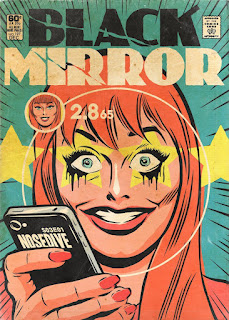
Black Mirror Revisit: Nosedive

Last year, I compiled a non-definitive ranking of Black Mirror episodes. Once a month, I revisit an episode, starting from the bottom. So find the right filter and get ready for #7!


The Talent: 
It's a big one! While the story started with showrunner Charlie Brooker, the actual script comes via The Good Place's Michael Shur and Anne Perkins herself, Rashida Jones. Behind the camera is heavyweight Joe Wright,  whose Atonement and Hannah remain high bars. Director of photography Seamus McGarvey, who has such striking visual credits as Nocturnal Animals and We Need to Talk About Kevin, brings a wildly interesting eye and star Bryce Dallas Howard goes all in.


The Setup: 
In a nightmarish future landscape packed with incredible lighting, the frills of daily life are determined by your online popularity. Every human interaction requires a rating from 1 to 5 stars, and once your profile dips below 4, life gets very, very difficult.


Lacie, insufferably perky and terrifyingly insecure, is doing everything she can to bump her rating up in order to get a discount on a new luxury apartment rental. Opportunity comes calling when her childhood best frenemy Naomi asks her to be maid of honor at her high profile wedding. It's the perfect chance for Lacie to reach the big leagues, but a few hiccups put everything she's worked for in jeopardy.


The Ending:
After a sour encounter with an airline attendant (American-voiced Michaela Cole no less!), Lacie struggles to make the wedding, striking out with a rental car disaster, striking gold by hitchhiking with a wise, 1-star rated but wisdom-filled Cherry Jones, and striking into a whole lot of mud by dirt biking the final mile. Naomi is horrified to see a social pariah make it past the altar, and after a raw, honest, hysterical wedding speech, Lacie is carted off to some form of literal social media jail, where she's ironically freer than she's ever been before. A neighboring prisoner begins to insult her, she cheerfully joins in, and they scream in release.


The Theme:
Like many a Black Mirror yarn, some of its ideas that seemed extremely clever just a few years back now feel a bit well-worn. Our internet identities are facades, the joys we find there are fleeting, and the "friends" you follow there are probably not nearly as happy as their filters might suggest. 


The Verdict:
Nosedive is one of the most definitive Black Mirror-y Black Mirror episodes in that it comes as close as possible to holding up, well, a black mirror to its audience so they can see themselves (providing they can look away from their own phones long enough). Honestly, in 2021, it's a tad tiresome a theme, hitting so close to the (pun somewhat intended) nose that it just doesn't seem as interesting as it did on initial watch. 

That aside, it's hard to call Nosedive anything but a very accomplished hour of television. It's one of the best-looking episodes not just of Black Mirror, but of any show produced in its time, and virtually every visual decision seems deliberate and tonally correct. Equally important is Bryce Dallas Howard, who seizes Lacie by the ponytail and isn't afraid to test our tolerance. Just listen to her laugh, and how it evolves throughout the show's sixty minute runtime. It's terrifyingly admirable. 


Technology Tip: 
Look, there's a lot of obvious messaging here regarding us all turning off our smartphones, but on a far more practical note, let's take a moment to appreciate the lesson that one should NEVER drive away from a car rental lot before taking a few minutes to confirm you know the necessary details of this particular vehicle


The Black Mirror Grade
Cruelty Scale: 3/10
Yes, this is a vicious universe, but as Cherry Jones' free-spirited truck driver already knows and Lacie is ready to discover, it doesn't HAVE to be if you can make your break.


Quality Scale: 8/10
This was Black Mirror's first big budget Netflix launch, and you can certainly feel it. The visual elements are striking and special, but all the less expensive elements are also working well. Howard's performance is extremely dynamic, while the pacing manages to world build and destroy within the hour. 


Enjoyment Scale: 7/10
Nosedive is one of the lighter Black Mirror entries, and its poppy visuals make it genuinely pleasing to watch. But unlike The Twilight Zone, whose universal sci-fi setups still pack a punch half a century after their initial airing, Nosedive already feels a bit of its time. Maybe we'll look back in another ten years and declare it a masterpiece. For now, it's clever, pretty, and a good one-time watch. 


Up Next (Month): I hear San Junipero is beautiful this time of year

Monday, November 15, 2021

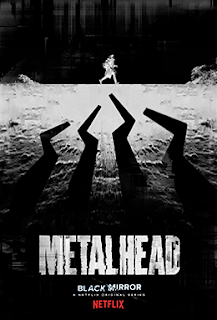
Black Mirror Revisit: Metalhead


Last year, I compiled a non-definitive ranking of Black Mirror episodes. Once a month, I revisit an episode, starting from the bottom. Herein lies #8!

The Talent: 
Metalhead easily boasts my favorite director: the underrated David Slade, who started his genre career with Hard Candy, continued with the better than it should be 30 Days of Night, made the only watchable Twilight movie, and served a key role on the outstanding Hannibal. We'll forgive him for Bandersnatch.

The Setup:
Presumably sometime in the black and white future, the world has become a wasteland. A trio of hardened survivors are on a mission to retrieve something for one of the children bunkering down in their safe house, but in order to find it, they have to evade society's new alphas: robotic dogs fully loaded with lethal ammunition.


The Ending:
It doesn't take long to trim the group down to just Bella, a scrappy and resourceful woman determined to bring home a teddy bear to a dying little boy. While she makes a valiant effort at thwarting a particularly feisty metal canine, she ultimately loses the battle, having been hit by some particularly nasty robot dog shrapnel right in her throat.


The Theme:
Metalhead is one of Black Mirror's starkest, simplest episodes, a 41-minute chase that's far more about the action itself than what it represents. Sure, one could dive REALLY deep into overthinking and write a thesis about metal vs. stuffed animals, but really, this is an episode created to scare you.


The Verdict:
And how nice and refreshing that is! Sometimes you just WANT a 41-minute robot dog chase in moody black and white. Like most good but surface-level horror movies, the overall effect of Metalhead does slip a little bit on second viewing, but it's still a ride.

See what I did there?


Technology Tip:
No matter how advanced your robotic design can be, as anyone with an iPhone and stash of dried rice can attest, no modern technology is immune to the dangers of liquid


The Black Mirror Grade
Cruelty Scale: 5/10
While Bella seems nice and incredibly undeserving of her fate, we don't really learn enough about her situation to have her end hit too emotionally hard.


Quality Scale: 7/10
This is a solid 41 minutes of television made by someone who knows how to stage a good long chase
Enjoyment Scale: 7/10
If you ever wanted The Terminator boiled down to 41 minutes, it's essentially right here for you


Up Next (Month): We work out our most flattering filters in the social media obsessed Nosedive