Showing posts with label hellraiser. Show all posts

Thursday, June 14, 2012

Here’s What Happens When You Raise Hell In Less Than 2 Weeks


Filmed in just 11 days, Hellraiser: Revelations is a difficult movie to discuss. This is a bottom of the barrel first draft sequel made purely to hold onto a once successful series’ rights. Even the cynic in me finds it mean to be too hard on the lazy story, messy performances, and ultimate lack of just about anything.

But the movie was made, thus making it fair game…right?

Quick Plot: Oh great, we start with found footage! There’s a way to cut the budget before it’s even estimated.


Two rich bratty suburban teens travel to Mexico to drink tequila and bang prostitutes in bar bathrooms. Yup, I am TOTALLY on these guys’ side already.

Cut to a Very Bad Things-ish accident that leaves uber male Nico in a bit of a bind. After manslaughter, the natural thing to do is to hit up a strip club (right?) where the pair befriend a mysterious American bum who gives them, out of the kindness of his sadistic heart, Pinhead’s vessel box.


All this action is mixed in with an awkward dinner party thrown by Nico and Steve’s grieving parents, who are completely rich and utterly boring. Steve’s teenage sister Emma is also in attendance to mourn the disappearance of her brother and (ick) boyfriend Nico, of whom her parents seem to care less for than the bottle of wine served with steak.


Oh Hellraiser: Revelations. The odds were stacked against you the minute you started filming against the clock. We know that, and can even forgive a shoddy Scottish accent-hiding actor’s shoddy skills at hiding a Scottish accent and a backlot serving as the country of Mexico. But how difficult could it possibly have been to NOT make your characters filthy rich entitled white brats? Are we supposed to WANT to see them skinned and pinned as Cenobite playthings? Or should we actually feel bad for their terrible tortured fate?


The problem with a film as rushed into production as Revelations is that it doesn’t know. A lot of the (pretty awful) Hellraiser sequels have leaned on having unlikable characters as a way to spread out the audience’s alliance. A date with Pinhead shouldn’t be wished on anyone, but it certainly makes viewers feel better if the victim deserves some form of punishment.


Heck, maybe I’m not giving Revelations enough credit. Perhaps the complete intention of filmmaker Victor Garcia was to get us rooting for Pinhead & Co. to win a few fresh bodies. Then again, if that was the plan all along, shouldn’t we…you know…be rooting for Pinhead? That’s a tricky request when for the first time, the lord of pain’s leather bodysuit is NOT being filled by Doug Bradley.


One can’t really fault unlucky actor Stephan Smith Collins for being a lackluster villain. Pinhead isn’t your run-of-the-mill Jason Voorhees or Michael Meyers. He’s far more akin to Freddy Krueger or Chucky, an iconic horror role made as memorable by the actor underneath the makeup as he is by his own mythology. Plopping another man inside his costume doesn’t feel sacrilegious: it just feels silly.

To make up for it, the script crams in every fad in recent horror cinema. Found footage! Home invasion! Crash test dummy Pinhead 2! Okay, the last one’s new, but not necessarily good. Little is in Hellraiser: Revelations.


But hey, that’s what you get for 11 days of shooting. The film runs a quick 75 minutes, little of which makes complete sense. Unlike the majority of the Hellraiser sequels, however, Revelations DOES actually FEEL like a Hellraiser installment. The story is essentially Frank & Julia retold as two awful teenagers who feel isolated in a dreadful youth-gone-wild straight to IFC original. From a screenwriting-in-11-days standpoint, it makes sense: there’s no time for anything complicated, so why not just copy the most successful plot and rewrite it with younger, prettier (by some definition unfamiliar to me) people? It makes sense. But a sensical plan and ELEVEN DAYS OF SHOOTING still do not a good movie make.

High Notes
For all its rushed messiness, the actual gore of Revelations is decently done, especially considering it mostly sticks to practical effects over the easier (as any Asylum vet knows) and uglier CGI

Well-

*mostly*

Low Notes
It’s hard to point fingers at the cast for inhabiting such miserable people, so I guess I’ll blame the studio for greenlighting an incomplete script filled with awful, ill-defined characters that offer nothing to sympathize with


Lessons Learned
Being on someone’s private property means that legally, they can blow your brains out and ask questions later

Before killing a prostitute, make sure you can afford her price


‘Cenobite’ now has a definition in your standard household dictionary

The Asian prostitute population in Mexico is surprisingly large

Getting shot in the stomach by a shotgun blast will kill indeed kill you, but it will take a really long time. Possibly enough time to rewrite your will, run a marathon, or rewatch the entire Hellraiser series


Rent/Bury/Buy
There’s a part of me that really wished Hellraiser: Revelations was worse, or at least, awful in a fun way. Alas, the film isn’t incompetent. Given an actual finished screenplay, I imagine director Victor Garcia can probably make a more than decent film. Instead, we’re stuck with a movie that feels embarrassed that it even had to be made. 

Sunday, June 6, 2010

Gimme Five

You may have noticed that this blog’s poll has been stagnant now far longer than usual. I typically like to start each month with a fresh question that gauges my audience’s taste in one random field or another.
So why, you may be wondering, has May’s Cinco de Pollo not made a June exit? The cynical may say it’s due to slackerdom on my part, but those true of heart should trust in my powers to know I’m simply speechless over the recent results.
It’s an industrious little franchise that reaches the 5 mark. Also quite often, a stale one scrounging for spark. Looking at the choices I assembled, how in the Hellraiser: Inferno did Halloween 5 and Friday the 13th V: A New Beginning get so close to nipping at the tiny heels of Seed of Chucky?
Before I get ahead of myself, let’s take a quick moment to examine the runners-up:
Children of the Corn V: Fields of Terror (Zero votes)


A terrible title and a film I apparently watched on the SyFy Channel a few months back, yet have absolutely no memory of. Did the Men In Black stop by the Bronx, or is this really that forgettable? Hard to believe, considering IMDB includes David Carradine and my dream pimp, Fred Williamson in the cast. 
Hellraiser: Inferno (1%)


A film I definitely have never seen (and not just mentally blocked), this fifth installment has no Clive Barker backing but does star Nightbreed hunk Craig Sheffer and Ajax himself, James Remar. The latter makes me happy, but the latter also popped up for a scene or two in The Unborn  and look how well that turned out.
Leprechaun in Da Hood (3%)


As surprised as I was at the poor showing of this wannabe cult classic, I’ll chalk some of the sway over to that other (far superior) horror comedy starring a different vertically challenged redhead. Despite a superb premise, watching Warwick Davis rap is far less fun than should ever be possible.
A Nightmare on Elm Street 5: The Dream Child (4%)


Maybe not the worst of the series but certainly the dullest (though the more critically acclaimed New Nightmare works hard to take that title). You’d think that the complexity of fetal dreams could at least birth some subtext (even Freddy’s Revenge managed to salvage its awfulness via homosexual metaphors) but aside from the apparent pro-life stance taken so early, this fifth Freddy romp is devoid of just about anything interesting. Lisa Wilcox’s Alice enters with mild residual sympathy, but her new batch of everyone’s-got-a-gimmick friends don’t bring much weight to the saga. Aside from a neat-enough comic book inspired death, Nightmare 5 is a snooze.
Hannibal Rising (6%)


There was a time when I was really excited to see this film. Most of that yearning came from the fact that Dominic “McNulty” West and Kevin “Lucious Vorenus” McKidd were listed in the credits. Four of you readers out there in the world would, it would seem, convince me to indeed rekindle that urge I once had. Perhaps one day when I find myself with a meat craving, I shall.
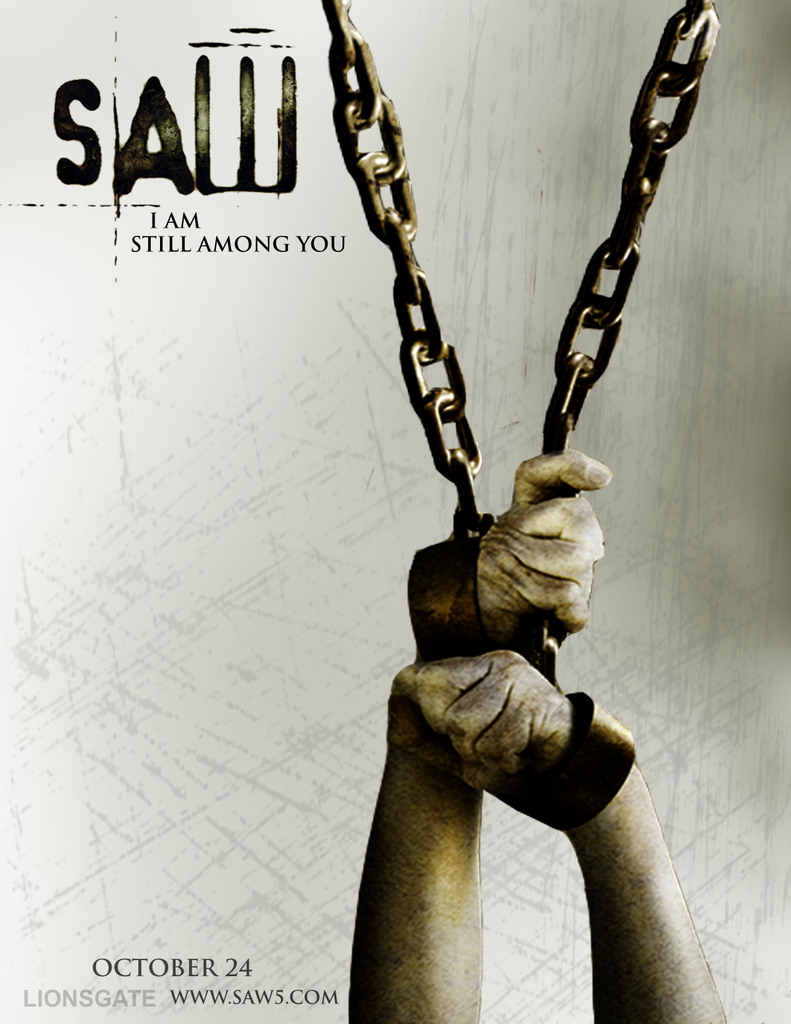
Saw V (6%)


The worst of the series and the epitome of what people who haven’t seen the films (but really want to complain about them anyway) would use as ammunition. Convoluted plot, characters we have no investment in, various loose ends, and an uninspired setup that manages to recycle plot points from just about every film before it. Power to Saw VI  for rescuing a franchise I had almost declared dead (Donny Walberg head smash dead, not Dr. Gordon is-he-or-isn’t-he deadish).
Diary of the Dead (8%)


In my personal estimation, Romero’s fifth in his Dead quintology (well now, sextology? stop giggling) series receives some unfair panning. Its weaknesses are glaring, but so were Day of the Dead’s (actors without indoor voices anyone?) and I will argue to my death that were the monotone narration removed, this would be considered a genuinely okay film.
Halloween 5 (22%)


Danielle Harris returns to give another fine underage performance, but aside from that, I have absolutely no idea why 14 of you presumably smart, kind and beautiful readers find anything to love about this lesser slasher. Enlighten me. Please.
Friday the 13th Part V: A New Beginning (22%)


Much like Halloween 5, this (spoiler alert) Jason-free installment teases audiences with the possibility that the previous film’s child survivor is now donning a dime store mask to match a bloody weapon. It's a tease that doesn't pay off, and the film's sole interest point seems to be the utter sleaziness it proudly sports. Are there really people out there in the world that dare to cite this a superior film to Jason Takes Manhattan???
The Winner, thank goobers:


Seed of Chucky (25%)
I’ve yet to fully expand on why I love this gleefully camped-out entry, but for now, heed my recommendation that if you haven’t seen Seed of Chucky, you're missing out on something really neat. 


It’s funny. 


It’s gross. 


Touching. 


Rather adorable. 


Bizarre.


And John Waters gets a cameo. 


Get to it.

Friday, October 9, 2009

How to Succeed In Sequels


More than any other film genre, horror has thrived--and sometimes shriveled--with the onslaught of sequels. From forced character crossovers to flashback riddled running times (is there even ten minutes of original content between the first round of followups to The Hills Have Eyes and Silent Night, Deadly Night?), it’s easy to mess up a sequel. But you know what? Pumpkins are in season, I'm high on candy corn, and the positivity is pumping, so let’s instead take a moment to consider some of the smart choices sequels have made in continuing a good story: 

Expanded Mythology
The true beauty of a sequel is that it can take a premise people found interesting the first go ‘round and attack it from a new angle, such as the Cenobite-heavy chambers of Hellraiser II. While it's true that many a sequel runs the risk of revealing too much (thereby negating some of the mystery that occasionally defines a first film) others seize upon the potential. Eli Roth's Hostel, for example, was a better idea than film, but his followup used the now established setup of a capitalist torture show to fully explore what audiences were drawn to in the first place. Instead of wasting time with standard protagonists, Roth gave us a briefer intro to much more likable women, then promptly delved into Elite Hunting and its own financiers. The result was a quick moving and smartly done film that found just the right note to revisit Slovakia.


Other films are less successful, but not always in a sacrilegious way. The philosophically horrific Cube series debuted as one of the most surprisingly intriguing films of the ‘90s, while a few straight-to-cable/dvd sequels attempted to take an incredible concept and try it with a different recipe. Cube 2 :Hypercube plays with the math, hints at its origin, and shoots itself with a horrid title worth of an Atari game while Cube Zero (arguably a prequel) goes behind the scenes to pose new questions. Neither is anywhere near as satisfying as Vincenzo Natali's original, which works precisely because we ultimately know nothing but what our own fears project. Still, if you watch Parts 2 & 3 as if they’re pieces of fan fiction blown up to feature length, both work on their own terms, sort of ‘what-ifs’ to a question that should never actually be answered.

Remakes In Sequels’ Designer Clothing
The world would be a far less groovy place had Sam Raimi ended the adventures of Ash in 1981. Yes, The Evil Dead is a great gooey film, but it's his first sequel that cements Bruce Campbell's status as an icon among the undead. Only quibble? It's not really a sequel if the first half hour retells the original story.


Sometimes, a filmmaker decides that directing a second film is code for second chance. In the case of The Evil Dead, this minor lapse of originality works because Raimi takes the good and makes it better with more money. We forgive the fact that Ash and Linda had already made a fateful trip to that cabin in the woods because even within the constraints of the same story, Raimi uses such a different energy that we end up with a completely different film not only from its original, but from just about every other film that had come before it.

Keep the Story Consistent
Say what you want about the juggernaut success of the Saw series, but has there ever been a 6 film franchise with such an excessively complicated spiderweb of a plot? Haters like to attack Lions Gate’s posterchild for its grisly suspenseless violence and contrived characters, but I continue to argue that this is, in many ways, one of the tightest (at least by script) franchises in the horror genre. With occasional flashbacks (and inventive ways to utilize the now deceased Jigsaw himself), each film has continued the story with something of a six degrees of separation mentality. A minor character from Part 2 returns to head Part 4, while missing characters reappear with believable, if somewhat logistically stretched explanations as to their whereabouts. I imagine the upcoming installment will have two audiences: those that have followed the five previous films and are still waiting for answers about Jigsaw's wife, the contents of a mysterious box, and the protagonists of Part III’s daughter (who’s been missing, but acknowledged in the last two films) while the other half will simply slurp their sodas through exposition and cheer at the latest rusted torture contraption. In a way, everybody wins. Except for oddly vast majority of horror fans who like to brand Saw the antichrist of filmdom. 


...or Dare To Be Different
Franchises are generally defined by their formula, whether it be pretty teenagers + machetes or redheaded dolls + profanity. Every so often, however, some series take a chance by breaking from the fold (even Chucky changed his act with married life). Though initially panned by critics and ignored by audiences, Halloween III: Season of the Witch has slowly aged to prove itself the most memorable of all those October 31st celebrating films. Admittedly, that’s not much of a feat when its competition included Michael Meyers’ worshipping cults and Tyra Banks, but still: abandoning Meyers for an evil corporation wielding head-melting dime store masks was a daring move well before its time. Likewise, the majority of Elm Street fans tend to use Part 2 as a coaster for their Hypnocil spiked Red Bull, but the sheer fact that such a random entry exists in an otherwise formulaic series is in itself somewhat notable. (Also, it’s one of the most fascinatingly homoerotic/homophobic films of all time, but that’s a discussion save for another day).


Jump Right In
Look, if we’re watching a film with 2, II, or the words “The Return” in the title, you can probably trust that we’ve been here before. Thankfully, the better sequels understand that audiences don’t need heavy exposition to get the kills rolling. Note how starting from Dawn to Land,George Romero’s Dead films never wasted time explaining the oncoming zompocalypse. Similarly, 28 Weeks Later boasts one of the most terrifyingly exciting openings in recent years by immediately thrusting us back into a nightmarish world we know all too well. 


There are plenty more notable sequel rules for continuing a franchise, so add some of your own and let the Freddy Vs. Jason style fights begin!

Thursday, July 30, 2009

Someone Famous Presents Something Less Famous


“From the special effects masters behind Hellraiser and Hellbound” reads the tagline for the strategically titled 1989 horror film Hellgate. Aside from the titular first four letters, Hellgate would never, under any circumstances in this or any other dimension, be confused with Clive Barker’s visionary nightmare soon to not be remade by Pascal Laugier. Hellraiser and its first and best sequel Hellbound utilize innovative costume design, gooey yet restrained makeup, and grandly horrific sets that put the cheap puppetry and Disneyesque ghost town of Hellgate to shame. 


I didn’t rent Hellgate for its pedigree (my real motive was the fact that it was on a double DVD with The Pit, a surprisingly lesser film that featured an evil teddy bear and forest trolls) but I did end up quite happy with the Scooby Doo feel and spontaneously combusting sea creatures it featured. That being said, the desperate ad line for Hellgate got me thinking of how some films--particularly horror--are buttered up for prospective audiences using a randomly hot industry name that may have stopped by the set one day to snag a Kraft Service donut. The most recent examples to my knowledge:

Craven Something Better


Wes Craven is something of the Krusty the Klown of the horror industry: a fine entertainer in his own right, but a little loose when it comes to lending out his name. For these reasons, the man owes me $11.50. Yes, I was one of those six people that attended the opening of Wes Craven Presents Dracula 2000, a limping update of Bram Stoker’s classic starring a pre-300, pre-personality Gerard Butler. This is only slightly less offensive than the $4 I lost renting They. Don’t bother looking for it and getting confused by its similar title to the classic giant ant movie and recent terrifying French thriller. This bland little film came and went in 2002 with less impression than leading man Marc Blucas ever made as Buffy the Vampire Slayer’s most despised love interest Riley. Yes, Wes Craven presented another opportunity for Marc Blucas to dig deep into his soul for some serious lip biting emoting. The horror is there, just not the way you expect it.

It’s Good to Be King


Stephen King has been associated with quite a large pile of...less than stellar film reels, but even he has his limits when it comes to using putting his name on unsanctioned adaptations. While he takes full credit for gleefully bad missteps like (he even cameo’d in Thinner, King tightened down on quality control in the early 90s. Thus poor Jeff Fahey’s starring role as a landscaping savant in 1992’s The Lawnmower Man may have lost a bit of its prospective audience when Maine’s most prominent author sued the producers for associating the film with his original short story. One year later, the country’s most ubiquitous horror writer’s name was nowhere to be found on Children of the Corn II: The Final Sacrifice, the not that terrible sequel to one of his most popular pieces-turned-feature. A good deal of the King film canon may not be good, but at least we generally know it came with his lawyer stamped approval.

The Unborn of Whom?


The trailer for this early 2009 release (the third Un -titled film of the month) was fairly promising until Michael Bay’s name made its bow. I suppose there were a few hungry Transformers fans lured to theaters by the Pavlovian connection, but did The Most Hated Man By Critics In America really have that much say in the making of this film? At least “The writer of Batman Begins and The Dark Knight” directed (although David Goyer does get a mere story credit for the more popular sequel). Having not yet seen The Unborn, I’m not qualified to say whether either marketing ploy is accurate. It was, however, extremely timely and convenient. 

Trust In the Toro


Guillermo Del Toro is a man whose name most genre fans trust, and thankfully, he wields his power well. A few years back, you may have found yourself explaining to a less cinematic friend that the new creepy looking Spanish film about kids in sack masks was not actually directed by that cuddly hobbit-to-be who made such an impression with Pan’s Labyrinth. The Orphanage is one of the better--almost best--horror films of the last ten years and shares a lot of the spirit found Del Toro’s masterful The Devil’s Backbone. It is, however, directed by a lesser known, but very talented Juan Antonio Bayona...whose name generally appears nowhere on the cover art. Still, Del Toro’s producing credit--milked for all its gooey attraction--is at least fitting and probably helped to make this little import a box office success. 

These are just a few forced to natural marketing connections of recent years. I imagine the list is unending, so please share you own discoveries and disappointments in the misadvertising of genre film. And by the way: unless my skimming and scanning skills are failing me, I can't seem to find a single connection on IMDB between Hellgate and its much more prominent near namesake. 


Monday, May 18, 2009

Martyrs, Spoiled


Me: Psst. Did you see Martyrs?


You: No.


Me: Go away.


You: Dude(tte). What’s your problem?


Me: I can’t go into any detail whatsoever about this movie without spoiling it grosser than a gallon of milk left open in an Elm St. boiler room.


You: Oh.


Me: Yeah.


You: So...should I, like, watch the movie?


Me: Yes.


You: Is it great?


Me: Eh. Yes. No.


You: Yes or no?


Me: I’m not sure. But it’s definitely very good.


You: Okay.


Me: Yeah.


You: Um, later.


Me: I’m glad we had this conversation.


That’s right folks. I did indeed major in Playwriting and English and graduate cum laude. Onto the review, which, in case my Shakespearean dialogue was a little too dense, contains SPOILERS that will make you want to throw hungry wolverine clawed kittens in my direction.


You’ve been warned:


Like many works of art and the artists that create them, a good deal of horror films struggle with identity crises. Their makers have clearly seen enough canon to know what’s expected of their genre and strive to recreate what’s worked in the past while occasionally casting a line out to catch something fresh. The recent (and recently reviewed) Frontier(s), for example, hit all the notes of backwoods horror birthed by classics like The Texas Chainsaw Massacre (or the earlier and beloved Spider Baby), but hinted at something new with Nazi undertones and a disappointingly unexplored dystopian setting. Unfortunately, Frontier(s) stopped short of forming anything revolutionary. For all the moody chaos in the bleak police state future, it delivered straight--if exceptionally well-done--gore cinema (known today as the heavily stigmatized torture porn).


Martyrs, the Canadian/French sleeper that has been making its prestigious rounds through the DVD community this past year, turns the confines of horror sub-genres into a fascinating, intelligent, and imperfect collage. Just when you think you know what type of film auteur Pascal Laugier is delivering (mangled ghostly girl? J-horror!), one shockingly explicit action transforms the story and style into another (shotgun in suburbia? home invasion!) and another (secret torture den? Underground society conspiracy!) until finally, the last 30 minutes lets Martyrs come into its own... for better and worse.


Quick Plot: Somewhere I never want to go in an industrial area of France, a young girl runs screaming through an empty morning street. We soon learn that this is Lucie, a mysterious orphan who was held captive and tortured, though no culprit or motive has been discovered. The understandably disturbed child is befriended by the pretty and maternal Anna, her roommate at a sad little orphanage that seems not entirely safe from the ghosts of Lucie’s past.


15 years later, the action shifts to a secluded upper middle class home where a typical family eats breakfast over the usual morning bickering. The doorbell rings. Father answers it, his face registering confusion, fear, and (possibly) recognition before a blast of shotgun busts through his stomach. At the other end of the smoking weapon is a now grown Lucie, her face still holding all the fear and hell of the little girl we met ten minutes earlier.


And then other stuff happens.


I could continue to describe the story, but if you’re reading this far, you already know it (and if you don’t and therefore haven’t heeded my SPOILER warning, you deserve a large heaping of force-fed gruel and systematic beatdowns). A lot of things happen in Martyrs, and none of them are good. Okay, a lot of things happen in Martyrs and none of them are any more pleasant than a route canal performed by Steve Martin’s dentist character in Little Shop of Horrors. At the same time, this isn’t a Saw sausage fest that tries to top itself or other extreme films with cinematic violence for shock’s sake. Bad things happen because the story demands them. Bad things happen because there are people in this world that do them.


Long haunted by a gollum-ish female, Lucie shoots some people--two innocent, two not. This does nothing to quell the demon that hunts her. When Anna meets the inspiration for Lucie’s trauma, she (and we) is equally repulsed, terrified, and heartbroken. It’s almost a relief to see her head blown off, for both the character’s sake and our own.


Like the film itself, there is no clear morality in the universe. People torture young women to unlock a mystery that probably shouldn’t be unlocked. Lives are destroyed in beyond painful ways. Yet the head mistress of this diabolical underground community gets her answer: a martyr is made in Anna, a skinless Joan of Arc without the independence to do anything with her bravery.


Or maybe Anna wins. What she tells the grand torturess, we never know. Maybe she lies. Maybe she whispers horrors of what lies beyond this world to terrify and guilt this macabre madame into suicide. Maybe she creates an imaginary eden to lure the old woman closer and quicker to an eternity of hell. Or maybe she has nothing to report and proves that the years of cruelty were for naught. We don’t know.


Personally, I’m not ready to rank Martyrs as a Great Film just yet. It’s an excellent movie, yes, and one that is clearly made by an artist with the potential to steer the genre in a solidly new direction. Technically, Martyrs is near perfect; the acting is spot on, the visuals are beautiful, and the editing is effective. If there’s a flaw, it comes somewhere at the 40 minute mark, where, despite what I recall as being tense and engrossing staging, something starts to drag. Maybe it’s the Haute Tension-ish look sparked by a pretty girl in a bloody tanktop or the not-too-surprising first reveal of Lucie’s real tormentor. I can’t put my finger on it, but at some point, I fell out before coming back.


Laugier does not reinvent the horror film, but he does reshape what’s already there with fascinating results. One hour in, I realized that I had absolutely no idea where this film was going. I haven’t really felt that way since the total surprise of The Descent. Where Neil Marshall’s spelunking scarefest led us into a nightmare with jumps and fear, Laugier’s Martyrs starts with hell and philosophically transforms it into purgatory.


High Points
Although we never get to truly know either character, both Morjana Alaoui and Mylene Jamponoi make intensely sympathetic and haunted characters


The minimalist score constantly evolves throughout the film, never settling on a predictable pattern to warn us of mood shifts


From the snowing feather gunshot to Anna’s gleaming eyes, Laugier creates some incredibly memorable visuals


Low Points
While I originally admired the opening Peeping Tom-esque home movie documentary feel of the child Anna and Lucie, it’s abandoned so quickly that I wonder if it was a simple exposition device


Lessons Learned
Overachieving in butterfly swimming competitions is just asking for trouble


When your shower is clogged, the best solution is to dig a ten foot hole in your front yard and find the little mouse bastard that’s been hanging out in the pipes


There are few things more frightening than old French ladies with money and Norma Desmond headwraps


Rent/Bury/Buy
You need to see this movie, if only to throw your hat into the discussion of what the fuss is all about. (But then, if you’re reading this far, you’ve already seen it.) As I explained in my yesterday’s posting, Martyrs didn’t quite live up to the hype I’d been hearing about it through podcasts and the blogosphere, but it definitely did leave an equally deep emotional and philosophical impression. Because of its ambiguous ending, it’s also a film to share and discuss, so I could certainly endorse a buy from your local independent dealer. A thorough making-of is included in the extras, giving you detailed discussions about every aspect of filming. All in all, it’s a solid, unique, and thoughtful horror that highlights Pascal Laugier as a filmmaker to watch with two open eyes. As the man tapped to helm the remake (reboot? I can’t keep up with the evolving language of stale cinematic trends) of Hellraiser, it’s guaranteed that we’ll be seeing more of him. Let’s hope he continues to make cinema his own.