Showing posts with label invasion of the body snatchers. Show all posts

Monday, July 3, 2023

Dawson's Clockwork Orange


As the runes predicted, the time has come to pass: '90s theatrical horror movies I once despised with my teenage might are now things I've come to enjoy with the same relish as a Snackwell's chocolate yogurt. Time does strange things to our tastes.


Quick Plot: Stoner Gavin is out for a walk with his (thankfully safe) dog when he spots a curious scene: an alpha jock refusing his girlfriend's sexual advances, breaking her neck rather than emitting his...fluids. Cops arrive only to have one shot and the other (Steve Railsback!) letting the letter jacket wearing murderer off with warning. 


Meanwhile, the Clark family is settling into their new home in Cradle Bay, the kind of small town that also happens to only be accessible by ferry. A cloud hangs over the ridiculously good-looking family following the suicide of oldest brother Allen (Ethan Embry!), which has been hard on middle child Steve (James Marsden!) and youngest daughter Lindsay (Katharine Isabelle!!!).


Apologies for the constant exclamations, but good golly: there are a lot of pleasant faces here.


They're also all ridiculously good-looking and about 98% white, including the albino character played, of course, by a non-albino actor. 


We had a lot to learn in the '90s. 


Gavin takes Steve under his baggy shirt-wearing wing, introducing him to fellow outcast Rachel via a music video slow motion of Katie Holmes' bare midriff. Like any high school, Cradle Bay has its clearly defined social caste system and at the top are the Blue Ribbons, a "community group" who live clean. Their only vices seem to be the local froyo shop(pe) and the need to bully those who misbehave. 


Having witnessed one commit murder, Gavin is convinced that the Blue Ribbons, coached by school psychologist Dr. Caldicott (Bruce Greenwood!), are some kind of cult under serious, possibly surgically-induced mind control. He's right, of course, but that doesn't stop his parents from signing him up, leaving Steve to take up the fight. 


I first saw Disturbing Behavior right when it hit video rental, and as a surly teenage horror fan, it epitomized everything wrong with theatrical horror following the success of Scream. I lumped it in my brain with I Know What You Did Last Summer as one more example of Hollywood misunderstanding a genre I loved. Why was everyone so pretty? Why did everything always end happily? Who did they think they were scaring?


It's been, apparently, 25 long years since Disturbing Behavior quietly came and went (though you wouldn't know by the possibly Dorian Gray-ish skincare regime of James Marsden) and while the characters ARE still too pretty, I can now sit back and say that for its time, it's quite possible that Disturbing Behavior is actually kind of interesting. Scott Rosenberg's screenplay hints at some surprisingly layered questions about teenagers' relationships to sex, as well as well-meaning parents struggling to make the right decisions for their kids. Director David Nutter (who has since gone on to be one of the most successful television directors working today)  doesn't quite break any of the mainstream '90s molds with his choices, but there's a solid core here. 


Under 90 minutes (including a full 3 of those minutes devoted to the opening credits) there's clearly something missing. According to the internet, that's another whole half hour. Not shockingly, the studio wanted Disturbing Behavior to be a teen hit and did everything it could to, well, not allow that to happen. It's clear that storylines and character journeys are cut (the fact that we never see Gavin's dog again is one clue) and as a result, the movie just never really comes alive. 


That being said, I had fun with this movie. Sure, the utter '90sness of its needle drops and wannabe Williamson dialogue is razor on its own (note: no it's not; nobody said "razor" as a term of approval except for Katie Holmes in Disturbing Behavior) but nostalgia aside, there's some meat here. It's impossible not to compare this film to The Faculty, another Body Snatchers/Stepford Wives-inspired high school sci-fi horror of the era. The Faculty is a better movie, and more importantly, a more entertaining one, but weirdly, thinking about the two side-by-side, there's more substance to Disturbing Behavior, even if it never had a chance to be developed. 


I'm not ready to say Disturbing Behavior is a misunderstood wonder, but time has been oddly illuminating to it...or rather, what it could have been.


High Points

One of the biggest whiffs of '90s slashers was how scared they were of sex. Disturbing Behavior kind of naturally embraces that by how it positions the very idea of sexual impulses in the Blue Ribbons' chastity. Like everything else in the film, it's not fully realized, but I appreciate its attempts to at least acknowledge how complicated a role sex plays in the teenage brain (in this case, literally)


Low Points

It's almost cute today, but it really can't be understated much seeing Nick Stahl and Katie Holmes in bad kid costuming feels like dress-up


Lessons Learned

The real path to a janitor's heart is Kurt Vonnegut (so it goes)


Psychiatric hospitals had no sign-in policy in the 1990s


The higher the school spirit, the better the bake sale


Rent/Bury/Buy

I'm not calling Disturbing Behavior a good movie. It's just more fun than I remembered, and more interesting in its potential than I probably realized. If you enjoy messy '90s genre films, it's definitely worth a watch. You can find it streaming now on HBO Max (if it's still called that). You know. Razor. 

Friday, June 11, 2010

I Know Who Spammed Me


A few weeks back, my email spammed a whole lot of people: friends, family, former employers, offices I had once applied to work in, renters on Craig's List, etc. While there may indeed be some people on that list welcoming a message about where to find top quality Viagra, I personally felt as though someone had stolen a piece of my identity, crawling around my inbox and mailing those who knew me with a poorly worded advertisement for something I’m not selling.

In modern banking terms, identity theft in a crime and nowhere is this more evident, frightening, or plain gross than horror cinema. Examine:

Possession


It's one thing to find someone else has been using your credit card, but feeling your body host an entirely different (usually evil) entity seems to violate just about every tenant of natural law. Pity The Exorcist's Regan, a mere teenager taken hostage by the cruel, kinky, and weak stomached demon Pazuzu. Similarly, entire towns seem to face a similar short term squatter menace in Wes Craven's Shocker, the Denzel Washington ripoff (face it) Fallen, and the weirdly experimental ninth installment of Friday the 13th. 

Complicated Disease


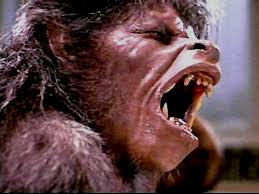
It’s not MY fault! The werewolf that bit me made me tear off my clothing and attack local loiterers! It’s an excuse used by a very unfortunate constituent of the lycanthropic population and really, how can you not sympathize with young Ginger Snaps, the confused Wolfman, and very tormented David in An American Werewolf In London? Yes, they all get to indulge their inner animal with a frolic in the nude, but as anybody who recognizes the name Rick Baker knows, those transformations just can’t be a scratch on the belly.

Bait & Switch


Perhaps the most physically complex and real estate-demanding identity theft can be seen in the four films (and assumedly counting) sci-fi series Invasion of the Body Snatchers, wherein imperialistic aliens harvest human-sized pods to grow replacement people that can continue your existence in monotone conformity. Those suffering from high blood pressure may see some benefits, but losing that emotion and individual spark means surrendering that quality that makes us human, for better and worse. Then again, the 2007 remake (shortened to The Invasion to best not confuse modern moviegoers) starred a plastic-faced Nicole Kidman as the feeling man’s last hope. So maybe the ability to show emotion doesn’t have so much weight after all.

Replacement Parts


And that leads us to another form of alternate you-ness that puts a whole lot of pressure on Ms. Kidman, the pop culture landmark The Stepford Wives. Based on the novel by Ira Levin, this satirical thriller of sexual politics in suburbia was made into one great film and another that challenges the English language to find words base enough to reflect a proper insult. The tale of Stepford is arguably the wrongest of all of these identity crimes because not only does it involve (spoilers) the murder/genocide of thinking women; it also means that after said strong women are dead, their names, faces, and bodies continue to be used in chauvinistic ways that would have made their living counterparts burn their bras in horror. 

Baby Swap ‘n Such


Due to the mysteries of human life and black and white limitations of ultrasounds, no woman can ever really know what’s brewing inside her uterus. Still, a consenting soon-to-be-mom generally assumes one guarantee: the child is a product of her and an identifiable male partner. Like any rule, there are always exceptions and one needs to look no further than the Rosemary’s Baby‘s Upper West Side, where poor Mia Farrow learns too late that her drunken night of lovemaking wasn’t exactly with the man in her wedding photo. A similar discovery befalls the illustrious Thorn family in 1976’s The Omen, when U.S. ambassador Gregory Peck trades his stillborn son for what he’s told is another innocent newborn. The next five years are then devoted to raising the antichrist. Hey, not everybody’s kid can be an honor student, but sometimes, it’s good to know what’s growing inside your home.

Species Conversion


As someone with a history of self-identifying as a morning person, I can’t imagine anything more horrifying than the biological constraints of vampirisim (well, maybe carrying Satan’s fetus but there are prenatal drugs for that). Aside from completely rearranging my natural schedule, the whole “loss of soul” thing is a viable reason to Just Say No to that handsome midnight caller with an unnatural ivory skin tone. One could make the same argument for zombiism, the disease to which no man or woman is immune. Looking past the obvious fear of being eaten, it’s the blankening of identity that makes this the horror genre’s favorite go-to monster. The idea that your mother could become your murderer is scary; that you would have no restraint at responding by hunting your own child is truly disturbing.

Recasted Sequels


In most cases, it’s the actor’s choice whether or not to reprise his or her role in a (usually) successful film’s followup, so it’s hard to ever feel sorry or concerned for the departing star. Still, it’s sometimes a lot to ask audiences to suddenly shift all sympathy to a replacement actor. Patricia Arquette’s Kristen backflipped her way through A Nightmare on Elm Street 3 only to morph into The Dream Master’s Tuesday Knight, a chain smoker who would probably cough up a lung before reaching the squatting position. Julianne Moore had the thankless task of inhabiting a newly redheaded Clarice Starling following Oscar winner Jodie Foster’s decline in Hannibal, and while Moore makes a believable FBI agent, it’s a jarringly confident makeover for our West Virginian brunette.

So how comfortable are you now in your own skin, and if given the choice, is it that bad to bid it adieu?

Friday, January 15, 2010

Apoca-Party Time


There are a whole lot of ways the could can end, and even more films that document each one. Here's a rundown of a few noteworthy entries into the apocalypse.

Nuclear Disaster

The 1980s was a decade fraught with Cold War paranoia, so it was only natural for filmmakers to mine the potential of nuclear holocaust for cinematic storytelling. Interestingly enough, in order to fully experience the horror of what could have been, one must prop up the Lazy Boy in the comfort of home to see the two most terrifying fictionalizations: the ABC Network’s The Day After and the BBC produced faux documentary, Threads. Both detail the everyday suburban/rural world of the early ‘80s spiraling into a burnt, radioactive open graveyard quickly eroding the faces and souls of those unlucky enough to survive the initial attack. Threads--still not available on Region 1 DVD--is particularly horrifying in how it tricks its audience into following a young pregnant couple and their families, only to lose a few members with the same lack of fanfare as the rest of the world and tear apart the bases we expected to hold strong. In just two hours, this made-for-TV film takes us from worrying about the economy to reliving the Dark Ages, where the new generation of children speak in grunts and age faster than Ice Pirates in super speed. It’s truly terrifying, particularly due to the matter-of-fact presentation that shows the demise of society not as a tragedy, but an inevitable consequence of a planet at war.

Disease

The Stand, 12 Monkeys, and 28 Days Later are a few classic examples of devastating plagues, but for a fresh take on viral horror, check out Alex and David Pastor’s wrongfully-straight-to-DVD Carriers. What makes this low budget, but extremely sharp little film so strong is the particular point in time it takes place: after the outbreak but before complete chaos. Without any flashbacks or forced exposition, Carriers starts with a young group of smart--if not smart enough--survivors led by Star Trek’s Chris Pine. These seemingly normal twentysomethings and teens are armed with disinfectant and a single pistol, but also mildly afflicted with consciences still clogged with the empathy they had in a world past. Unlike most plague pictures hypnotized by sexy scenes of contagion and apocalypse, Carriers focuses on how a person must adjust to surviving a world with no mercy. By the end, our remaining characters have crossed a line and stepped into a new world, but not without surrendering--and, in a sense, executing--what made them human in a former life. It’s gripping and far more intelligent than its pretty-people-in-peril poster art would have you believe.

Religion

Whether you worship Jesus or prefer his work in Jesus Christ: Vampire Hunter (a classic for another list), it’s hard to deny the Book of Revelation is one kickass read. Religious-themed apocalypses are something of a cheat due to the lack of real rules that goes with the territory, but Michael Tolkin’s 1991 drama The Rapture earns a place here for taking the idea of its title and exploring its implications through one conflicted character. Mimi Rogers plays Sharon, a telephone operator (a job which apparently warrants a horror film entirely of its own) who trades in her promiscuous swinger lifestyle for a Born Again baptism with a new husband (David Duchovny) and church ready daughter. Without getting into spoiler territory (as this is a highly recommended film for the thematically combative philosophizing film fan), let’s just say Sharon, a woman fully expecting to greet the end of the world with her family at her side and arms open wide, instead finds herself doubting her faith at an extremely inopportune time. It’s one of the most intriguing and discussion-ready films I’ve seen to deal with this (or any) big issue, and well-deserving of a watch on a day that warrants introspection into the individual at the end of it all.

Supernatural

While Buffy spent seven years protecting Earth from demonically-rendered apocalypses, John Carpenter chose to pit a mere insurance investigator (albeit one who previously took on velociraptors) against the god-like horror novelist celebrated by a surprisingly fertile nation of readers. A beloved, if messy apocalyptic offering from a brilliant genre director still in his golden years, In the Mouth of Madness playfully juggles a few big ideas about what it means when an entire population puts its devotion in one morally questionable artist. Carpenter had dabbled in the world ending before, but even Snake Plissken would be blinded (in the other eye) by the insanity of reality now ruled by a Sutter Kane, a Stephen King-meets-Jack Ketchum style novelist who loves blood and the color blue. Like The Rapture, this is a film as much about idol worship as gooey monsters and practical effects. A surprisingly thoughtful, fairly flawed, and incredibly fun trip into the end.

Alien Annihilation


The good thing about extraterrestrial invasions is that they’re kind of out of our hands. If a passing spaceship wants to blast our planet like it’s Alderon, then what can we really do? Steal our water or serve man for dinner, well, at least that’s fast and/or filled with plenty of fattening food to pad us out. Other films, however, take a more haunting and individualized approach to those strangers from other galaxies, and none are quite as frightening as Jack Finney’s Invasion of the Body Snatchers. Both the 1956 and 1978 adaptations capture an unsteady sense of loss, as mysterious seeds land in our neighborhoods--the suburbs and city, respectively--to grow into blank alter-egos of our more dynamic selves. It’s creepy enough to consider the loss of your soul to an emotionless (and never actually identified) being from another world, but what makes these films true classics is how easy it is for an apocalypse to take place inside our friends, family, and neighbors without most of us batting an eyelash. 

Zombies

Anybody worth their protein-filled brains knows a thing or two about surviving in a world ruled by the shambling elite. It’s easy enough to devote a few million words to my favorite film of all time, but Dawn of the Dead needs little praise from the likes of me. Meanwhile, Day of the Dead and Land of the of the Dead cheat the apocalypse with disappointingly upbeat (and slightly unearned) endings. Zombieland shows us a world low on Twinkies and common sense, thus knocking it down a few points when it comes to realistic survival techniques. For two recent undead films very different in execution, yet oddly similar in approach, compare the caravan of Resident Evil: Extinction with the somber team of The Zombie Diaries. Both focus on hardened survivors living off canned goods and their wilderness skills, and neither is necessarily a good time, but if you’re looking to tide yourself over before The Walking Dead and World War Z hit mini and big screens, you can always enjoy some vegetarian unfriendly feasting at the world’s most depressing restaurant: planet earth, post-Z Day.